Almost all refugees and migrants arriving in Kenya are fleeing prolonged drought rather than sudden floods or storms, with most waiting up to two years until their resources are completely exhausted before making the decision to leave home, a new study has revealed.
The survey of more than 1,000 Somali and Ethiopian refugees and migrants found that 89 per cent cited prolonged drought as a driver of their movement, while 26 per cent reported flooding as a factor.
The research, conducted by the Mixed Migration Centre and published in April 2026, found that environmental shocks are devastating agricultural and pastoral livelihoods.
“When the drought came, we lost everything. Coming to Kenya gave us a chance to start over and people actually cared about helping us. Now, I can look after my family without being affected by any conflict unlike in Ethiopia,” a respondent from Oromia region, Ethiopia, who moved to Moyale, said.
Among those displaced by drought, 76 per cent moved after losing livestock and 63 per cent following crop failure.
“There was no water, no food, our wells ran dry, crops failed and there was literally nothing left to eat or drink,” a 41-year-old man from Ethiopia’s Oromia region told researchers after settling in Moyale, northern Kenya.
“There was no income, families faced starvation, thus we decided to migrate.”
The journey itself exposes people to extreme danger. Among respondents who reported abuse, 57 per cent cited physical violence, 56 per cent extortion and 35 per cent sexual violence.
For children, risks included injury, physical violence and even death.
Despite urgent needs, humanitarian assistance remains critically insufficient.
Ninety-one per cent of all respondents said they needed help at the time of interview, with food identified as the most pressing concern for 86 per cent.
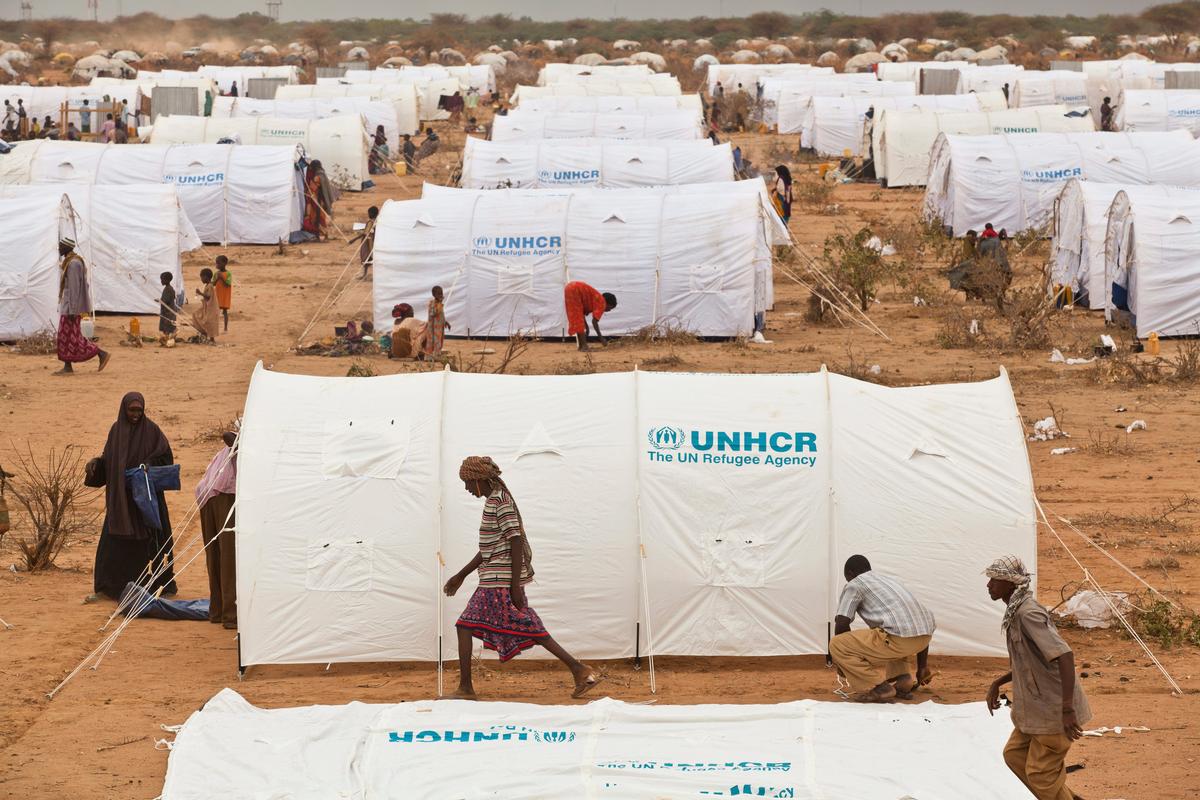
In displacement hubs such as Dadaab and Mandera, three-quarters of those who required aid along their journey received no food assistance or shelter.
“The journey was challenging,” a Somali man residing in Mandera said.
“I experienced bribery and corruption at the border crossings and also constantly feared deportation.”
Smugglers have stepped into the vacuum left by inadequate formal assistance. Among respondents who interacted with smugglers, 63 per cent received food or water from them and 35 per cent obtained medicine.
Community-based early warning systems exist but remain underdeveloped: fewer than half of respondents had access to any early warning system and 19 per cent of those who received warnings took no action due to lack of capacity.
Kenya currently hosts more than 850,000 registered refugees and asylum seekers, a figure that has nearly quadrupled over the past 25 years.
The country experienced one of the most severe multi-year droughts in East Africa between 2020 and early 2023, which killed about 2.5 million livestock and displaced vast numbers of people.
Among drought-affected respondents, 81 per cent reported crop losses and 80 per cent lost livestock.
Many households abandoned pastoralism entirely after five consecutive failed rainy seasons left an estimated 4.4 million Kenyans facing acute food insecurity.
Climate stress is acting as a threat multiplier, exacerbating armed conflict and insecurity.
Of those who believed environmental factors influenced conflict drivers behind their displacement, 70 per cent cited armed conflict and terrorism as a reason to leave, while 56 per cent mentioned political unrest.
“Political tension, riots and rising insecurity forced me to move,” another Oromia resident, now living in Moyale, said.
“In addition, the severe drought that killed most of the livestock was a major challenge.”
Climate adaptation efforts are failing, the report found. More than half of those who attempted to grow new crops or keep alternative livestock experienced total loss of their newly introduced plants and animals before migrating.
“The extreme temperatures and unpredictable weather patterns meant no rain, no future and no choice,” a 22-year-old Ethiopian woman said.
“Running for survival and safety was the only option for us.”