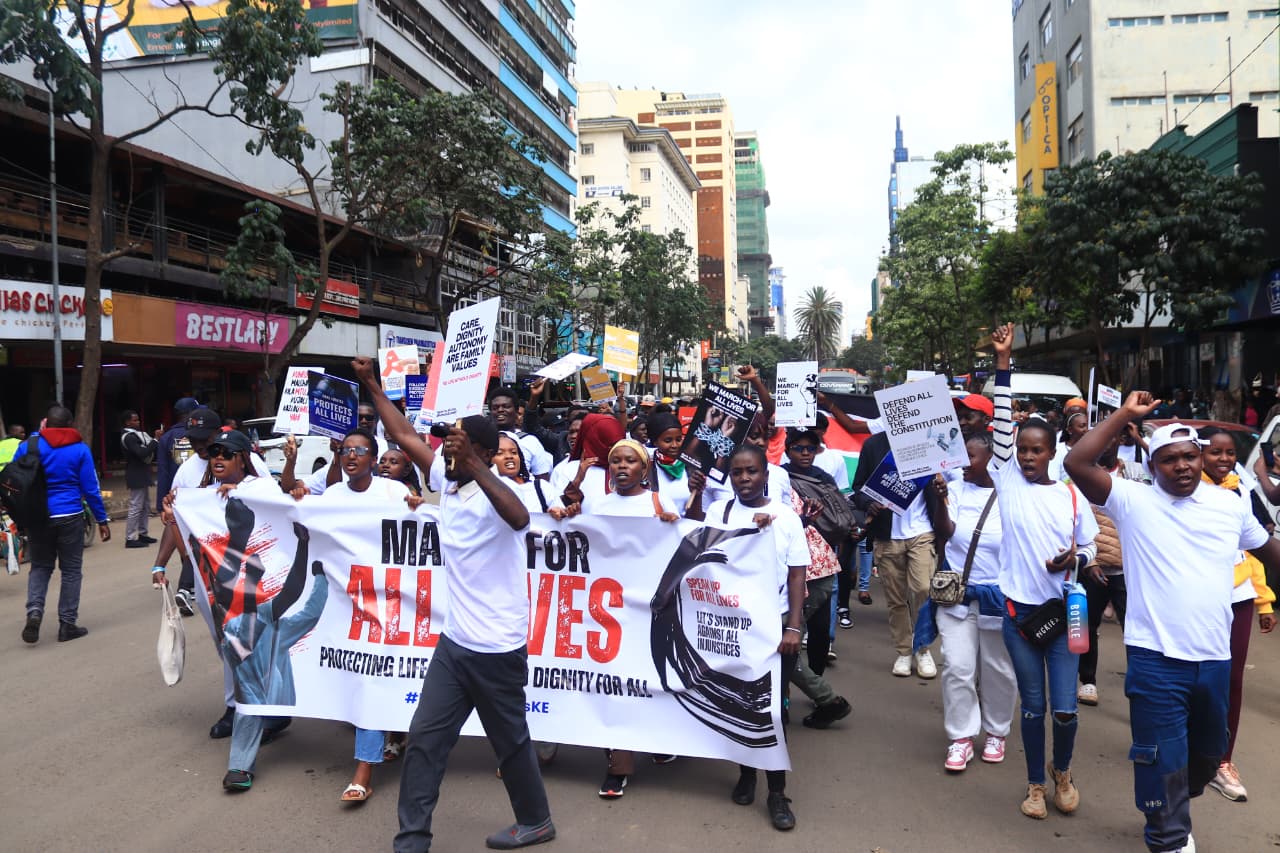
 Youths in Nairobi during a protest along Moi Avenue on March 27./TIMON OTIENO
Youth groups in Nairobi on Friday staged a peaceful procession through the city centre, calling for equal recognition and protection of all lives lost to violence, disasters and systemic neglect.
The demonstration, dubbed the “March for All Lives,” was organised by Raise Your Voice Community Based Organisation, led by Doris Kathia, a human rights defender.
It began at Jeevanjee Gardens before proceeding along Moi Avenue and across the Nairobi CBD at large. Reading from a press statement during the march, Kathia described the action as “a collective act of remembrance and solidarity,” aimed at confronting what organisers termed a selective and inconsistent interpretation of the right to life in Kenya.
“This action is a direct and unapologetic stand against the persistent disregard for all Kenyan lives. We are marching to affirm that the right to life must be expansive, consistent, and unconditional; every life matters,” she said.
The youth said their protest was driven by concern over the growing number of deaths across the country that often receive unequal public attention and response.
They pointed to recent fatalities caused by floods, rising cases of femicide, incidents of police brutality, and what they described as systemic neglect affecting vulnerable populations.
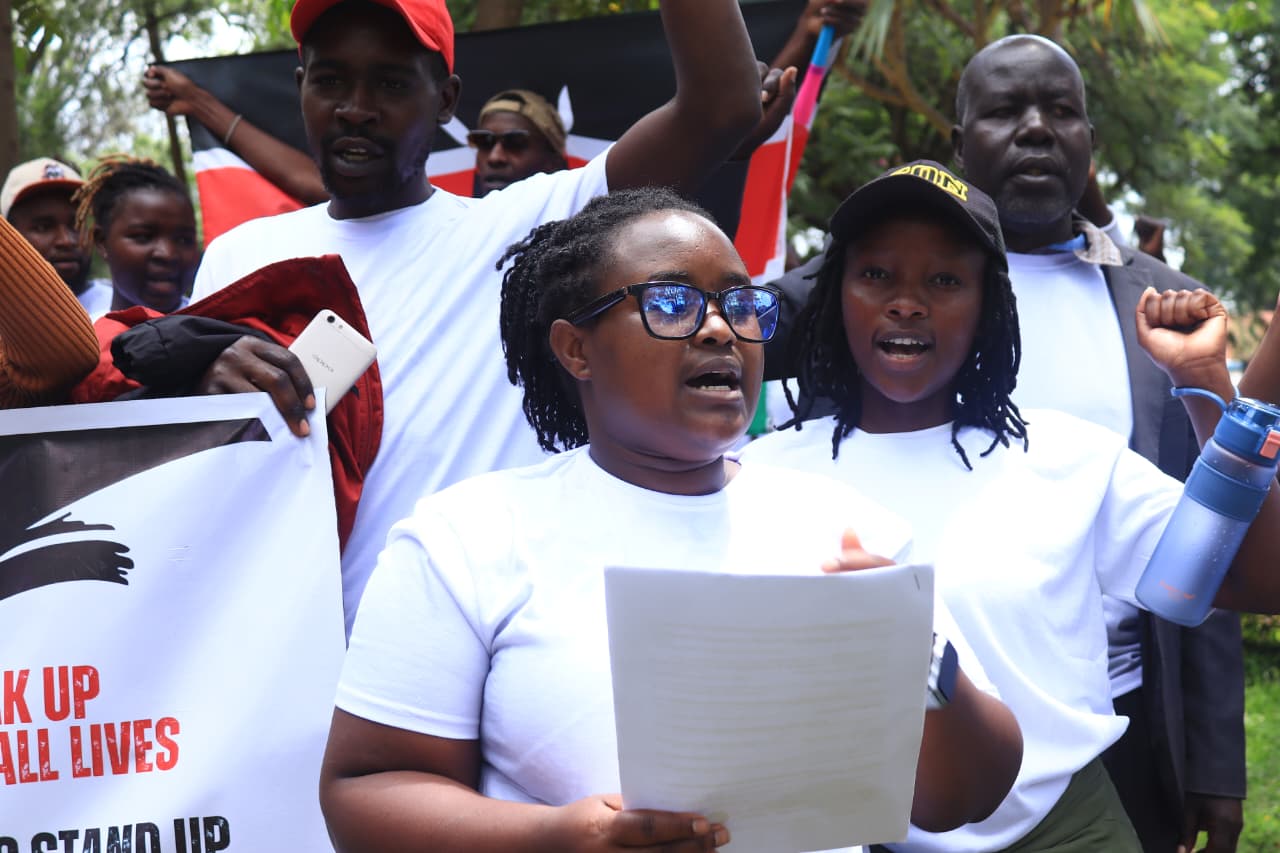 Doris Kathia reading a press statement after the procession at Jevanjee Gardens./TIMON OTIENO
According to the organisers, the march seeks to honour all victims regardless of identity, belief, profession or circumstance, while also challenging what they called selective outrage in national discourse.
“We cannot continue to live in a society where some deaths are amplified while others are ignored,” Kathia said. “Every life lost, whether to violence, disaster or neglect, deserves equal recognition and justice.”
Participants carried placards bearing messages of remembrance and accountability, with some highlighting victims of gender-based violence and others referencing climate-related disasters and alleged extrajudicial killings.
Chants of “Every life matters” echoed through the streets, drawing the attention of passers-by and motorists within the central business district.
Some demonstrators called for reforms in policing and stronger action to address gender-based violence, while others urged the government to invest more in disaster preparedness and social protection systems to prevent avoidable deaths.
Kathia emphasised that the demonstration was not aimed at any single institution, but rather intended to spark a broader national reflection on how Kenyan society values human life.
“We invite the country to reflect on whose lives are amplified and whose are ignored,” she said. “The right to life cannot be conditional or reduced to a single-issue agenda.”
 A group of youths holding placards with messages on protection of all lives during a protest in Nairobi./TIMON OTIENO
The protest remained peaceful, with a visible police presence monitoring the procession as it moved through the city. By midday, the march was still ongoing, with organisers saying more participants continued to join along the route.
They expressed hope that the action would help restore balance to national conversations around human rights and accountability, and push leaders, both political and religious, to adopt a more inclusive and consistent approach in addressing all forms of preventable deaths.
As the procession continued through Nairobi’s streets, the message from the demonstrators remained clear: dignity, justice and protection should not depend on circumstance, but must be guaranteed equally to every Kenyan life.
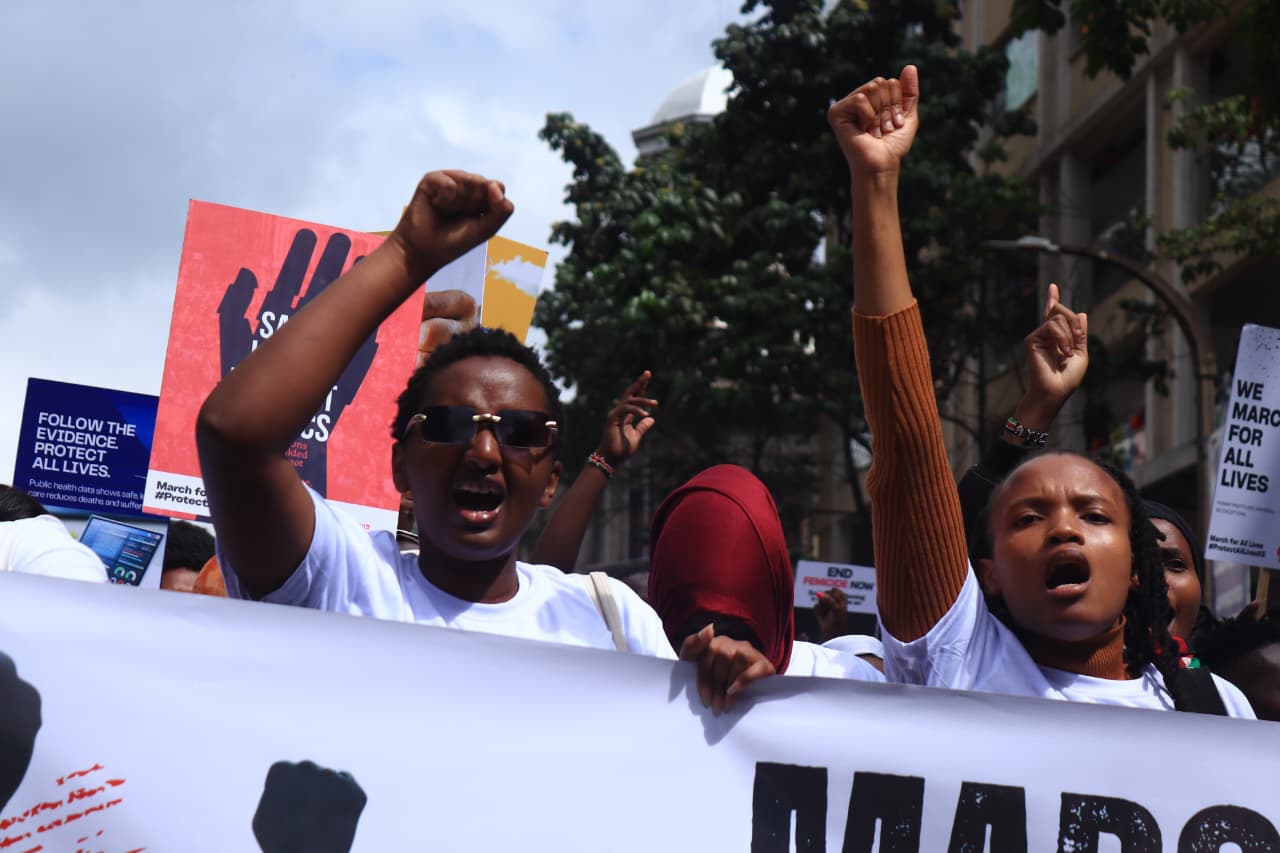 Youths chanting anthems and songs during the protest along University Way on March 27./TIMON OTIENO
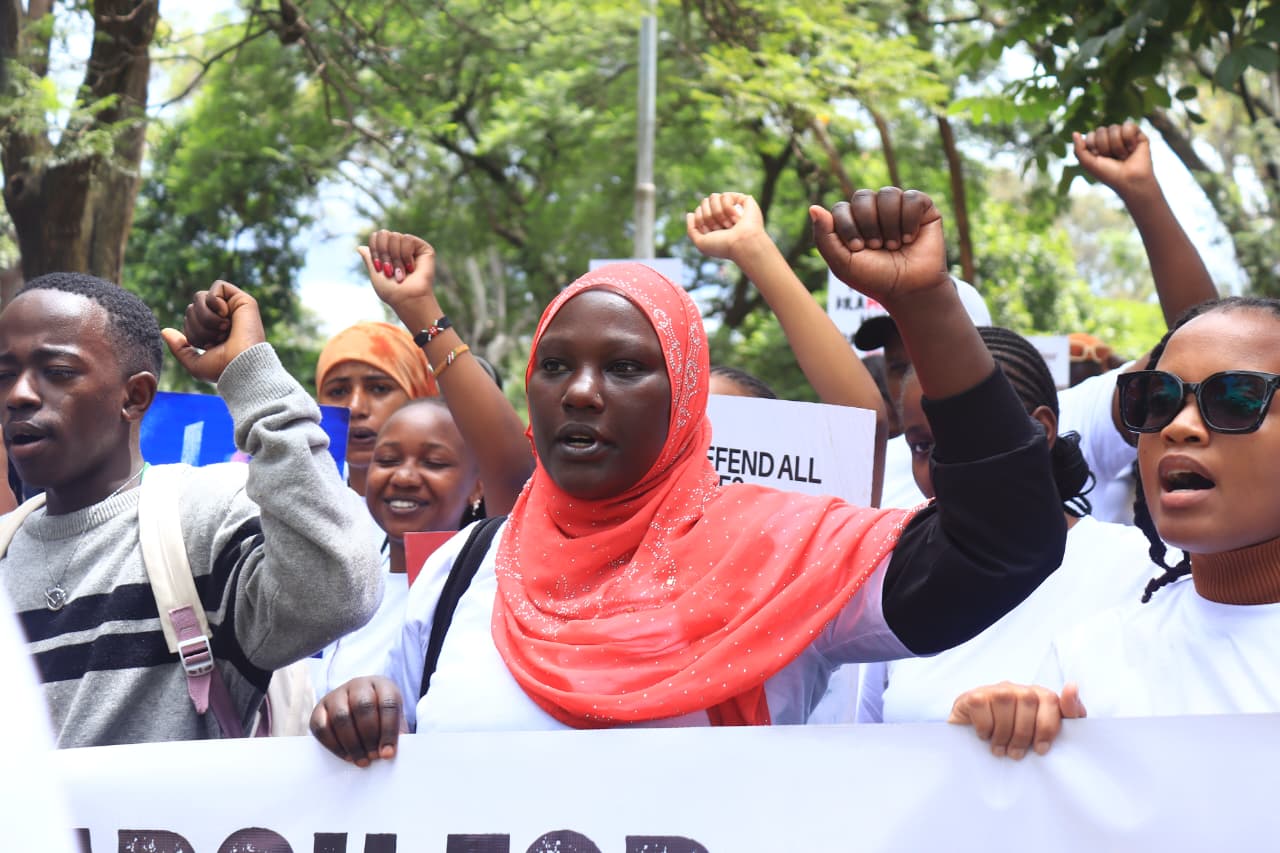 A group of youths during the protest on March 27./TIMON OTIENO