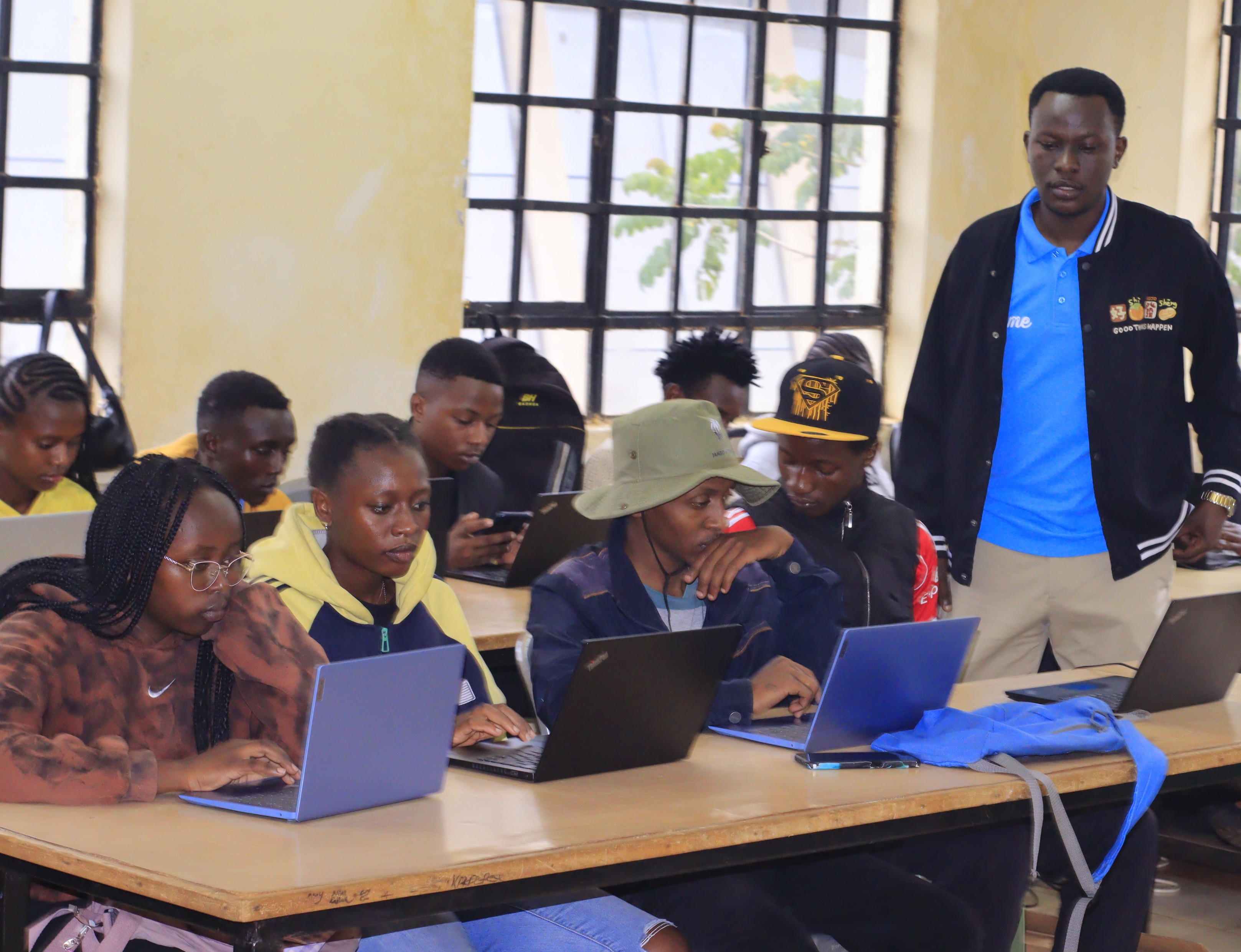
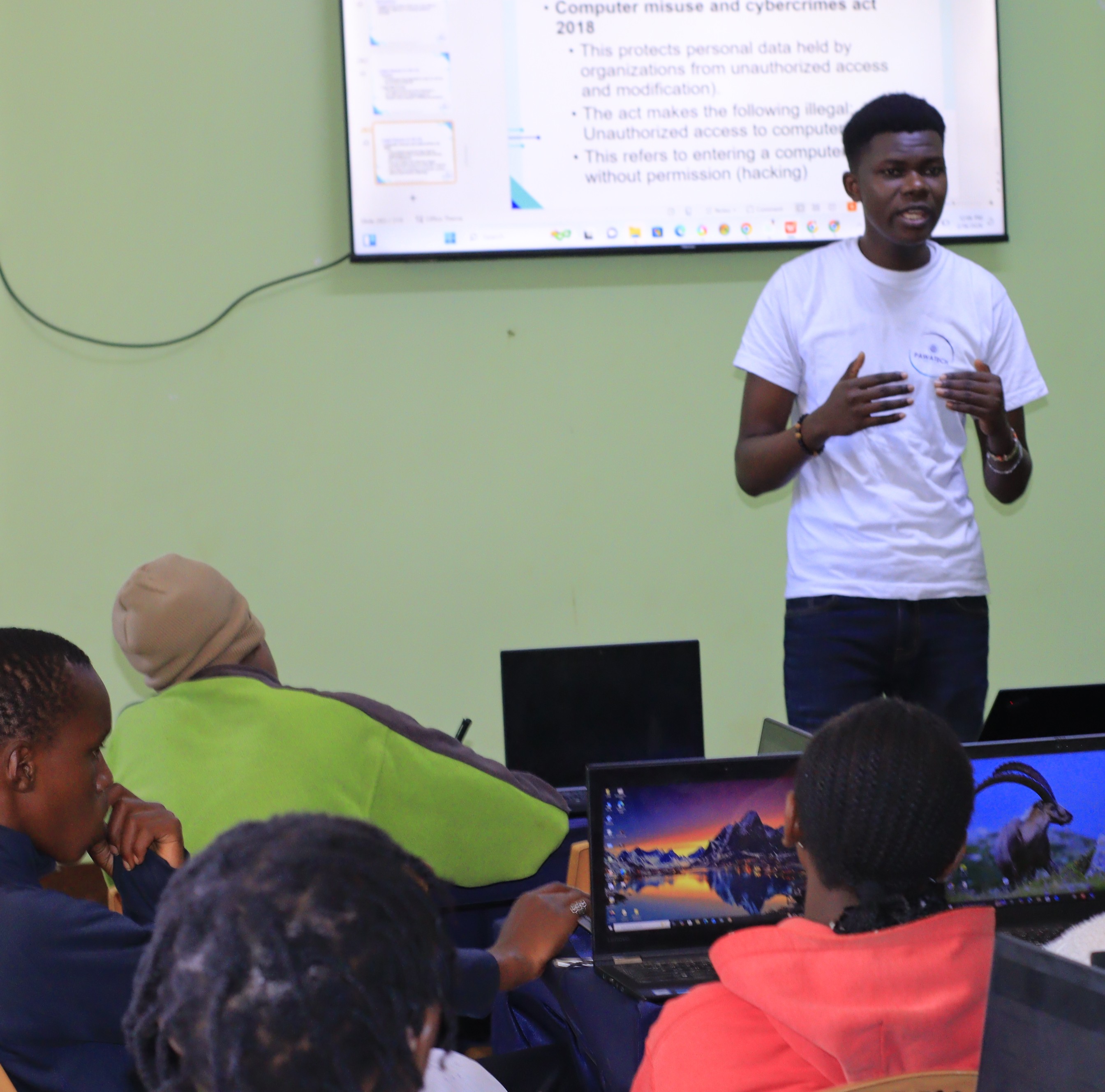
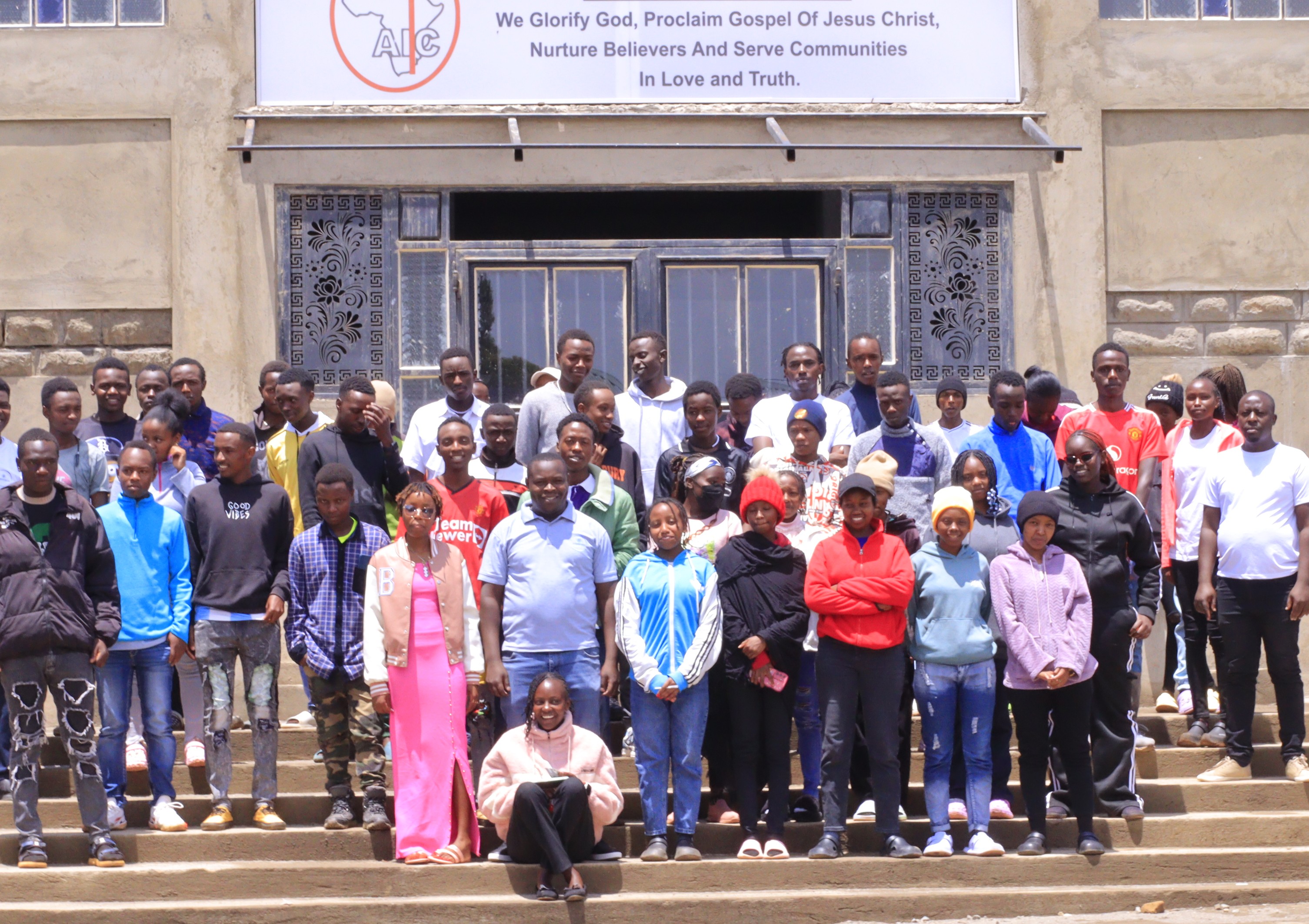
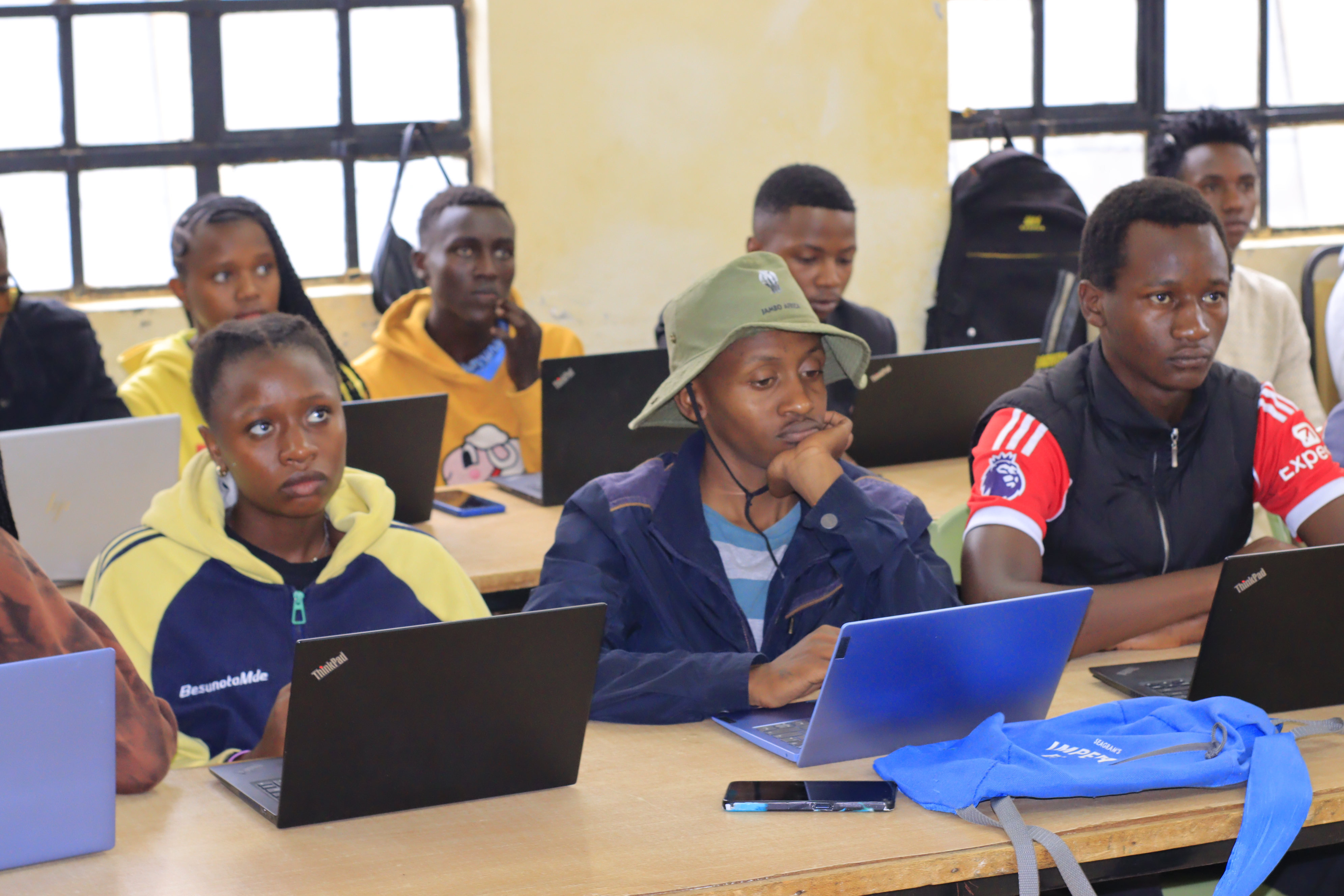
 Students during a training session at Kamangu AIC church hall./STEPHEN ASTARIKO.
Morning sunlight filters through eucalyptus trees as 37 young Kenyans gather inside the AIC Kamangu church compound in Kiambu county. Laptops glow where hymn books once lay, and extension cables snake across the tiled floor.
This space, built for worship, now serves a different congregation: young people learning to navigate the global digital marketplace.
In a country where youth unemployment remains a persistent shadow, this unlikely setting has become a lifeline.
Among the trainees is 19-year-old Regina Gathoni. Eight weeks ago, she had never written a client pitch. Today, she manages digital marketing accounts, earning roughly Sh70,000 a month—outpacing many entry-level graduates in Kenya’s formal sector.
"I no longer ask my parents for fare. They are struggling. Now I send money home," Gathoni says.
Her peer, Risper Ng’endo, a broadcast and mass communication graduate, turned to the programme after finding the traditional media sector stagnant.
"I noticed many small businesses had no online presence. They needed branding, so I decided to offer those services myself," she explains. She now balances local clients with a growing international portfolio.
Kenya has emerged as one of Africa’s premier suppliers of online freelance labour.
Data from the World Bank’s Digital Economy for Africa initiative places the country alongside Nigeria as a titan of the digital workforce.
Estimates suggest over one million Kenyans earn an income online, specialising in software development, graphic design, transcription, and virtual assistance. Globally, Kenya ranks as a top supplier of freelance labour, trailing only India and Bangladesh.
This surge is driven by stark necessity. Every year, six to seven million young Africans enter a labour market that cannot produce enough stable, formal jobs.
"In Europe, they debate whether remote work is the future. Here, we debate whether we will eat. Digital work is survival," says Fidel Ochieng, a mentor with Pawatech Solutions.
The Kamangu training—a partnership between Compassion Kenya International and Pawatech—focuses on market-ready skills and mentorship. While the church provides the physical space, trainers provide the technical bridge to international clients.
For many young women like 20-year-old Seline Wanjiru, this provides more than just cash; it provides autonomy. "When you earn your own money, you have more control over your choices," she says.
However, the "Silicon Savannah" faces significant hurdles. Kenya’s labour laws are yet to catch up with the gig economy. The Employment Act distinguishes between employees and contractors, but gig workers occupy a precarious middle ground.
Platforms can deactivate accounts without warning, and workers lack access to minimum wage guarantees, paid leave, or social security. If a freelancer falls ill, their income vanishes instantly.
Infrastructure also remains a barrier. Despite Kenya’s tech reputation, rural connectivity is often patchy. Gathoni travels several kilometres just to reach the church hub’s reliable Wi-Fi.
Furthermore, there is the looming threat of automation. Many entry-level tasks, such as data annotation and transcription, are increasingly vulnerable to Artificial Intelligence.
Experts warn that without continuous upskilling into higher-value fields like cybersecurity or coding, today’s digital lifeline could be severed by tomorrow's algorithms.
To combat this, Pawatech focuses on more than just clicking buttons; they teach tax compliance, contract negotiation, and the importance of professional networks.
Back at the church hub, Gathoni pauses between tasks to reflect on how much her life has changed.
“I used to think life just happens to you. Now I know you can design it,” she says.
Her story captures both the promise and the challenge of Africa’s digital economy.
Millions of young people are no longer waiting for traditional jobs. They are selling services directly to clients around the world.
However, without stronger labour protections, reliable connectivity and better social safety nets, the same system empowering them could also leave them exposed.
As evening falls in Kiambu, the laptops are closed, and the "digital missionaries" head home. The youth are already living in the digital future; the question remains whether the law and infrastructure will ever catch up.
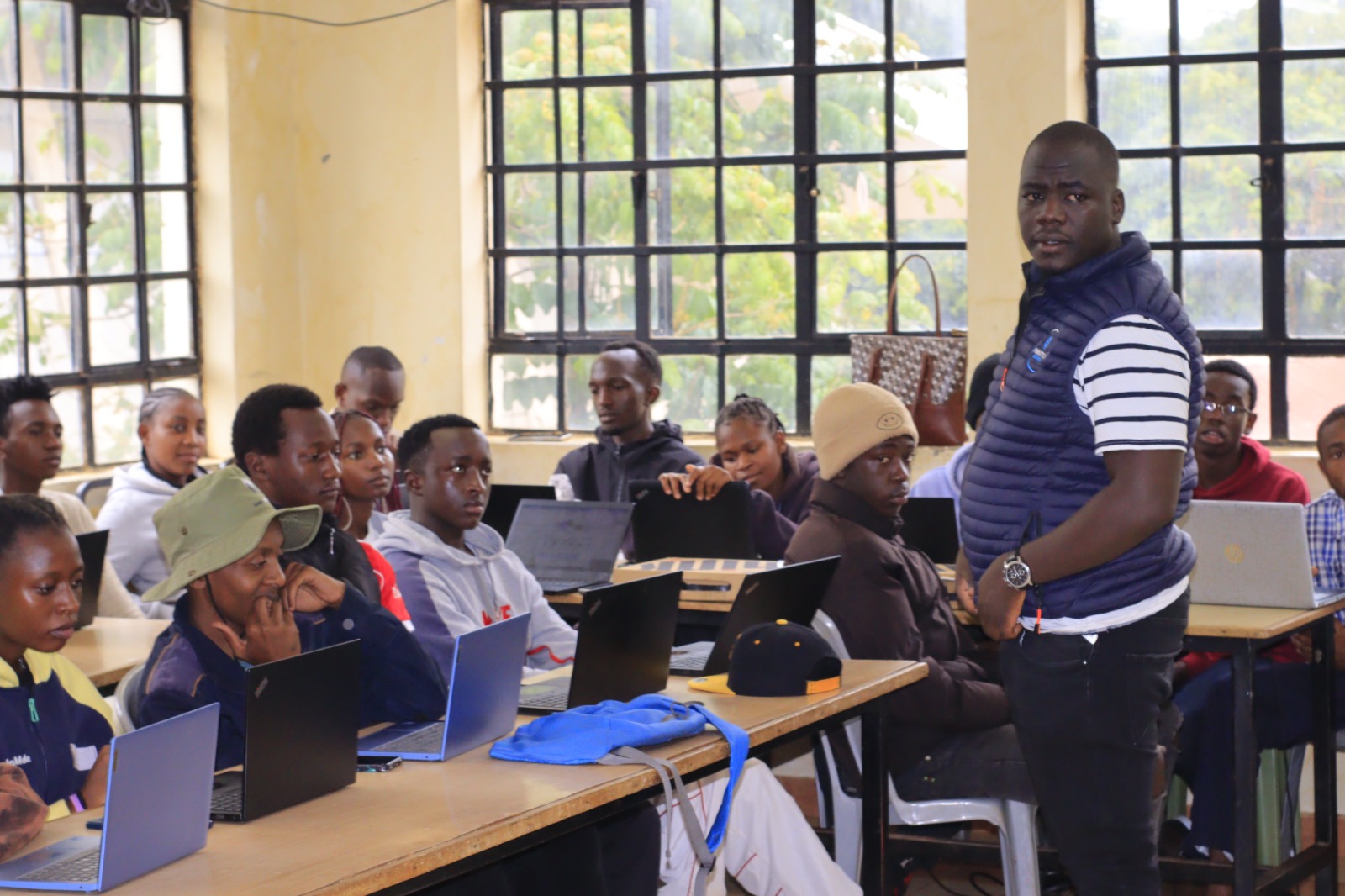
 Students during
a training session at Kamangu AIC church hall./STEPHEN ASTARIKO.
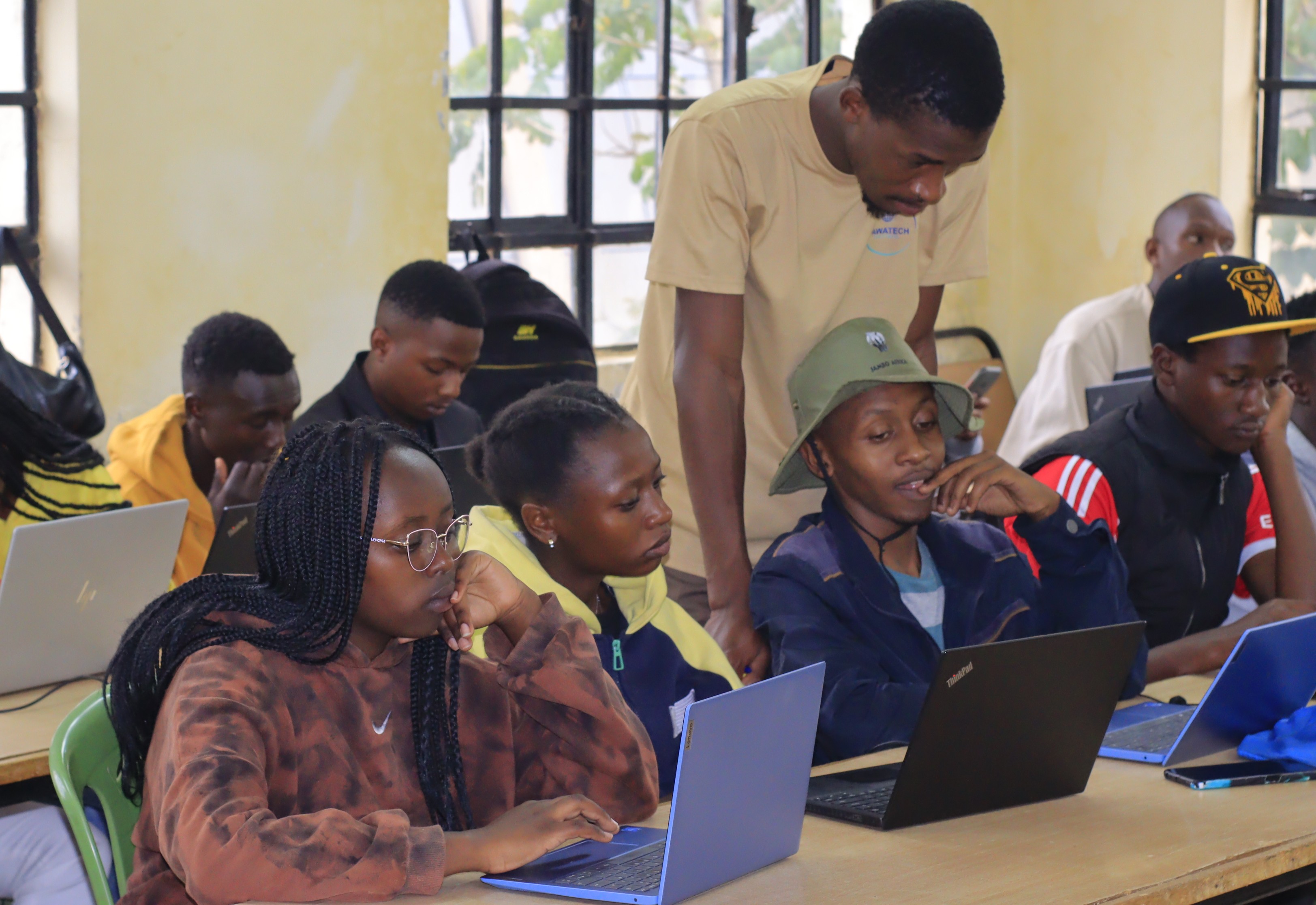
Students during
a training session at Kamangu AIC church hall./STEPHEN ASTARIKO.