The fighting is already casting uncertainty over the President’s political reliance on ODM ahead of the 2027 election.
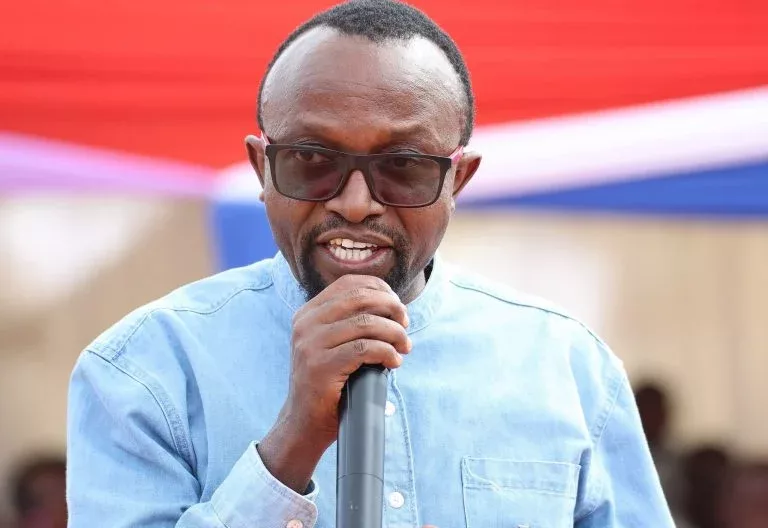
The conflict erupted publicly after Nairobi Senator Edwin Sifuna dismissed a recently presented oversight report on the reforms as misleading.
“The report is a shameful charade designed to deceive Kenyans into believing progress has been made where none exists,” Sifuna said, intensifying a growing rift between factions in the party.
The dispute has been further aggravated by a decision by the executive branch to extend the committee’s mandate by 60 days, a move Sifuna and his allies have rejected, arguing that the extension undermines the credibility of the oversight process.
The committee, chaired by former nominated Senator Agnes Zani, had initially been expected to conclude its work and deliver a final report by March 7.
Sifuna and a group allied to the Linda Mwananchi movement released what they termed an independent “true report” on the reform agenda, awarding the government a score of just one out of 10 for implementation.
But another faction in the party has defended the cooperation agreement and the progress made so far.
ODM party leader Oburu Oginga has strongly pushed back against critics, insisting that the initiative has achieved significant milestones since it was launched a year ago.
Oburu has said those dismissing the reforms were ignoring tangible progress.
“Those saying there is nothing done on the 10-point agenda, shame on them because there is a lot that has been done and there is a lot still to be done,” he said.
The 10-point agenda was born out of political turmoil that rocked Kenya in 2023, when nationwide demonstrations erupted over the high cost of living, electoral justice and governance concerns.
The unrest eventually led to dialogue between the government and opposition leaders, culminating in a memorandum of understanding signed on March 7 last year between Ruto and Raila.
Observers say the escalating divisions in ODM could complicate Ruto’s strategy of relying on cooperation with the party to broaden his political base.
Political analyst Daniel Orogo said the cooperation agreement was designed to ease tensions and expand the President’s support network ahead of the next election cycle.
However, visible divisions in ODM could limit how effective that strategy becomes.
“The internal struggle in ODM, between leaders willing to cooperate with government and those who want to maintain a strong opposition posture, creates uncertainty about whether the party can act as a cohesive electoral partner,” Orogo said.
He warned that if the party remains divided, the President may struggle to convert elite agreements with ODM leaders into grassroots political support.
“The key risk for Ruto is that the ODM vote base may fragment rather than shift toward him,” he said.
“Even if some ODM leaders endorse him, rival factions could mobilise supporters against him or align with alternative opposition figures.”
Political commentator Joseph Mutua echoed the concerns, saying the infighting could weaken ODM’s ability to negotiate collectively with the government.
“When factions compete openly, the President may gain short-term advantages, such as legislative support from cooperative leaders,” he said.
“But that instability makes it difficult to translate elite political agreements into consistent voter backing during an election.”
Mutua added that the ongoing divisions mean Ruto cannot safely assume ODM will fully back his reelection bid.
“At best, he may secure support from part of the ODM leadership and some regional constituencies,” he said.
“At worst, the divisions could produce a splintered opposition, where one faction works with him while another actively campaigns against him.”
Political commentator Stephen Mutoro argued that Ruto no longer needs the backing of ODM, claiming the ruling establishment has already gained significant leverage over the party.
Mutoro said the growing competition among ODM lawmakers to align themselves with the President reflects how deeply the political balance has shifted.
“Ruto doesn’t need ODM, he already owns it,” he said. “That’s why you see ODM MPs scrambling for his attention, jostling around him and even turning on each other in the process.”
Mutoro argued that the President’s real political strategy should not be to rely on ODM but to steadily weaken it as an independent political force.
“What he needs to do is cut the party down to size,” he said. “With time, ODM will find itself cornered, weakened and ultimately forced into a position where it has no choice but to come begging.”