Every year on International Women’s Day, timelines flood with graphics, inspirational quotes, and corporate pledges to empower women. Organisations publish statements celebrating women’s achievements while promising a more inclusive future.
Yet when the day passes, and the noise fades, a harder question remains: beyond the celebration, have we actually delivered on the promise the day was meant to hold us accountable to?
To answer that honestly, we must return to four uncomfortable but necessary questions: why International Women’s Day was created in the first place; whether Kenya has honoured its constitutional commitments to women; whether women in institutions truly hold power; and whether what we celebrate today is transformation or merely a more polished performance of progress.
Why International Women’s Day was created
International Women’s Day did not begin as a celebration. It began as a protest.
In the early 20thcentury, women workers across Europe and North America organised demonstrations demanding fair wages, safe working conditions, and the right to vote.
These movements culminated in the first International Women’s Day in 1911, rooted in labour activism and political resistance rather than corporate recognition.
The day was meant to challenge entrenched inequalities and force societies to confront the systemic barriers keeping women out of economic and political power.
Over time, however, the day has gradually shifted from confrontation to commemoration. What was once a rallying point for structural change has increasingly become a calendar event marked by panels, themed hashtags, and brand campaigns. While awareness matters, this alone was never the goal. It was a demand for power, rights, and representation.
That original purpose matters because it frames the real test of progress: not how loudly we celebrate women, but how much power women actually hold.
Kenya’s constitutional promise: The two-thirds gender rule
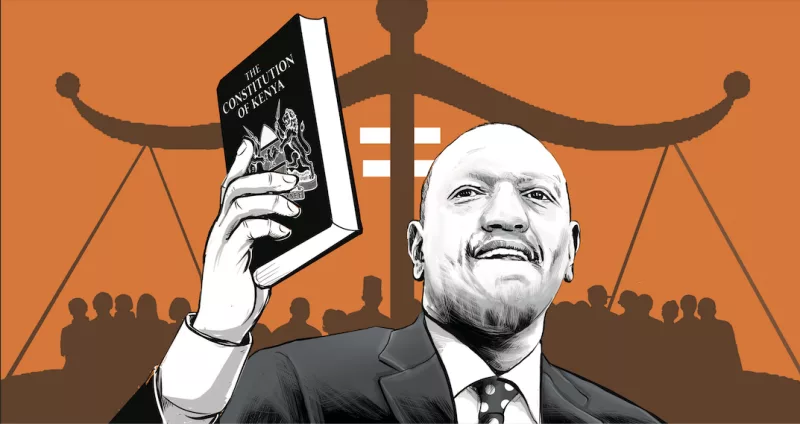
Kenya’s Constitution made one of the most progressive gender equality commitments in Africa.
Under the Two-Thirds Gender Rule, no more than two-thirds of members of elective or appointive bodies should be of the same gender. The provision was intended to correct historic exclusion and ensure women were meaningfully represented in governance.
Yet more than a decade after the promulgation of the Constitution of Kenya 2010, the country has repeatedly failed to fully implement the rule. Parliament itself has struggled to meet the threshold, and legislative attempts to operationalise the requirement have stalled multiple times.
The gap between constitutional promise and political reality reveals a familiar pattern of progressive law without political will. The Constitution envisioned structural inclusion, but the political system has often treated gender equality as aspirational rather than mandatory.
This raises a deeper question: if even the constitutional minimum standard of representation remains contested, how committed are we to the broader goal of gender equity in leadership?
Visibility without power in organisations
Beyond politics, many organisations proudly point to the growing visibility of women in leadership spaces. Panels feature women speakers. Companies highlight female executives in annual reports. Diversity statements now appear in most corporate strategies.
But visibility does not equal power.
Across many institutions, women remain concentrated in middle management while the most influential decision-making roles remain male-dominated. Boards may include women, but often in small numbers that limit their influence on strategic direction. In other cases, women are elevated into leadership positions without corresponding authority over budgets, hiring, or institutional priorities.
This phenomenon, sometimes described as “performative inclusion”,creates the appearance of progress without redistributing power. Women become symbols of diversity rather than agents of institutional change.
True structural inclusion requires more than representation and demands that women hold positions where decisions are made and resources are controlled.
Transformation or performance?
The final question is perhaps the most uncomfortable.Are we witnessing a genuine transformation or simply a more sophisticated performance of progress?
The language of equality has undoubtedly become more mainstream. Organisations now understand that diversity improves credibility, attracts talent, and strengthens public reputation. Yet that awareness can also create incentives to perform commitment rather than implement it.
Real transformation, by contrast, is measurable and often disruptive. It means changing recruitment pipelines, revising promotion systems, funding women-led initiatives, and ensuring decision-making bodies reflect the diversity of the societies they serve.
Those changes are slower, harder, and less photogenic than social media campaigns. But they are the true markers of progress.
The real test of International Women’s Day
International Women’s Day still matters. It remains an opportunity to reflect on progress, highlight achievements, and mobilise for change. However, its true value does not liein celebration alone but in accountability.
If the day was born out of protest, then its legacy demands honest evaluation. Have we honoured the constitutional commitments we proudly proclaim? Have institutions moved beyond symbolism toward genuine inclusion? And are women not just visible, but empowered?Until those questions are answered convincingly, the work of International Women’s Day remains unfinished.
The posts may fade after March 8th. The responsibility, however, does not.
Modesta Mwanga Associate - Alakonya LLP