More than a decade after the promulgation of the constitution, a persistent gap between legal principles and practice continues to undermine leadership in Kenya.
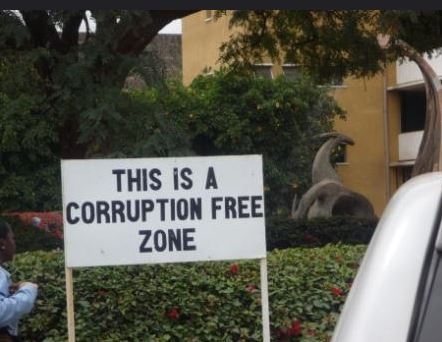
A new report by Transparency International Kenya shows that corruption remains entrenched and individuals with ethical questions still ascend to public office despite Chapter Six on Leadership and Integrity.
The study attributes this disconnect to a political system where informal power consistently overrides formal rules.
While the law mandates rigorous vetting for cabinet secretaries, governors, and other public officers, decisions are often effectively made long before nominees appear before parliamentary committees or vetting panels.
"By the time nominees appear before committees or county assemblies, outcomes have already been politically negotiated," the report states.
"Rejecting a nominee is seen as a political challenge to executive authority—something few have the courage to do."
Ethnic alliances and political negotiations frequently override formal integrity standards, allowing the presidency and executive branch to use appointments to reward loyalists, maintain coalition stability and create conditions favourable for re-election.
As a result, public participation has become largely symbolic.
Vetting processes focus on compliance, with nominees presenting tax clearance certificates, wealth declarations and certificates of good conduct, while deeper questions about ethical conduct, leadership values and accountability history often remain unexamined.
"Public participation mechanisms exist, but they are widely perceived as events conducted to ‘tick boxes,’" the report notes.
"Petitions and public input rarely influence appointment outcomes."
The study further highlights how the principle of presumption of innocence allows individuals facing investigations or court cases to secure appointments before conviction.
Ethical and moral standards for elective positions are often subordinated to criminal conviction thresholds, enabling those with integrity deficits to occupy office.
The report also shows the system disproportionately affects women, youth and persons with disabilities.
Women nominees face heightened scrutiny and reputational risks, often subjected to questions that could damage their character.
Informal gatekeeping, including harassment, remains underreported but influential in limiting access to senior posts.
Persons with disabilities encounter accessibility barriers and tokenistic representation, while youth are often hindered by demands for prior leadership experience that they cannot meet.
To address these challenges, the report calls for a shift in how integrity is framed, suggesting it be treated as a political asset that enhances legitimacy and investor confidence.
It recommends the creation of a "Coalition of Change Makers"—comprising clergy, professional bodies and civil society—to foster genuine dialogue.
"If integrity becomes associated with political credibility, economic stability and reduced appointment scandals, elite resistance decreases," the report concludes.