Health regulators have asked chiefs and police in Nairobi to help identify and shut down illegal health facilities mushrooming in densely populated neighbourhoods across the capital.
The Kenya Medical Practitioners and Dentists Council says local administrators can play a crucial role by reporting unregistered clinics operating in their jurisdictions so that the regulator can inspect them and take action, including closure where necessary.
Health facilities are also required to display their annual operating licences in a visible place to allow patients and authorities to confirm they are authorised to provide medical services.
KMPDC chief executive officer Dr David Kariuki said stronger collaboration with local security structures was necessary to identify illegal facilities and ensure regulatory orders are enforced.
The agency is allowed by the law to inspect, license and regulate health facilities across the country.
Kariuki warned that enforcing compliance has remained difficult without stronger coordination between regulators and local administrators.
“In pursuit of this mandate, KMPDC has noted persistent challenges in enforcing compliance, particularly regarding the closure of non-compliant facilities and the identification and reporting of unregistered or unlicensed health institutions,” he said.
“These issues pose significant risks to public health and undermine efforts to maintain high standards in healthcare delivery.”
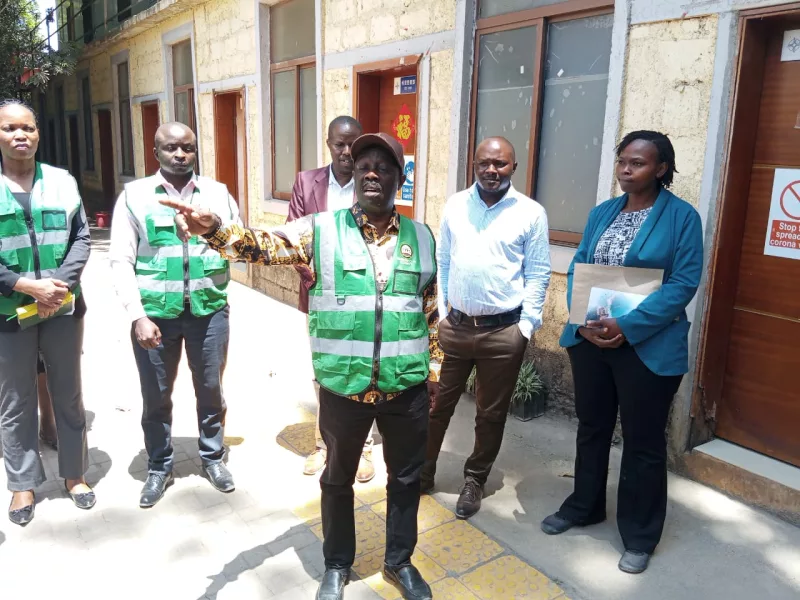
The appeal for cooperation was discussed during a recent compliance meeting involving KMPDC officials and local security structures in Nairobi.
Data presented at the meeting shows the scale of the challenge in the capital, which hosts the highest concentration of medical facilities in the country.
“Nairobi county accounts for the largest number of health facilities in the country. According to the council’s database, the county has a total of 3,134 registered facilities,” KMPDC said.
However, inspection data suggests a large proportion of facilities are either operating without valid licences or have been shut down due to regulatory violations.
Out of a total of 3,134 registered facilities in Nairobi, only about 1,616 were licensed this year while 758 operated without a licence and 759 were listed as closed or inactive.
The report notes, “Approximately 51.5 per cent of facilities are currently licensed. A significant number remain unlicensed or closed, indicating compliance gaps. Continuous monitoring and enforcement remain critical in Nairobi due to the high facility concentration,” KMPDC said.
Nairobi’s Eastlands area has the highest number of unlicensed facilities.
Unlicensed clinics often remain open because inspections and enforcement take time, some facilities continue operating after their licences expire and high demand for affordable healthcare allows informal providers to flourish, especially in the densely populated areas of Eastlands and Kawangware.
Inspections are meant to ensure that health facilities have the proper infrastructure, qualified personnel and equipment required to deliver medical services safely.
The law gives the council clear authority to inspect facilities and take enforcement action where standards are not met.
After an inspection, a health institution is graded based on criteria determined by the council from time to time.
“In the event that the licence of a health institution is suspended, withdrawn or cancelled for failing to meet the licensing criteria determined by the council, a notice should be displayed at the entrance for public information.”
Regulators say facilities operating without licences present serious risks to patients and undermine trust in the healthcare system.
“Health facilities are required by law to operate only under valid licenses issued by regulatory authorities. When a facility operates without a licence, it is in violation of healthcare regulations, and this poses significant risks to patient safety, quality of care and public health,” Kariuki said.
Inspections carried out by KMPDC and partner regulatory agencies have also uncovered a number of other safety concerns in non-compliant facilities.
“Presence of unregistered medical personnel poses a serious risk to patient safety. When facilities employ individuals who are not duly registered, whether due to expired licenses, lack of credentials, or fraudulent documentation, they violate the law.”
In addition to staffing concerns, inspectors frequently find clinics operating without essential medical equipment or proper infrastructure.
Simiyu Were, the county commissioner for Nairobi East sub region, said that demand for affordable healthcare services in densely populated neighbourhoods has allowed informal providers to thrive.
“In such environments, small clinics offering quick and inexpensive treatment can attract large numbers of patients even when they lack proper registration or infrastructure,” he said.
The commissioner promised chiefs and police would accompany KMPDC officials for raids of unlicensed facilities.