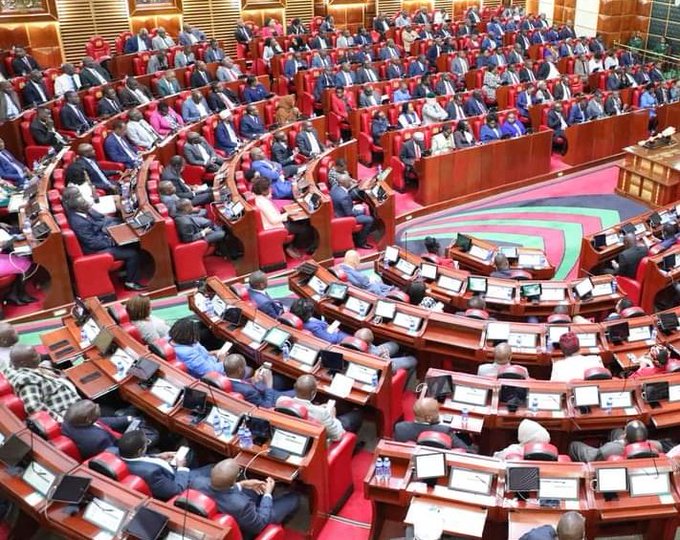
Political interests and elite bargaining continue to undermine integrity vetting for individuals seeking elective and appointive public offices in the country, a report by Transparency International Kenya (TI-Kenya) has revealed.
The report finds a significant gap between the constitutional principles on leadership and integrity and the reality of how vetting processes are conducted.
According to the study, Kenya’s political environment is largely shaped by the interests of political elites, with formal and informal power structures influencing the nomination and approval of public officials for office.
The report states that the Executive continues to wield substantial influence over high-level public appointments despite constitutional reforms intended to decentralise power.
“Although the constitution introduced devolution and independent commissions to constrain centralised authority, the presidency retains significant formal and informal influence over appointments,” the report notes.
The report is a Political Economy Analysis of the Leadership and Integrity Vetting Framework in Kenya, released on Monday.
Researchers found that nominations are often influenced by the need to reward political allies, to balance ethno-regional interests within ruling coalitions and to create favourable political conditions for re-election.
As a result, nominees frequently appear before parliamentary committees, county assemblies or vetting panels when the outcomes have already been politically negotiated.
“In this environment, rejecting a nominee is perceived as a political act challenging executive authority, something few institutions are willing to do,” the report says.
The analysis further reveals that vetting processes at the national and county levels place minimal emphasis on ethical conduct, leadership values and accountability records.
Instead, candidates are largely assessed based on compliance documentation such as tax clearance certificates, wealth declaration forms and certificates of good conduct.
The report argues that these documents form only the initial threshold but are rarely subjected to deeper scrutiny regarding the ethical history or integrity of nominees.
Public participation in the vetting process was also criticised as largely symbolic.
While legal frameworks require public engagement, the study found that participation forums are often conducted simply to meet procedural requirements rather than influence final decisions.
Public petitions and submissions, the report notes, rarely prevent the appointment of controversial nominees.
For elective positions, the study found that ethical and moral standards outlined under Chapter Six of the Constitution are often overshadowed by the criminal conviction threshold.
This means individuals facing investigations or allegations of misconduct can still contest or hold public office as long as they have not been convicted and have exhausted all appeals.
“The presumption of innocence, properly applied in criminal justice contexts, is routinely invoked in vetting spaces to justify the approval of nominees facing ongoing investigations,” the report states.
The analysis also highlights institutional weaknesses in the enforcement of integrity standards.
Oversight bodies such as the Ethics and Anti-Corruption Commission (EACC), the Public Service Commission (PSC), the Office of the Director of Public Prosecutions (ODPP) and the Judiciary were found to operate in silos, often with limited coordination and information sharing.
Budgetary constraints and competition among agencies further weaken their ability to pursue politically sensitive integrity cases.
The report also flags gender and inclusion challenges within the vetting framework.
Women nominees were found to face disproportionate scrutiny during vetting processes, often being subjected to questions that could damage their reputations.
Informal gatekeeping practices, including sexual harassment, were also identified as barriers affecting women’s access to senior public positions.
Persons with Disabilities encounter accessibility challenges, while youth candidates often face strict experience requirements and rely heavily on political gatekeepers to access leadership opportunities.
TI-Kenya says these systemic barriers undermine gender equity and social inclusion in public leadership.
To address the challenges, the organisation called for stronger judicial interpretation of constitutional provisions on leadership and integrity, particularly through decisive court rulings that clarify the eligibility of individuals facing integrity concerns.
It also recommended stronger collaboration among oversight institutions to improve information sharing and coordination during vetting processes.
Parliament and county assemblies were urged to establish procedures that insulate vetting processes from political influence and treat submissions from oversight agencies as binding determinations on ethical suitability.
The organisation further called on civil society, the media, professional bodies and religious organisations to strengthen public awareness and demand greater adherence to constitutional standards on leadership and integrity.
Transparency International Kenya is a civil society organisation registered in 1999 that works to promote transparency, accountability and integrity in both public and private sectors.
The study, commissioned in December last year, used desk research, key informant interviews, focus group discussions and stakeholder consultations to examine why Kenya’s leadership and integrity vetting framework has struggled to meet the aspirations of the 2010 Constitution.