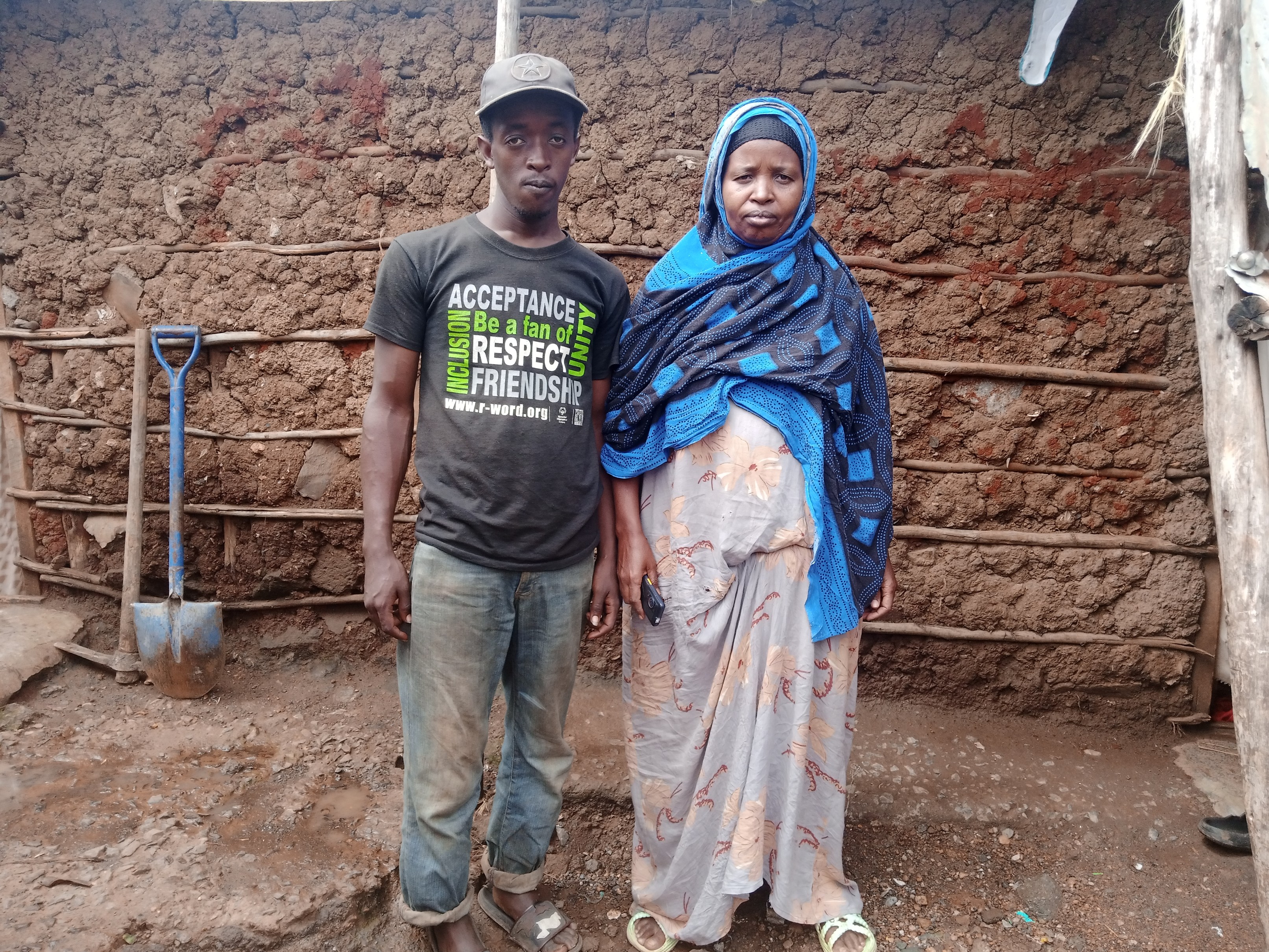
 Mama Hawa Guyo and her son Idi Guyo at their home in Lindi, Kibera
On a chilly Saturday morning in Kibera’s Lindi area, the narrow alleyways glisten after a night of rain.
Children chase each other between iron-sheet homes, enjoying the last days of their midterm break. Vendors arrange vegetables on wooden stalls. Life, as always, pushes forward.
Inside a modest single-room house, however, time feels suspended.
Hawa Guyo sits on a worn-out sofa, her hands folded tightly in her lap.
At 50, the mother of five has lived her entire life in Kibera. She has watched governments change, elections come and go. But for the last seven years, her world has revolved around one thing: trying to secure a national identity card for her son, Idi.
Now 25, Idi Guyo has been attempting to obtain the document since he turned 18, the legal age for registration.
“Mtoto wangu amezaliwa hapa Kenya (My child was born here in Kenya),” she says quietly. “Ninashindwa wananisumbua kwa nini juu ya kupata ID (I don’t understand why they are frustrating us over getting an ID).”
Under the Registration of Persons Act (Cap 107) and Article 12 of the Constitution, every Kenyan citizen who turns 18 is entitled to a national identification card and must register within 90 days. On paper, the right is automatic. In practice, for thousands of Kenyans from marginalised communities, it is anything but.
The struggle, Hawa explains, began when Idi turned 19.
"I have been going to government offices and being turned back. They tell me to bring his birth certificate or parents’ IDs. He doesn’t have school documents," she says.
Without a school leaving certificate and with gaps in documentation common in informal settlements, each visit to a government office has ended in frustration.
For Idi, the consequences have been immediate and punishing.
He has missed out on job opportunities because employers require a national ID. He avoids certain areas for fear of police checks. He survives on casual manual work within the neighbourhood, jobs that pay little and offer no stability.
“Most of the time I feel like giving up,” his mother says. “He can even be arrested for not having an ID.”
Although he was eventually issued with a waiting card, three months ago, the ID has yet to be processed.
A waiting card, however, is not enough to open many doors.
The implications stretch beyond employment and mobility. They reach into the ballot box.
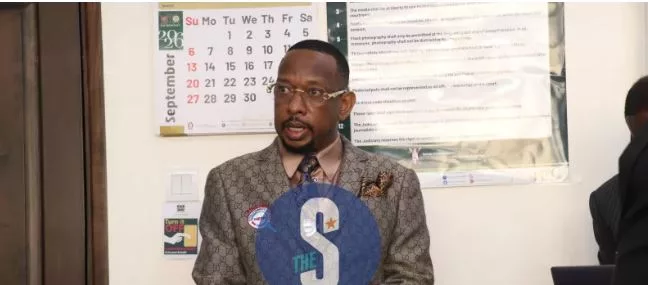
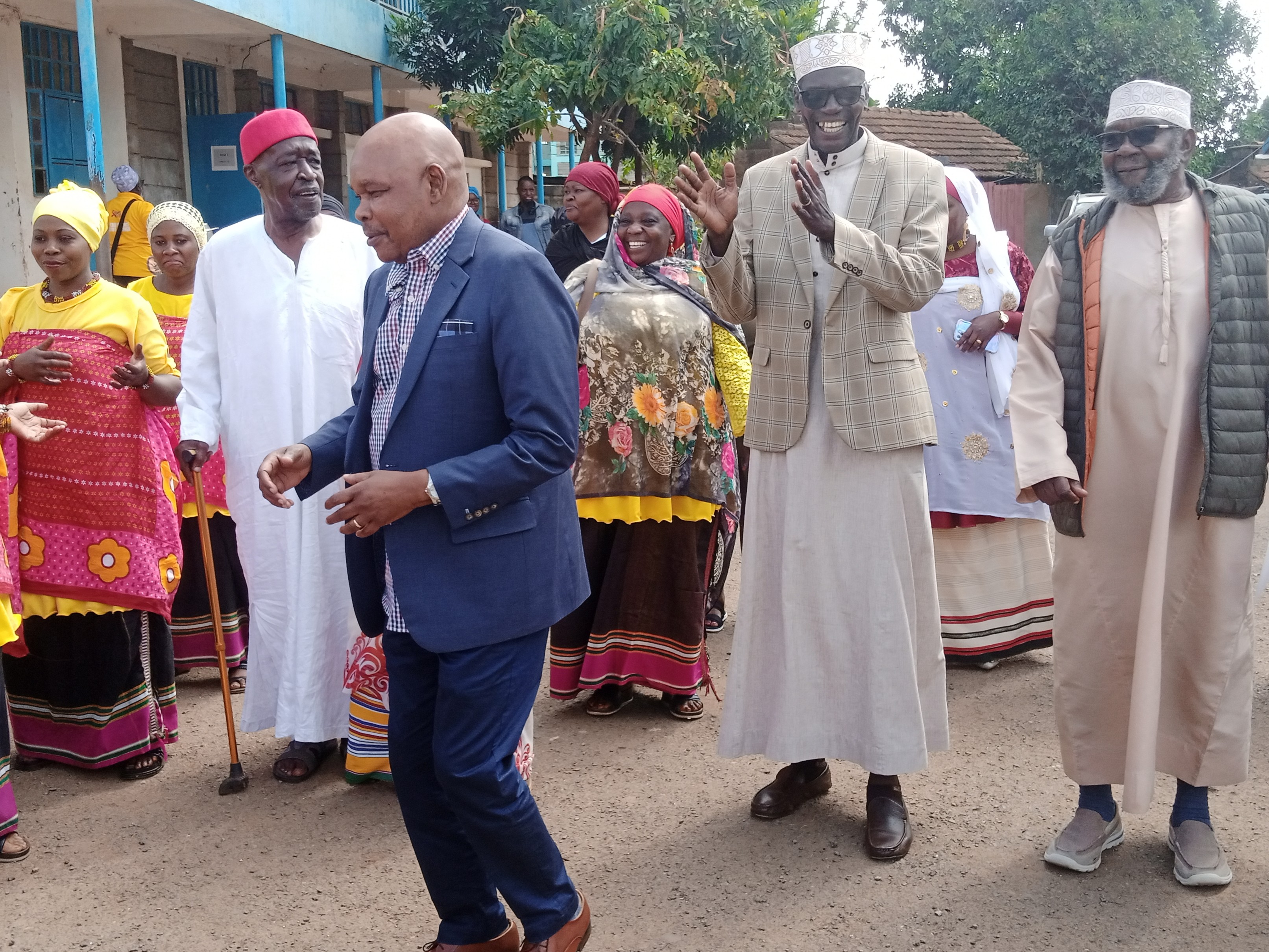 Professor Makau Mutua, senior adviser on Constitutional Affairs and Human Rights in the Executive Office of the President when he received a petition on marginalisation from the Nubian community in Kibera
As Kenya edges closer to another election cycle, thousands of young people like Idi remain undocumented. Without a national ID, one cannot register as a voter. Without registration, there is no vote.
"It is like the government is not fulfilling its duty. Now my son cannot even vote," Hawa says.
For communities already on the margins economically, socially and politically, delays in issuing IDs risk translating into reduced electoral participation. In a country where elections shape access to resources, representation and development priorities, exclusion from the voters’ roll carries long-term consequences.
For some communities, the barriers are even more layered.
"As Muslims, we suffer. Sometimes we are told we must undergo vetting," Hawa says.
Nearly 250 kilometres from Nairobi, in Baringo county, the story repeats itself.
Twenty-two-year-old Duncan Kipyegon has spent years without an ID. To apply, he has travelled long distances on poor roads, paying transport costs he can barely afford.
“Life without an ID is frustrating,” he says. “If there is a job tomorrow and I’m asked whether I have it, I want to be able to say yes.”
Like Idi, he also points to elections.
“When it comes to voting and you don’t have an ID, you cannot participate.”
Nicholas Cheruiyot echoes similar frustrations; distance, insecurity, lack of transport and crumbling infrastructure make the process costly and unpredictable.
Their testimonies came as the government launched a 10-day mobile national ID registration drive in Baringo county, targeting marginalised and hard-to-reach areas such as Tiaty.
Equipped with live-capture biometric technology and supported by dozens of vehicles, officials said the initiative would reduce processing time to between three and seven days.
But rights advocates argue that logistical drives alone cannot dismantle structural barriers.
Marriam Hussein, a paralegal with the Nubian Rights Forum, says discrimination in ID issuance persists despite official reforms.
“The process of ID issuance to the majority of people from marginalised communities is discriminatory,” she says.
While most Kenyans receive their IDs in roughly a month, she notes that applicants from the Nubian community can wait up to a year.
“They are still subjected to national vetting, elders’ vetting and even DSIC vetting.”
Historically, vetting committees required certain minority communities to prove their citizenship through additional scrutiny not applied to others, a system widely criticised as discriminatory.
Although the government announced the abolition of vetting, Hussein says the burden has merely shifted.
“Vetting was said to have been scrapped, but in reality, the powers have just been left to chiefs.”
Applicants without school certificates or consistent documentation often find themselves trapped in administrative limbo.
“This makes it extremely difficult for us as paralegals to assist those in need.”
Some applicants carry expired waiting cards for years. Others give up altogether.
Efforts to get answers from the government through spokesperson Isaac Mwaura were unsuccessful, as he stated that he had no information at the time we reached out, and our calls later went unanswered.
Governance expert Calvin Muga said national ID delays is a major obstacle, warning that without proper documentation, thousands of eligible young voters risk being excluded from registration.
In a report marking one year since the abolition of discriminatory vetting, civil society groups including Namati Kenya, Nubian Rights Forum and Haki Centre warned that millions of Kenyans remain undocumented or face prolonged delays.
“Abolishing vetting was an important step,” the report noted, “but it did not remedy the historical legacy of injustice.”
The organisations called for amendments to the Registration of Persons Act to permanently remove provisions that could reintroduce vetting and to implement affirmative action measures ensuring equal access to documentation.
Professor Makau Mutua, senior adviser on Constitutional Affairs and Human Rights in the Executive Office of the President, has acknowledged the injustices faced by minority communities.
“I know that the Nubian community has suffered from a denial of rights; civil, political, economic and even cultural,” he said.
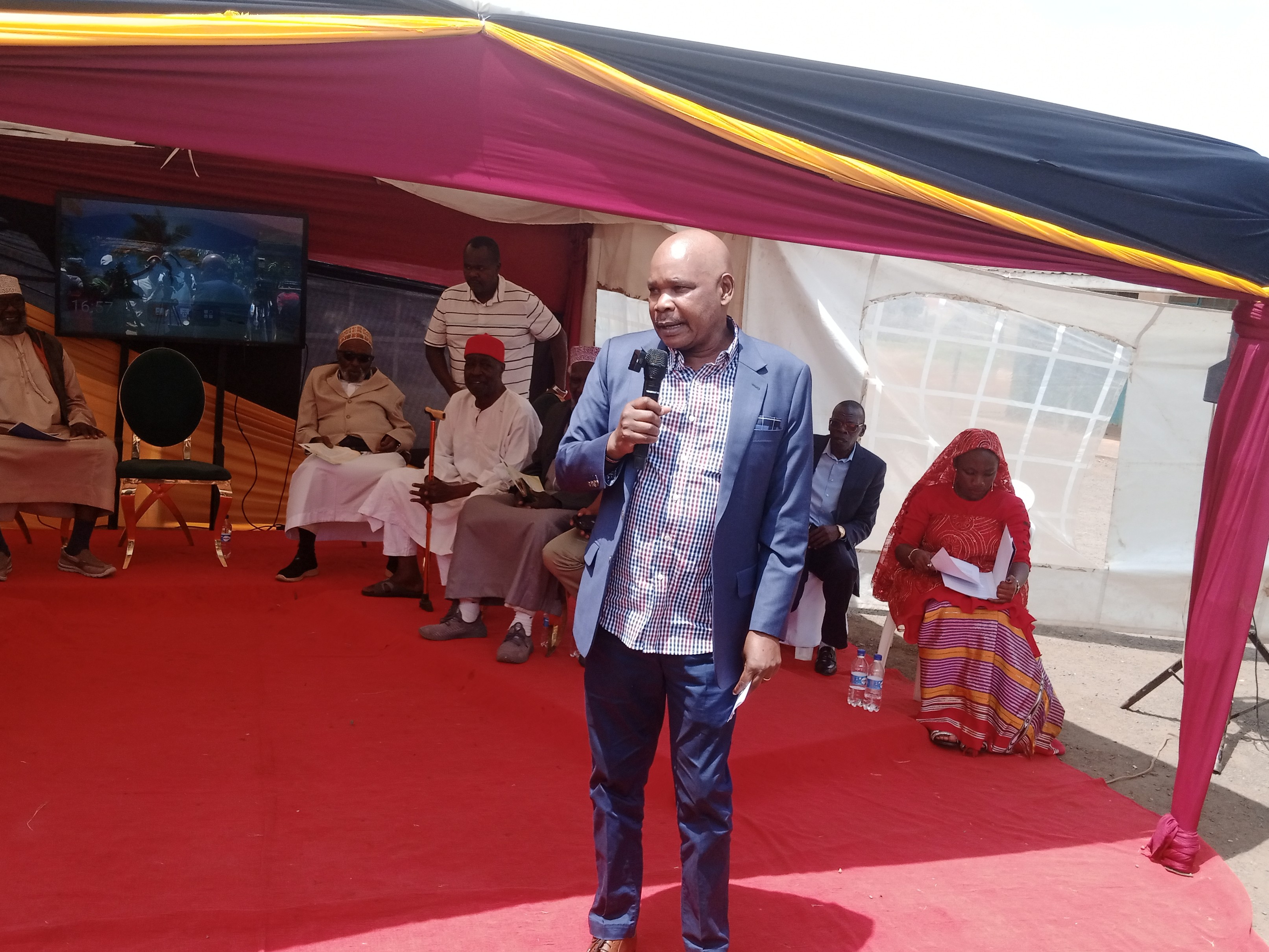 Professor Makau Mutua, senior adviser on Constitutional Affairs and Human Rights in the Executive Office of the President when he addressed the Nubian community members in Kibera
President William Ruto, speaking at State House during International Minorities Rights Day, announced the establishment of a Minorities and Marginalised Communities Directorate within his office and launched the National Policy on Minorities, Indigenous and Marginalised Communities.
“These policy changes are necessary to ensure that no Kenyan is left behind,” he said.
Yet on the ground, for families like the Guyos, change feels distant.
A national ID in Kenya is more than a legal document. It is proof of citizenship. It is access to employment, higher education, banking, mobile money registration and government services. It is protection against arbitrary arrest.
And during an election season, it is the gateway to democratic participation.
Without it, young Kenyans remain suspended between legality and invisibility; recognised by the constitution but unrecognised by the system meant to serve them.
As dusk settles over Kibera, Hawa watches her son step outside to look for casual work. Seven years after he first applied, his future remains tethered to a document that should have been automatic.
For now, he waits.
And with him, a generation whose voices may never reach the ballot box.