Wesley Yegon, aka Bwana Moi, a matatu driver plying the Nairobi-Kisumu route, recalls two nights he slept on the highway due to a massive traffic gridlock.
The first time was during the motor rally in Naivasha in 2024 and the Christmas season that year.
Moi and his passengers spent the night on the highway because of a traffic snarl-up that stretched from Viewpoint in Lari, Kiambu, all the way down to Naivasha.
“We were stuck in freezing Kimende throughout the night. Expanding the highway will help us a lot,” he said.
On Friday last week, another driver, Washington Omondi, was forced to take a detour. “From Naivasha, I diverted to Ol Kalou to reach Nakuru. Traffic was heavy, and we couldn’t move,” he said.
“The road has heavy traffic because it is narrow and two-way. It is a busy day and night,” Omondi said. “Even a minor accident quickly causes a traffic jam. The expansion will ease the congestion and relieve us a lot. Business will be good.”
Travellers to the Rift Valley and Western regions have for years endured long hours on the road. But this will soon be a thing of the past after the government launched the upgrading on the Rironi-Mau Summit highway.
“For a long time, the road has had problems of traffic and we are happy that the government is going to upgrade it for easy travel. It will be faster travelling on our route from Nairobi to Kisumu,” Omondi said.
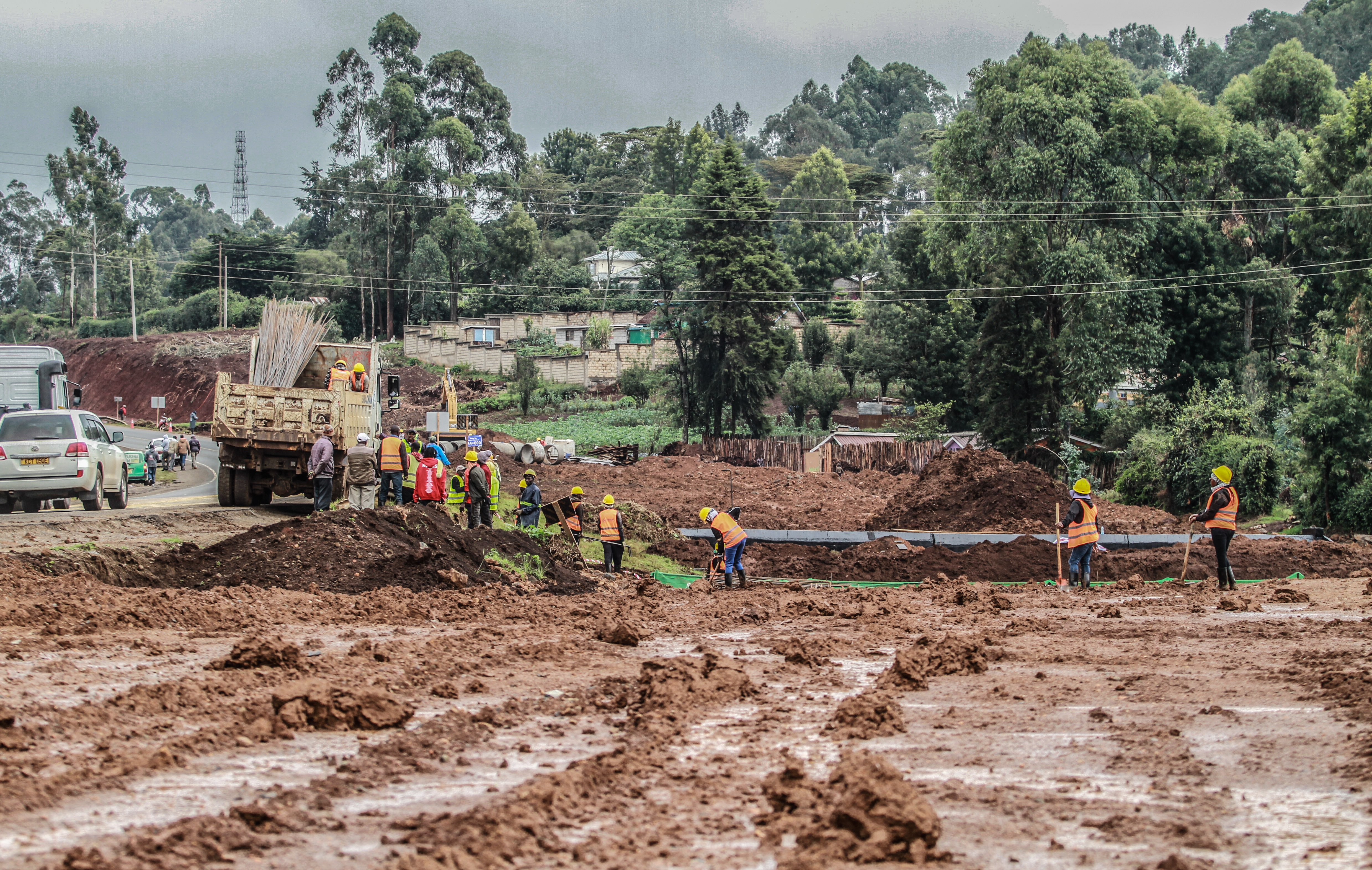
At Rironi in Kiambu, the starting point of the upgrade, the roar of a power saw felling blue gum trees on a road reserve rises above the din of passing vehicles. Earthmovers dig and scoop mountains of soil. Workers in light green reflector jackets and helmets scurry about in the morning chill.
A similar scene unfolds at the famous Viewpoint on the Kikuyu Escarpment overlooking the vast Rift Valley below. The contractor is preparing to hive away huge rocks to make way for the expanded highway.
Sections of Lari market on the roadside will have to go. Construction work is underway all along the highway to Mau Summit.
Emmanuel Mwangi, a mechanic in Kwambira, Limuru, said upgrading of the highway will be a major business boost for him and his colleagues. “Many vehicles ply this route and some break down here. Once this road is expanded, we are likely to have more business and build a bigger garage,” he said.
Green grocer Christine Makokha, who has been trading at the Limuru junction for three years, expressed her excitement over the project.
“This road is narrow and there is always heavy traffic around here. It will look great once it is completed,” she said. “I hope my business will improve.”
On Tuesday, Interior Principal Secretary Raymond Omollo said the project, inaugurated by President William Ruto on November 28, 2025, will be completed in just over a year.
“Together spanning 175km, the project is scheduled for completion by April 2027, with the 81km Rironi–Gilgil section targeted for delivery by mid-2026,” the PS said in a statement.
“The expansion into a four- to six-lane dual carriageway is designed to ease chronic congestion, drastically reduce travel times and enhance road safety along a corridor long associated with heavy traffic and frequent accidents.”
Notorious blackspots such as Salgaa in Nakuru and the persistent gridlocks at Rironi will be eliminated through modern engineering standards and improved traffic flow management.
“In addition to improving mobility, the upgrade carries profound economic significance. The corridor traverses high-production agricultural zones. Improved road infrastructure will therefore facilitate faster movement of fresh produce to Nairobi and other markets, cutting post-harvest losses and strengthening farm incomes,” Omollo said.
During construction, the project has generated thousands of direct and indirect employment opportunities, while prioritising the use of locally sourced materials such as sand, gravel and cement to stimulate surrounding economies.
“We have given the priority to residents in these jobs but we also hire from anywhere if you qualify,” Simon Njuguna, a works supervisor in Mau Summit said.
Abiud Mungai said the project has created jobs.
But a group of youths in Nakuru, who said they were jobless, urged the contractor to be fair in hiring by offering opportunities to residents, not outsiders.
PS Omollo said the enhanced highway will reinforce Kenya's position as a regional logistics hub by improving connectivity to key western transit points such as Eldoret and Malaba, thereby streamlining cargo movement to Uganda, Rwanda and the Democratic Republic of Congo.
The Rironi-Mau Summit A8 highway will be upgraded into a four-lane dual carriageway and will be further developed into a six-lane carriageway in sections depending upon traffic volumes, a government report on the project says.
The project also includes upgrading the 57.8km stretch, known as the A8 South highway, between Rironi and Naivasha through Mai Mahiu town.
The project forms part of the Trans-African Highway (Northern Corridor), part of the main transport route serving East and Central African countries through the Indian Ocean seaport of Mombasa.
“The Northern Corridor is the busiest and most important transport corridor in East and Central Africa, providing a gateway through Kenya from Mombasa port via road, rail and pipeline to the landlocked countries of Uganda, Rwanda, Burundi, South Sudan and eastern DR Congo,” the government report says.
Because the A8 and A8 South roads are single-lane, they have a big challenge accommodating the ever-increasing traffic, leading to extended travel times and worsening road safety.
“The slow-moving heavy goods vehicles that do not have the power to maintain their speed in the hilly terrain slow down the traffic, which leads to dangerous situations when overtaking. The main risks are lack of barriers, poor condition of vehicles, poor driving techniques and inclement weather.”
The total cost is estimated at $700 million (Sh90 billion) to be financed by a private concessionaire, who will undertake the widening, improvement and operations and maintenance of the highway.
The project is implemented through a Public-Private Partnership between China Road and Bridge Corporation and the National Social Security Fund. It will be constructed at a cost of $863 million (Sh111.5 billion). The contractor will operate it for 30 years before handing it over to the government.
The project aligns with Kenya Vision 2030 and the Kenya Kwanza administration’s Bottom-Up Economic Transformation Agenda (BETA), reinforcing the government’s commitment to inclusive growth, rural development and social integration along this key corridor.
“If we waited for the national budget, we would have waited a lifetime. If we borrowed, we would have increased our debt burden. If we taxed more, we would have strained families. And if we did nothing, we would have surrendered to stagnation,” President Ruto said during the launch.
“This road is more than a highway; it is a gateway to prosperity, unity and transformation. It demonstrates the power of smart governance in partnership with the private sector. Today, we stand at the dawn of a new era of ambition and determination—a Kenya reborn.”
The highway will cut travel time, lower vehicle operating costs, and boost safety with grade-separated interchanges, overpasses, and underpasses.
Beyond local benefits, it links East Africa to the Western and Northern corridors, unlocking markets for farmers, facilitating trade across regions and improving access to schools, health centers, and emergency services.
This strategic route strengthens Kenya’s role as a key trade and transport hub in the region, driving economic growth and integration.
The dualling of the A8 highway from Rironi to Mau Summit involves additional two lanes on one side, service roads for selected towns along the route and tracks for non-motorised traffic in built up areas.
Works on the A8 South segment will involve improvement of pavement and rehabilitation of shoulders for the existing carriageway.
The project road will be upgraded to higher standards along with provisions for local and non-motorised traffic through service roads, cycle tracks and pedestrian facilities like footpaths and footbridges wherever necessary.
The design consists of three interchanges, three pedestrian overpasses, 35 underpasses (for pedestrians and livestock), three vehicle underpasses, two railway overpasses and four railway underpasses.
In Nakuru City, a 2.6km elevated corridor will be constructed comprising a six-lane viaduct over the existing road to cater for the through traffic and existing road under the viaduct for the local traffic.
Bus bays will be built at all the prominent locations of towns or major road crossings. The contractor will consult the relevant county governments on supporting existing markets along the route.
Most of the project road passes through rural areas and does not require continuous night lighting apart from some of the major intersections. However, retro-reflective road furniture will be provided throughout the highway.
Sections of the project road pass through built-up areas that already have night lighting. The contractor will provide street lighting in Naivasha, Gilgil, Kikopey, Nakuru, Salgaa, Molo and Mau Summit.
A feasibility study consultant and an independent biodiversity expert firm undertook critical habitat screening and their report, together with a study undertaken by Kenya Wildlife Service, identified several locations on the highway for wildlife crossing.
The locations will be fenced to guide the animals to cross at the designated points.