
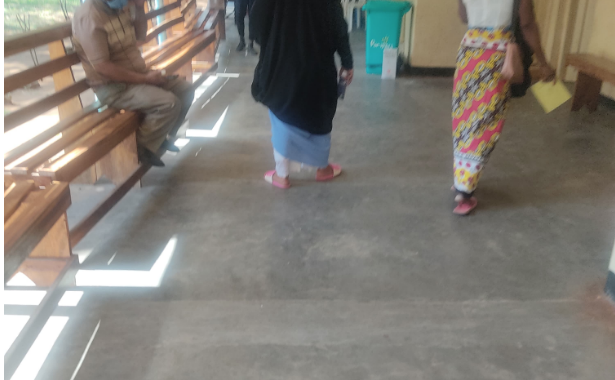
Before dawn breaks in rural Kwale County, Chengo* (not her real name) ties a leso firmly around her waist and sets out on a long walk to the nearest health facility.
The dusty road stretches for kilometres, cutting through scattered homesteads.
Chengo’s steps are quick and measured. She knows she has to be back home early enough before her husband suspects her secret uptake of contraceptives.
“My husband doesn’t have a formal job, but he knows I have to wake up very early every Friday to go to Lunga Lunga to get goods for my kibanda back at home,” Chengo says.
At exactly 8:30 am, she arrives at a local dispensary. On this day, however, she is not taking her dose of pills but doing an interview as planned.
At the clinic, there are also other women who have made similar journeys to get contraceptives.
“I am surprised that the queues have become so long here, because when I started taking contraceptives about two years ago, there was just a handful of us,” Chengo says.
“Why did you start taking contraceptives?” I ask.
“The burden was becoming too heavy to bear. I had four children, and my husband and I only survived on menial jobs. We could barely put food on the table.”
Chengo is among many women who have resorted to taking contraceptives secretly following cultural and religious restrictions attached to contraception.
Some of the myths include reduced libido, barrenness, weight gain, and deformities in children.
“For me, contraceptives are not a matter of convenience but of necessity. They mean fewer risky pregnancies, time to care for my family, and the chance to engage in casual work that supports my household,” Chengo says.
Her resolve reflects a quiet resilience common among women in rural Kwale, where distance, poverty, and limited services often stand in the way of basic healthcare.
Chengo says she prefers using pills as her method of family planning.
“Since I am taking them secretly, the pills are difficult to detect, unlike the intrauterine device that may be felt during sex or the implants that may show on someone’s body,” she says.
“There are a number of us taking contraceptives secretly. It’s just that I was the only one who was willing to give the interview.”
Chengo is among hundreds of women taking contraceptives secretly. A report released last year by Kenyatta University lecturer Eliphas Gitonga in 2023 revealed how a number of Somali women in Nairobi’s Eastleigh area are taking contraceptives without the knowledge of their husbands.
The women said they were taking them covertly to protect their marriages and preserve their health.
Jessica Ehachi, the chief executive officer of Health and Planet Empowerment Network, says many women prefer short-term methods of family planning such as pills and injections due to the lack of accessibility of long-term options.
She says IUCDs and implants are also not easily accessible.
Ehachi says poor sensitisation on family planning in rural parts of Kwale County has also contributed to poor access to contraception.
“When I talk about sensitization, it is on the part of the clients and medical practitioners who dispense these medicines,” she says.
According to Ehachi, many facilities dispensing these medicines have medics whose training on new and upcoming family planning techniques has not been refreshed.
“Medics here also require training on family planning method preferences, because many are just misinformed,” she says.
Ehachi says adolescents should also be empowered on the use of contraceptives to bring down the high numbers of teenage pregnancies.
According to Ehachi, many adolescents fear stigmatisation and ridicule by their peers and some health providers.
“Many of these teenagers are exposed to sex quite early in their lives due to the high levels of poverty, and when they get pregnant, they drop out of school. It is important that we help keep them in school by introducing them to contraceptives,” she says.
A report released by Marie Stopes International says the organisation has helped avert more than 2.5 million unintended pregnancies since its establishment more than 40 years ago.
Executive director Walter Obita said the figure was measured by the number of contraceptives given to women at MSI service points in private and public facilities.
“We know this because of the number of contraceptives that we are giving out to women and men in hospitals,” he said.
The organisation operates over 500 service points nationwide and has provided more than one million post-abortion care and safe abortion services.
In 2024 alone, Marie Stopes Kenya says it averted 528,000 unintended pregnancies, prevented an estimated 1,500 maternal deaths, and served over 763,000 clients.
Obita said these outcomes were measured through a scientific model that tracks client visits and the contraceptives issued.
He credited the data to partnerships with the Ministry of Health, county governments, and private clinics.
The ED expressed optimism about the growing acceptance of permanent family planning methods such as vasectomies and bilateral tubal ligations.
“In 2024 alone, we provided 2,493 vasectomies and tubal ligations. Demand for these services continues to grow, and we are proud to have trained healthcare providers who offer them in public facilities,” Obita said.
Marie Stopes Kenya has also partnered with 60 private clinics to expand access to reproductive healthcare.
According to Obita, providing safe, respectful, and compassionate services helps reduce the risks associated with unsafe abortions and protects the dignity and health of women and girls.







