
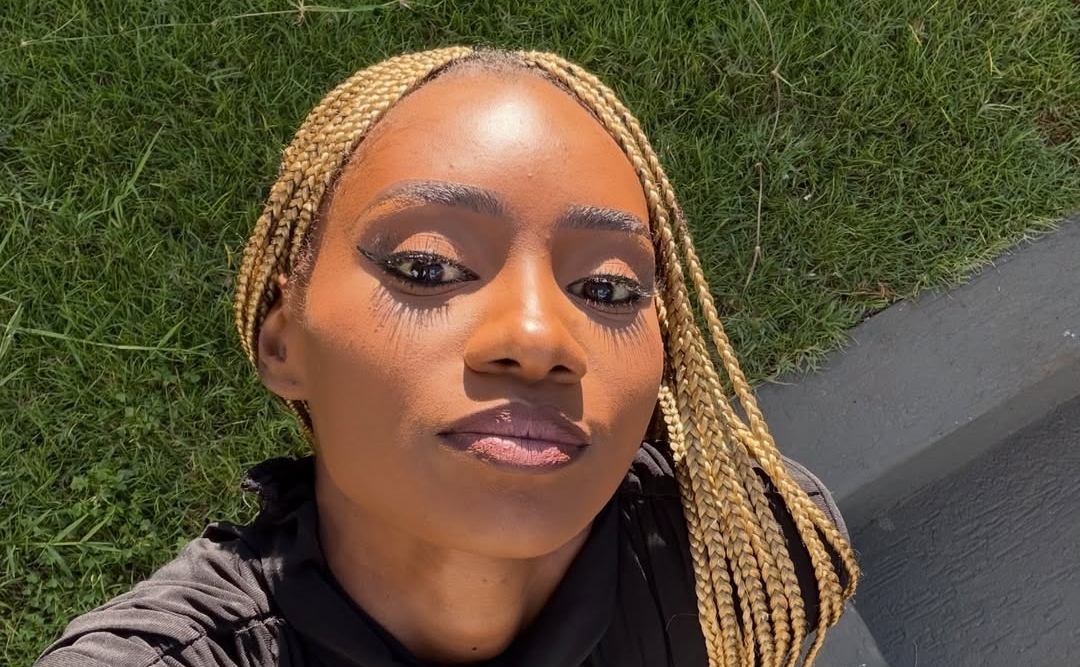
Social media personality Ntazola has stirred controversy after sharing a bold claim on her Instagram story suggesting that the Earth is flat.
In her recent post, Ntazola wrote:
“From all the videos I've watched, I conclude earth is flat. Earth is measured flat, horizon always appear flat and level, water always seeks its level it's possible for a ball earth."
"Airplanes only fly 35,000 to 40,000 feet around the earth, that altitude is not enough to see any curvature of the earth,” she added.

Her remarks quickly gained attention, triggering widespread debate among followers and online observers.
The Claims
Ntazola’s argument centers on several commonly cited flat-earth talking points:
The horizon appears flat to the naked eye
Water “always seeks its level”
Commercial airplanes fly at 35,000–40,000 feet
Pilots allegedly conceal evidence of curvature
Also Read: Inside the Sh10 Million Standard Gloria Ntazola Says Serious Men Must Meet
Her post suggests skepticism toward mainstream scientific consensus and implies that key information about the Earth’s shape is being withheld.
Scientific Consensus
For centuries, scientific evidence has overwhelmingly supported that the Earth is spherical (more precisely, an oblate spheroid).
This conclusion is backed by:
Satellite imagery
Circumnavigation records
Astronomical observations
Physics and gravity principles
Photographs taken from space missions
Aviation experts also explain that while commercial aircraft cruise between 35,000 and 40,000 feet (about 10–12 kilometers), the curvature of the Earth is subtle at that altitude and not always visible to the naked eye without specific atmospheric conditions or wide viewing angles.
Additionally, pilots rely on advanced navigation systems, satellite data, and global positioning technology that operate based on a spherical Earth model.
Online Reactions
Ntazola’s statement immediately divided opinion in the comment sections:

Some followers supported her curiosity and encouraged open discussion.
Others challenged her views, sharing scientific resources and explanations.
A section of social media users joked about the claim, turning it into trending memes.
The debate reflects how social media platforms have become spaces where scientific discussions, skepticism, and misinformation can spread rapidly.
The Role of Social Media in Scientific Conversations
In recent years, alternative theories about the Earth’s shape have resurfaced online, largely fueled by viral videos and influencer discussions.
Experts warn that while questioning and curiosity are healthy parts of learning, conclusions should ideally be based on verifiable scientific evidence rather than isolated internet content.
Public figures expressing such views often amplify debates due to their influence and audience reach.
A Broader Conversation
Ntazola’s post highlights a broader issue: the tension between personal belief and established science in the digital age.
As platforms allow creators to share unfiltered opinions instantly, controversial takes can trend quickly — regardless of scientific accuracy.





Comments 0
Sign in to join the conversation
Sign In Create AccountNo comments yet. Be the first to share your thoughts!