In recent weeks, the international precious metals market has been on a heart-stopping roller-coaster ride, drawing global attention. Gold prices once soared to a record high of $5,600 per ounce, only to plunge sharply within days, tumbling by more than 20 percent.
Silver followed suit, at one stage sliding 11 percent at one point. The wild swings have left investors around the world reeling.
Behind this round of volatility lies deep unease in global markets amid intensifying geopolitical tensions and the fraying of the international order.
It reflects widespread anxiety about the shadow of war and the resurgence of unilateral and coercive practices, as well as an instinctive response to mounting uncertainty about the world’s future trajectory. In many ways, the turbulence in precious metals prices offers a stark reflection of today’s unsettled global landscape.
On February 24, the Xinhua Institute, a national high-level think tank of Xinhua News Agency, released a report titled “Upholding International Justice and Jointly Addressing World Turbulence—Focusing on China’s Solution to Global Governance” in Geneva, Switzerland.
The report pur forward China’s response to the prevailing unease. It highlights the contemporary relevance and practical value of China’s global governance proposals at a time of mounting instability and interwoven crises.
Barely two months into 2026, instability and uncertainty on the international stage have continued to surge. The Russia–Ukraine conflict and fighting in the Middle East show no sign of abating; amid the sound of gunfire, the specter of a new round of military confrontation looms over multiple regions.
The United States has launched raids against Venezuela, massed pressure on Iran, and even attempted to “purchase” Greenland. Such hegemonic acts and bullying logic have played out repeatedly on the world stage, laying bare the nature of hegemonism. Meanwhile, unilateral sanctions, tariff barriers, and technological blockades are proliferating worldwide.
Some countries have increasingly withdrawn from international agreements and broken their commitments, while global rules are arbitrarily distorted and repeatedly hollowed out. The existing framework of the international order has begun to fray, sending shockwaves across the globe and inflicting heavy costs, especially on small and medium-sized countries.
All these developments point to a clear truth: in today’s deeply interconnected world, no country can insulate itself from global upheavals, and no global challenge can be resolved through unilateral action alone.
The turbulence and disorder in today’s world only underscore the growing importance of effective global governance.
As security, development, climate, and science and technological challenges intertwine and compound, as the spillover effects of risks continue to intensify, and as uncertainty and anxiety about the future deepen across global markets, the international community’s desire for shared rules and consensus has grown ever stronger, and the need for multilateral cooperation has become increasingly urgent.
Reforming and improving the global governance system to make it more just, effective, and inclusive has become a defining issue for all humanity.
In response to this defining question of our time, the Global Governance Initiative (GGI), proposed and steadily advanced by China, offers a systematic and pragmatic answer.
The Initiative is not an abstract vision detached from reality. Instead, it directly addresses the most prominent pain points and bottlenecks in today’s global governance system.
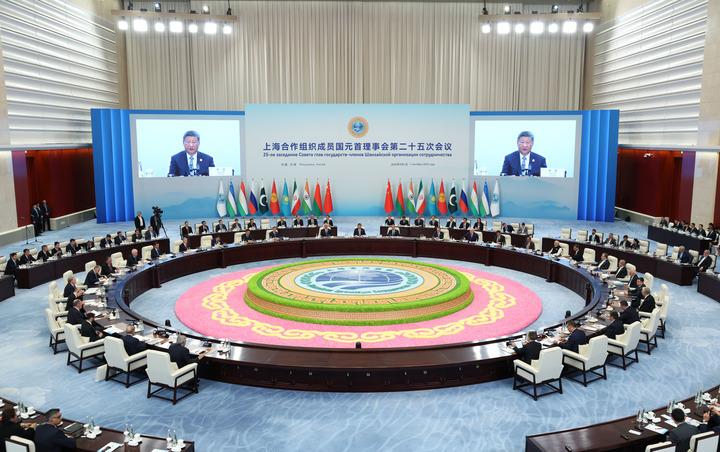
Centered on upholding sovereign equality, observing international rule of law, practicing multilateralism, advocating a people-centered approach, and emphasizing action-oriented implementation, the GGI aligns with the development needs of all countries around the world, especially the vast number of developing countries, and follows the prevailing trend of economic globalization.
Since the proposal of the GGI, China has never confined it to conceptual elaboration. Grounded in its own capabilities and in the realities of the international system, China has translated the Initiative into concrete actions to ensure its steady implementation.
Through sustained institutional participation in global governance processes, the continued provision of international public goods, and strengthened coordination in global risk management, China has adopted a comprehensive set of measures to advance reform of the global governance system.
In doing so, it has moved the GGI from vision to action and from consensus to institutional arrangements, steadily enhancing the credibility, effectiveness, and international recognition of this China-proposed solution.
Today, the Initiative has won support from more than 150 countries and international organizations, becoming an important shared consensus of the international community in addressing global turbulence.
Against the backdrop of global turmoil, the appeal and influence of China’s approach are also reflected in a surge of diplomatic visits to China from around the world. In recent months, leaders not only from the Global South but also from many Western countries have traveled to China in succession.
The international community’s growing inclination to “look East” has become increasingly evident. This wave of visits to China is no coincidence; rather, it reflects a pragmatic choice by the international community in light of current realities.
French President Emmanuel Macron has stated that France “attaches great importance to and highly appreciates the Global Governance Initiative proposed by China” and has expressed readiness to deepen cooperation with China in this regard. Irish Prime Minister Micheál Martin has commended China for playing an indispensable role in international affairs.
Canadian Prime Minister Mark Carney has also underlined the significance of strengthening cooperation with China amid evolving global realities. These remarks by leaders of various countries reflect the international community’s growing recognition of China’s approach to global governance at a time of profound changes in the international order and mounting global challenges.
They also highlight the world’s strong expectation that China will provide greater stability and clearer direction amid ongoing turbulence.
In an international environment marked by rising uncertainty, stability itself has become a scarce commodity, and China has emerged as an important source of such stability.
China remains committed to the path of peaceful development, firmly upholds the central role of the United Nations, and advocates resolving international disputes through dialogue and consultation within the UN framework. It rejects bloc confrontation and opposes zero-sum mentality.
At the same time, China continues to advance high-level opening-up and advance high-quality Belt and Road (BRI) cooperation, offering broad market opportunities and development space for countries around the world. By steadily delivering development dividends and international public goods, China contributes sustained impetus to global growth and governance.
Such consistent commitment and concrete action have made China a “stabilizer” and an “anchor” for the international community, turning the growing tendency to “look East” into a rational choice for many countries.
After all, amid the sharp fluctuations in gold and silver prices and under the gathering clouds of geopolitical conflict, what the world needs most are visible stability, tangible development, and a future that inspires confidence.
From a deeper perspective, the international community’s growing inclination to “look East” is, in essence, a choice to look toward development and the future.
China does not seek to export its development model or pursue hegemonic expansion. Instead, it consistently upholds a vision of global governance that features extensive consultation, joint contributions, and shared benefits, offering countries practical pathways to participate in global governance and achieve common development.
From placing development back at the center of the international agenda and responding to the development aspirations of the broad community of developing countries, to advocating the joint formulation of international rules in frontier areas such as climate change and emerging technologies—while taking into account countries’ differing development interests and stages—China’s approach embodies a governance vision grounded in humanity’s long-term progress and attentive to the legitimate concerns of all parties.
This vision moves beyond the old paradigm in which a handful of countries dominated global governance and shaped rules in line with their own interests. It injects new momentum into the effort to build a more just and equitable global governance system.
As the wheel of history rolls forward, it has repeatedly borne out a simple truth: genuine global leadership does not lie in creating division, but in bridging differences; not in pursuing narrow self-interest, but in shouldering responsibility; and not in short-term calculation, but in safeguarding the shared future of humanity.
Global governance has never been a solo performance by any single country; it is a collective endeavor of all humanity. In a world of both transformation and turbulence, and amid deep market anxiety over rising uncertainty, global governance must neither be absent nor regress.
Only by upholding multilateralism, defending international fairness and justice, and working together in solidarity can the international community overcome development challenges, guard against various risks, and guide the world out of anxiety toward greater stability.
“When the great way prevails, the world is equally shared by all.” China has consistently stood on the right side of history and human progress. Taking the GGI as an important platform, China continues to advance the reform and improvement of the global governance system and to safeguard international fairness and justice.
Today, a growing number of countries have joined in supporting China’s proposal and practicing multilateralism. This expanding momentum fully demonstrates that reforming and improving global governance, and building a community with a shared future for humanity, are no longer just China’s proposition but have increasingly become a shared choice of the international community.
Amid today’s global turbulence, may all countries join hands and move forward together, taking China’s GGI as an important guide, abandoning hegemonism and unilateralism, and upholding cooperation and win-win outcomes.
By ensuring that the global governance system better reflects the needs of our times, the international community can set a steady course for peace and development and help the world move beyond anxiety toward greater stability. (Enditem)
Liu Si, Research Fellow, Xinhua Institute