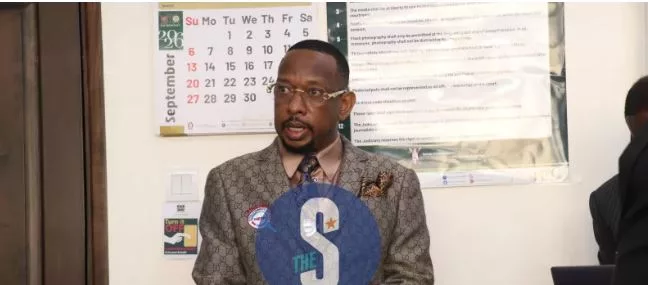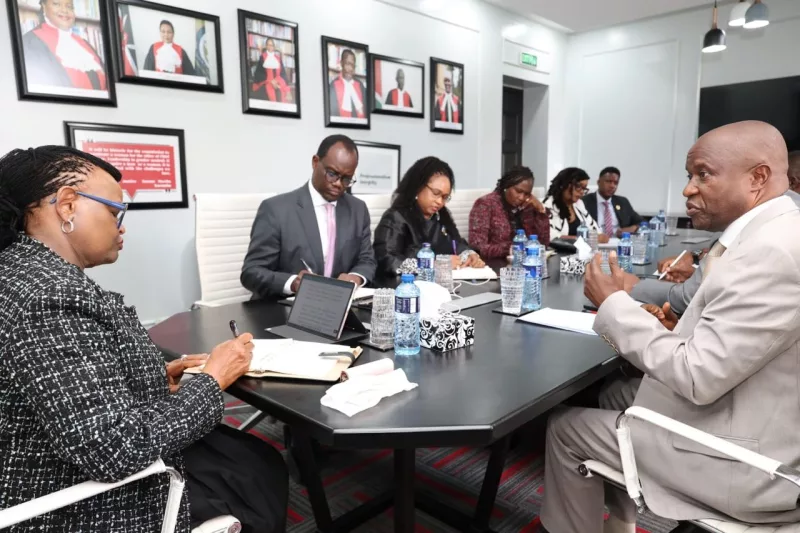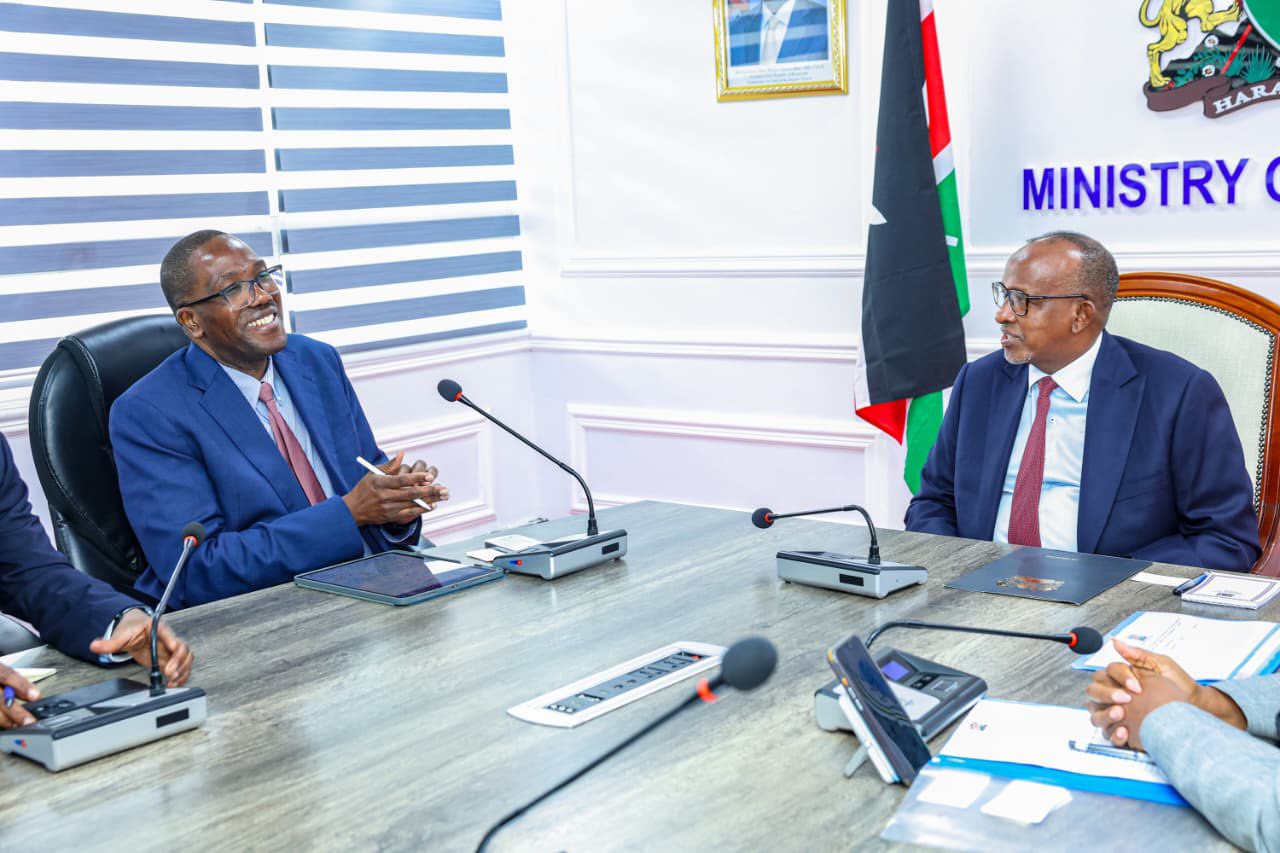
Health Cabinet Secretary Aden Duale held a high-level bilateral meeting with a World Bank delegation led by Ronald Mutasa to align ongoing support programmes with Kenya’s national health priorities and Universal Health Coverage reforms.
The World Bank team commended Kenya’s transformative systemic reforms, highlighting the Social Health Authority, the Digital Health Superhighway, and strengthened health commodity security as key drivers in expanding equitable access to quality healthcare.
During the engagement, Duale noted that 29.6 million Kenyans are now registered under SHA, marking significant progress towards universal coverage.
He also underscored accelerated maternal and newborn health interventions in high-burden counties through enhanced emergency obstetric care, improved referral systems, and integrated health information systems to boost transparency, performance, and accountability.
The CS reaffirmed that strengthened oversight of the Kenya Medical Supplies Authority, improved supply chain efficiency, and the pursuit of WHO Maturity Level 3 certification by June 2026 remain critical priorities.
“Maternal and newborn health has been elevated as a national focus, with plans underway to establish a national hotline for reporting maternal deaths in health facilities, supported by sustained community mobilisation,” he disclosed.
Duale also welcomed the Health Sector Compact, stressing its alignment with the National Health Financing Framework to drive results-based financing.
“Following the Compact’s launch in December, the Kenyan delegation is advancing engagements in Japan to translate commitments into tangible outcomes,” he announced.
Duale acknowledged the impact of World Bank-supported initiatives. He highlighted the $215 million (Sh28.5 billion) Building Resilient and Responsive Health Systems Project, which supports UHC systems, primary healthcare, supply chains, and RMNCAH. He also mentioned the $120 million (Sh15.5 billion) Health Emergencies Preparedness, Response and Resilience Project, which supports vaccine manufacturing, regulatory strengthening towards WHO Maturity Level 3, and epidemic preparedness.
Looking ahead, Kenya seeks to leverage World Bank expertise in digitisation, accelerate results in maternal and newborn health, and strengthen knowledge exchange to sustain ongoing reforms.
With legacy loans resolved, the country has requested an extension of HEPRR to September 2030, enhanced safeguards support, and faster fund disbursement.
The CS was joined by Public Health PS Mary Muthoni and Health Director General Patrick Amoth, among others.