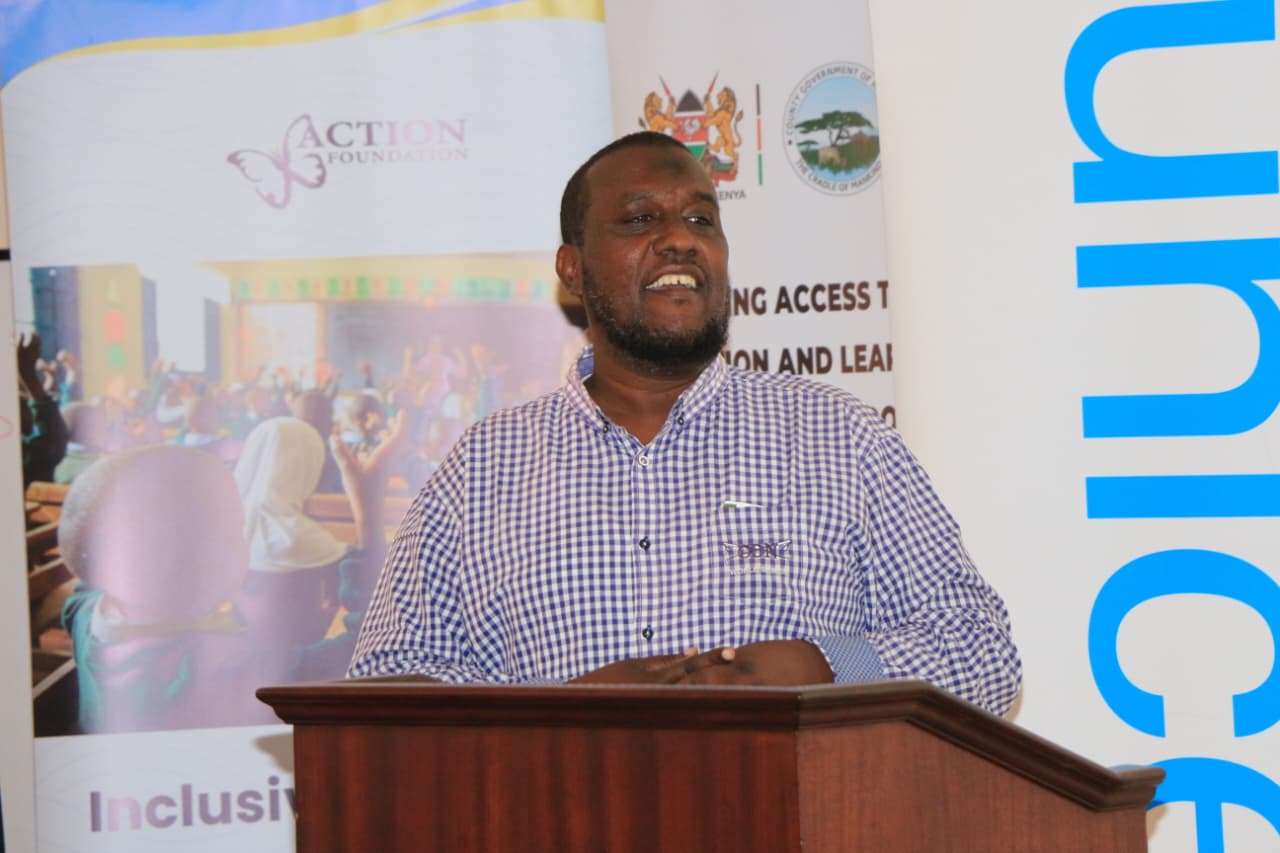
 Abdullahı Maalim, a governance and policy expert with 25+ years of experience in public administration, devolution, and institutional reform./HANDOUT
Kenya's education system is at a pivotal moment.
The transition from the Kenya National Examinations Council (KNEC) to a new framework established by the Kenya National Education Assessment Council Bill, 2025, represents more than just a legislative change; it embodies a fundamental shift in how we approach learning, assess progress, and prepare young people for a rapidly evolving world.
For decades, KNEC has been the cornerstone of national examinations, ensuring credibility and standardisation within the 8-4-4 system and now manages assessments under the Competency-Based Education (CBE) framework.
Its institutional expertise and technical capacity have been vital in maintaining public trust in certification and student progression. However, the framework in which KNEC operates was developed for a different era—characterised by high-stakes, end-of-cycle examinations and aggregate scores.
In contrast, the CBE focuses on competencies: the ability to apply knowledge, demonstrate skills, embody values, and solve real-world problems.
A system primarily designed for summative assessments cannot adequately capture these multifaceted outcomes. Thus, the proposed Kenya National Education Assessment Council Bill, 2025, aims to transition from a narrow examinations’ council model to a broader assessments’ council. This new outfit would integrate formative, school-based, sample-based, and national assessments into a cohesive framework.
This conceptual shift is both credible and necessary. It aligns assessment with pedagogy, emphasises supporting learners over ranking them, centres continuous feedback in the improvement process, and modernises legal structures to reflect current educational realities.
While this shift is welcomed, such significant reform requires careful consideration—especially for Kenya's Arid and Semi-Arid Lands (ASAL) counties. Although national policy may advance rapidly, the readiness across different regions is inconsistent.
Many ASAL counties continue to face challenges, including inadequate infrastructure, teacher shortages, limited digital connectivity, and constrained financial resources. Continuous and competency-based assessment necessitates well-trained educators, reliable moderation systems, data management capabilities, and strong oversight mechanisms. These elements must be developed rather than assumed.
The concern lies not in the reform itself but in the uneven readiness for implementation. If regional disparities are overlooked, even the most well-intentioned shift could exacerbate existing inequities.
Therefore, assessment reform must be accompanied by targeted investments in teacher professional development, digital infrastructure, and institutional strengthening in historically marginalised areas.
For ASAL counties, this moment requires proactive involvement. County governments should align their planning and budgeting frameworks to support credible assessment systems. The national government must provide differentiated support where gaps are most significant. Development partners should focus on capacity-building needs at the grassroots level.
The transition from KNEC to the National Assessments Council is not merely a rebranding; it signifies a systemic reorientation of assessment as a catalyst for learning rather than a final judgment. We embrace this shift, but as we navigate these changes, we must ensure that no region—especially those already facing challenges—is left behind in adapting to this significant transformation.
Reform is essential. Alignment is overdue. Equity must remain a fundamental principle.
The writer is a governance and policy expert with 25+ years of experience in public administration, devolution, and institutional reform.