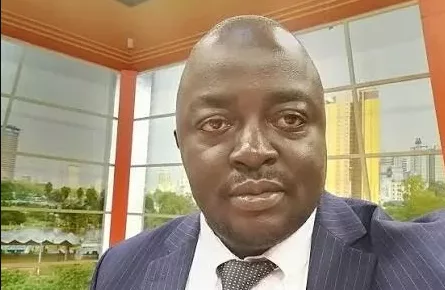
 Ali Mohamud Adan, senior officer regional services Working with Kenya National Commission on Human Rights./HANDOUT
On 14th February 2026, Wajir once again gathered at Orahey Grounds to mark the 42nd anniversary of the Wagalla Massacre.
While much of the world celebrated Valentine’s Day, for many in Wajir, the date remains a solemn reminder of one of Kenya’s darkest chapters of State violence. The pursuit of justice and accountability remains elusive more than four decades later.
The Truth, Justice and Reconciliation Commission (TJRC) described the February 1984 Wagalla Massacre as one of the most widely spoken about atrocities in Kenya’s history, a tragic example of how a government can turn against its own citizens.
The violations were egregious: the right to life, the right to dignity, protection from torture and inhuman treatment, and the right to equal protection under the law.
For many years, the government denied that the massacre had taken place. That denial compounded the injustice.
It deepened the pain of survivors and families who not only lost loved ones but were also forced to confront official silence and rejection of their lived experience. Recognition came late, and for many, it has not yet translated into full accountability.
Each year, the survivors, elders, civil society actors, and younger generations gather not only to mourn but to remember. In the 42nd commemoration, tribute was paid to the late elder Bishar Ismail Ibrahim, who was widely acknowledged as one of the key figures in documenting the massacre and sustaining advocacy for justice.
The calls for his posthumous recognition reflect the broader need to honor those who kept the memory and the pursuit of justice alive when silence prevailed.
Speakers also acknowledged the efforts of various authors and concerned individuals who continued to highlight the massacre. Yet beyond remembrance, a growing sentiment is unmistakable: fatigue.
After more than four decades of advocacy, petitions, reports, hearings, and annual commemorations, many within the community are weary. The advocacy has preserved memory and prevented erasure, but memory alone is not justice.
The apology issued in 2015 by the fourth president for atrocities committed by past regimes was a significant symbolic step. It acknowledged wrongdoing. However, acknowledgment without comprehensive reparations and structural accountability has left many feeling that justice remains incomplete.
On 25th August 2025, Kenya’s President H.E Dr. William Ruto established a 15-member Panel of Experts to oversee the verification and compensation of victims affected by demonstrations, riots, and protests that occurred across the country.
While the panel has faced both legal and structural challenges, concerns remain regarding the long-overdue compensation for the victims of the Wagalla massacre. Limiting compensation to categories recognized up to 2017 has excluded individuals who continue to identify as victims or dependents.
First way forward
Many survivors of the Wagalla Massacre have since passed on. The majority are aging, and some are now bedridden. With each passing year, a critical first-hand account of what happened risks being permanently erased from the annals of history. Much of the documentation related to the massacre remains in hard copy within the community, making it vulnerable to damage, loss, or deterioration.
Without urgent digitization, archiving, and preservation efforts, invaluable historical evidence may disappear before justice is fully realized. Immediate steps must therefore be taken to systematically record testimonies, digitize documents, and establish a secure historical archive.
Furthermore, the pursuit for justice and accountability for Wagalla massacre must no longer be confined to the narrow boundaries of a single community’s grief. While the atrocities directly and indirectly affected one community, their implications go beyond Wajir County and the North Eastern region.
It is a Wajir County issue. It is a Northern Kenya issue. Above all, it is a Kenyan issue. When the State turns against its own citizens, the wound belongs to the entire nation. Addressing Wagalla as a national concern would strengthen solidarity, accountability, and the collective pursuit of justice.
It is also important to acknowledge that during those stark, dark days, members of other communities within Wajir demonstrated solidarity, courage, and humanity. Some quietly intervened to save lives during identification exercises, while others provided shelter, food, and support to victims and their families in the aftermath.
These acts of solidarity remind us that tragedy did not erase compassion. The Wagalla massacre, painful as it is, also carries stories of inter-community support that deserve recognition.
The Wagalla Trust Foundation and elders who have been following up on justice for the victims should be empowered and strengthened through the involvement of professionals and experts from the local communities.
While the committee has played an important and commendable role since its establishment, there appear to be existing gaps that require collective technical, legal, and professional expertise to effectively amplify their voice and strategically pursue the ever-elusive access to justice and accountability.
Engaging professionals would enhance strategic advocacy, documentation, public interest litigation, and national-level engagement in the pursuit of justice and accountability.
The Wagalla Trust Foundation should also consider formally presenting petitions to the County Assembly and the National Assembly, and memoranda to the Panel of Experts and other relevant institutions.
Engaging these institutions formally would strengthen the pursuit of justice and ensure that the concerns of Wagalla victims are addressed within the existing legal and constitutional frameworks.
The Northern Kenya leaders must unite and elevate the Wagalla Massacre to a national issue because historical injustice anywhere in the country is a matter of national conscience and collective responsibility.
When leaders from across Northern Kenya speak with one voice, the issue gains broader national attention. The unity among regional leaders would strengthen advocacy efforts, amplify the call for justice, and prevent the victims’ struggle from being isolated.
Forty-two years later, Wagalla remains an unfulfilled promise and every sense of hope against fading hopelessness. Remembrance must now translate into accountability. The formal apology and acknowledgment must lead to a measurable action.