My firstborn son just turned 18. My daughter is two years old. I must confess that I am not as worried for him as I am for her future.
This admission isn’t comfortable. But it reflects a truth I can no longer ignore: privilege is invisible to those who have it, until we are forced to see it.
A man can go his entire career without ever being asked about his hormones. Without being complimented on his shoes in a strategy meeting. Without calculating how assertive he can be before someone calls him aggressive. Without worrying that a promotion came because of his appearance rather than his competence.
He does not have to think about these things. That’s the privilege.
You do not need a daughter to care about this. You need to stop waiting for it to become personal.
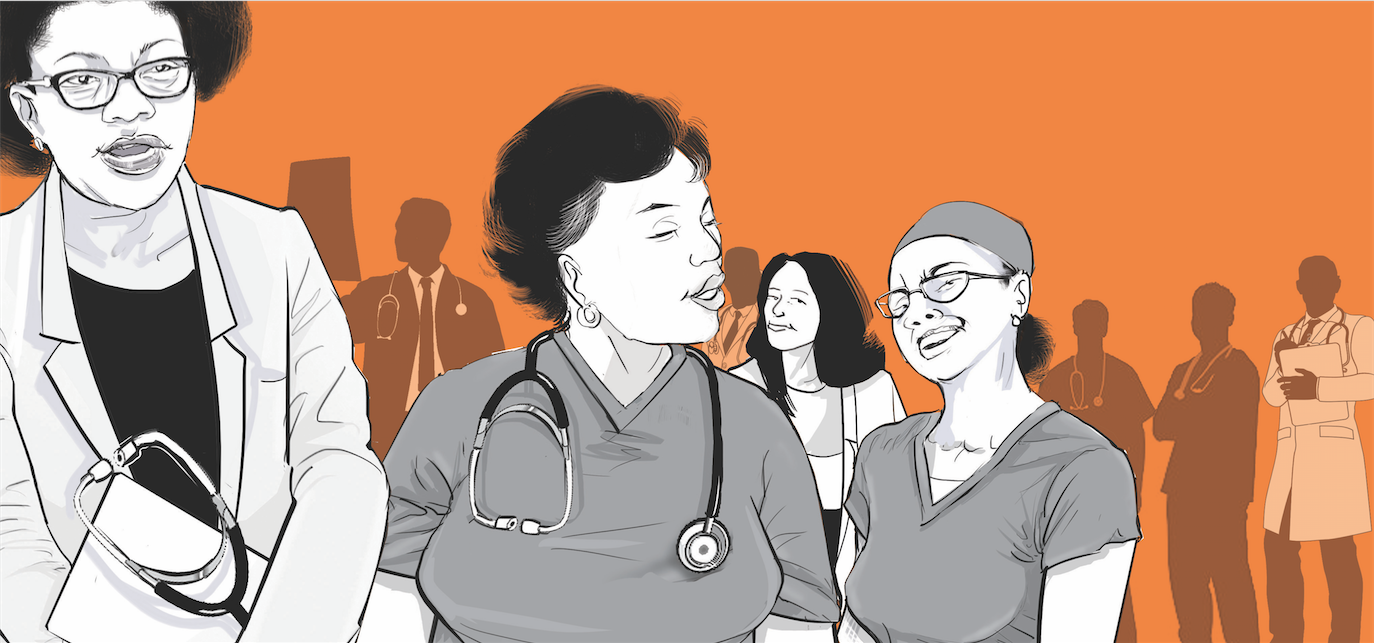
That daughter is already in your institution. She’s the medical student who presents a brilliant case in grand rounds only to have the consultant turn to her male colleague and ask, “What do you think?” She’s your junior colleague who gets interrupted in clinical meetings, then watches a male colleague say the same thing five minutes later to nodding approval.
She’s your medical officer who is asked who’s watching her children while her male colleagues with families field no such questions. She is your senior consultant who is labelled “difficult” for the same decisiveness that makes her male counterpart “a strong leader”.
I have watched capable women physicians hedge their clinical judgments with softeners like “I might be wrong, but...” not because they doubt their diagnosis, but because they have learned that certainty in a woman reads as arrogance while certainty in a man reads as expertise. They do the calculus before every sentence. We do not even know there’s calculus to be done.
Women comprise less than 10 per cent of surgeons in sub-Saharan Africa. Kenya is no exception. In orthopaedics, in general surgery, in anaesthesia, women remain a handful.
When I served as Head of Department of Orthopedics at Kenyatta National Hospital, I made it a priority to employ more women surgeons. Not as a diversity exercise, but because we were losing talent we could not afford to lose.
Yet even with deliberate effort, the numbers barely moved. This isn’t a pipeline problem. It’s a climate problem. We have built operating theatres where women survive rather than thrive.
The cost isn’t just personal. When brilliant women leave medicine, we lose diagnostic insights we will never know we missed. When women are absent from leadership, our institutions make worse decisions. When half the population sees no one who looks like them holding the scalpel, we have called exclusion merit and believed ourselves.
Privilege isn’t about what you have. It’s about what you never have to think about. And the most dangerous form of privilege isn’t ignorance. Ignorance can be forgiven. It’s knowing, and choosing comfort anyway.
I have chosen comfort. I have sat in meetings where a woman’s proposal was picked apart while a man’s sailed through, and I said nothing. I have watched female colleagues get interrupted and thought “that’s unfortunate” instead of “that’s my responsibility”. I have benefited from systems I told myself I did not build, as if inheritance absolves complicity.
Recognition without action is just sophisticated spectatorship. So I became a mentor in the Gender Equity in Global Surgery Program. My first mentee, Irakoze Diana, is a medical student at the University of Global Health Equity. She has the clinical instincts and intellectual courage that surgery desperately needs.
But talent isn’t enough when the system is designed to filter you out. So I tell her what no one told the women who came before her: your voice isn’t just welcome, it’s essential. Your perspective isn’t a diversity quota. The profession needs what you bring precisely because you bring something different.
One mentor, one mentee. It’s not enough. But it forced me to see what I had trained myself not to notice.
Silence isn’t neutral. It is a choice. And that choice has a cost, paid by someone who looks like your daughter.
To every woman reading this: You are not imagining it. You are not too sensitive. The invisible weight you carry is real. Your clinical judgment does not need hedging. Your ambition does not need justifying.
To every man reading this: You have seen it. In meetings. In promotions. In how she is spoken to. In whose competence is assumed and whose must be constantly proven.
The question isn’t whether you noticed. It’s what you did next.
My daughter is two. By the time she’s my son’s age, I want her to live in a Kenya where her competence is her currency, where her voice carries the same weight as any man’s in the room.
That Kenya will not build itself. And the time for waiting ended the moment you noticed.
Surgeon, writer and advocate of healthcare reform and leadership in Africa