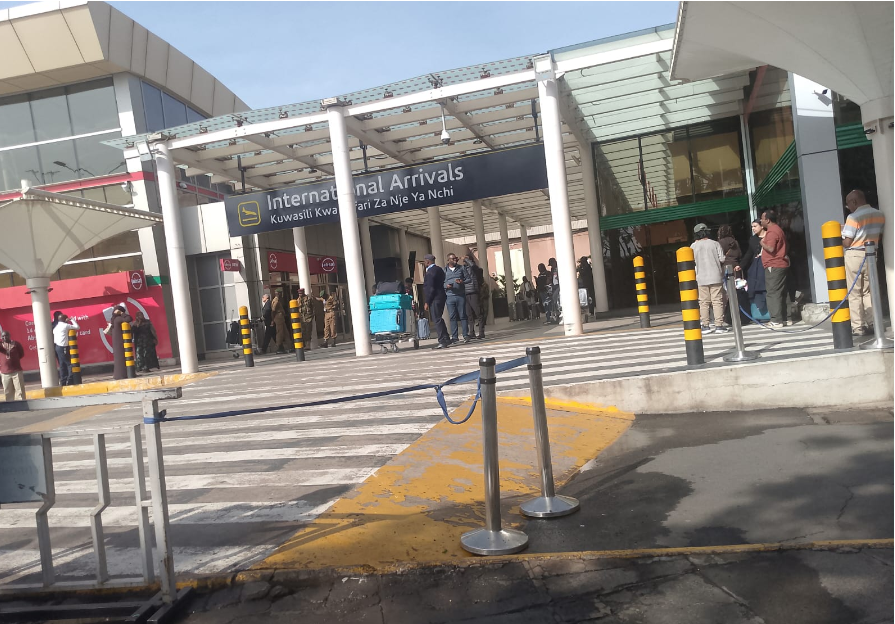
From the moment a plane leaves the gate at Jomo Kenyatta International Airport (JKIA) to the time it lands, a tightly coordinated network of air traffic and aviation safety professionals manages its journey.
Every phase of the flight is controlled to ensure the aircraft remains safely separated, follows approved routes and operates efficiently.
As the current flight disruptions have highlighted, this system depends on a broad category of Kenya Civil Aviation Authority (KCAA) personnel responsible for air navigation and aviation safety.
These professionals form the backbone of safe aircraft movement, covering air traffic control and ground safety operations to ensure every flight operates within a controlled, secure and risk-free environment from take-off to landing.
Clearance before movement
Long before an aircraft begins to taxi, the airline files a flight plan with air traffic services.
This includes the intended route to be flown, planned altitude and speed, departure and arrival times as well as fuel requirements and alternate airport details.
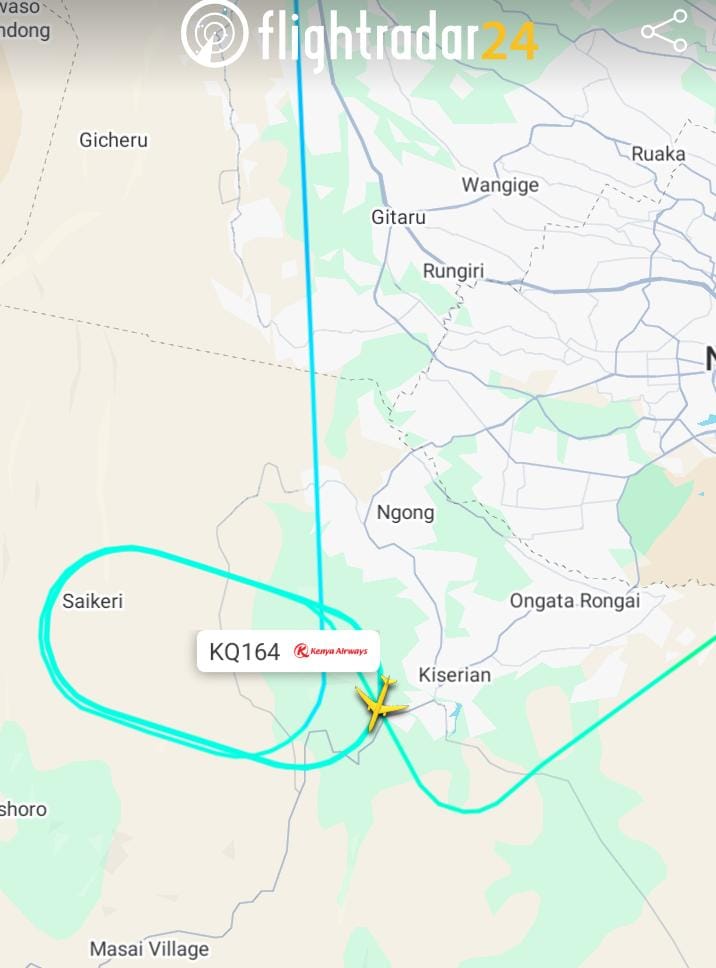 What an inbound plane treated to at JKIA./HANDOUT
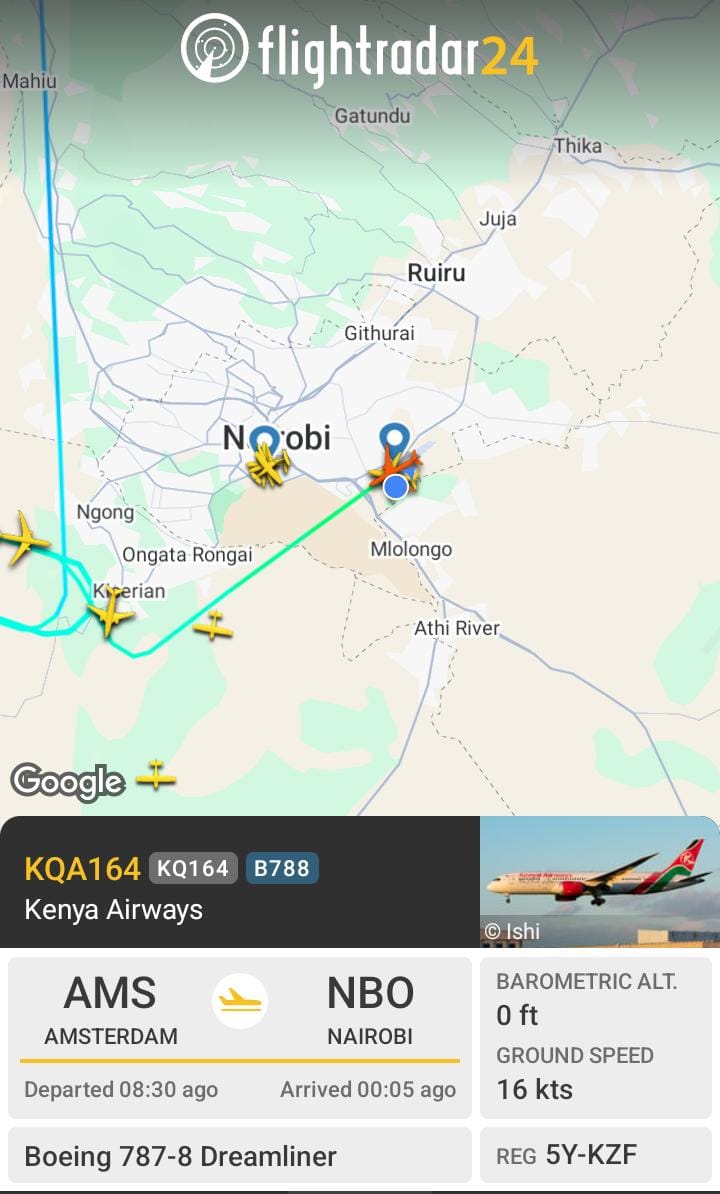 What an inbound plane treated to at JKIA./HANDOUT
This clearance confirms the approved route, initial altitude, departure procedure, and any restrictions due to weather or traffic.
“No aircraft moves without clearance. Every departure is sequenced to fit safely into the airspace system,” an aviation operations officer told the Star.
Ground control and runway operations
Once cleared, the aircraft comes under ground control, which manages movement along taxiways and aprons and directs it to the runway holding point.
Ground controllers ensure the aircraft moves safely without conflict with other planes, service vehicles or maintenance activity.
At the runway, communication is transferred to tower control.
The tower controller confirms runway safety, checks wind conditions, ensures proper separation from other aircraft and then issues take-off clearance.
After take-off, the aircraft continues climbing under tower instructions until it reaches a designated altitude.
Shortly after departure, control is handed to departure or approach radar controllers, who guide the aircraft along its assigned route and integrate it into the broader traffic flow.
This team monitors the aircraft using radar, adjusts altitude and direction to avoid other traffic and integrates it into the wider airspace flow.
At this stage, aircraft from multiple airports may be merging into regional air routes.
Once the aircraft leaves the terminal area, it comes under the Area Control Centre (ACC).
In Kenya, this is managed primarily from the Nairobi ACC, with additional control for coastal airspace from Mombasa.
ACC controllers monitor aircraft over long distances using radar and satellite-based systems, maintain safe separation and coordinate with neighbouring countries as flights approach international boundaries.
When a flight leaves Kenyan airspace, control is formally handed over to the next country’s ATC.
“The sky is divided into sectors and responsibility is transferred from one controller to another as the aircraft progresses,” the officer said.
For international flights, the handover continues across borders, with pilots switching radio frequencies as each country’s controllers take responsibility.
Nairobi ACC for example hands over the aircraft to Ethiopia if it passes the country or another neighbouring ATC unit.
Each country’s controllers guide the aircraft through their airspace.
The process repeats sector by sector until the aircraft nears its destination.
Descent and landing
As the aircraft nears its destination, it enters approach control, where controllers sequence arrivals provide descent instructions and align aircraft with the runway using instrument procedures.
On final approach, communication returns to tower control, which issues confirms runway clearance, monitors wind and visibility and issues landing clearance.
After touchdown, ground control directs the aircraft to its parking stand, completing the journey.
Throughout the flight, the aircraft is continuously tracked using radar, satellite surveillance and radio communication. Controllers provide weather updates, traffic alerts and emergency assistance where necessary.
People behind safe skies
Behind these movements is a wider aviation safety ecosystem.
Air navigation and safety personnel include air traffic controllers, air navigation service officers, communication and surveillance technicians, aeronautical information specialists, aerodrome safety teams and flight operations inspectors.
Though their roles differ, they operate as one integrated system.
“Aviation safety is a coordinated effort. Controllers, technicians and safety officers all form one chain, and if any link is weakened, operations must be slowed to maintain safety,” the officer said.
Air traffic controllers manage aircraft separation and direct movements, while ground safety teams inspect runways and taxiways, monitor airside activity and ensure the airport environment remains safe.
At the same time, technical teams maintain radar systems, communication networks, navigation aids and flight data infrastructure.
If any of these systems cannot be adequately staffed or monitored, aviation regulations require that traffic levels be reduced.
“Aircraft movement is limited not by airport size but by how much traffic the safety system can safely handle at any given time,” he said.
Why disruptions slow flights
Aviation operates on the principle of risk prevention.
Every aircraft movement depends on multiple layers of oversight, and when staffing levels drop or services are disrupted, authorities must immediately limit operations.
This is why during operational disruptions: Aircraft already airborne are given priority to land, departures are delayed or cancelled and flights may be held, rerouted or diverted.
“Safety cannot be scaled up or down casually. If capacity drops, traffic must drop as well,” he said.
KCAA’s air navigation and safety personnel also play a critical role in maintaining Kenya’s position as a regional aviation hub.
Their work supports efficient passenger and cargo movement, international airline confidence and compliance with International Civil Aviation Organisation (ICAO) standards.
Any prolonged disruption to these services can affect scheduling, supply chains and the country’s aviation reputation.
The work itself is highly specialised, requiring intensive training, certification, constant monitoring and strict adherence to international procedures.
Even during industrial action or staffing shortages, authorities prioritise minimum essential safety coverage to keep operations running at reduced but safe levels.
From gate to gate, a single flight may be handled by multiple controllers across several sectors and countries, supported by a wider network of safety and technical personnel on the ground.
Each handover is carefully coordinated, and responsibility is clearly transferred at every stage.
Pilots, according to experts, fly the aircraft, but air traffic controllers manage the journey and every safe flight is the result of continuous coordination from departure to arrival.