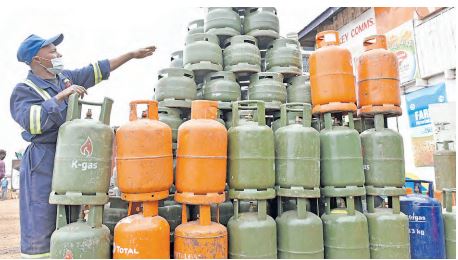
 A supplier delivers gas cylinders to Waiyaki Way Supermarket in Kangemi, Nairobi /FILE
Total Kenya Limited acted unlawfully by holding more than 4,400 gas cylinders belonging to a gas distributor as leverage, the High Court has ruled.
On Friday, Justice Helene Namisi found the multinational oil marketer erred by seizing the cylinders, the property of Hunkar Trading Company Limited, for seven years over unpaid bills.
The High Court determined that while Total Kenya initially held the cylinders with Hunkar’s consent following a meeting in July 2016, that consent was revoked when the latter filed suit in March 2017, rendering the subsequent detention tortious.
The dispute arose after the government mandated a system designed to allow consumers to swap gas cylinders of any brand at any retail outlet.
But between June 2015 and March 2016, the LPG Cylinder Exchange Pool system created a financial deficit for Hunkar, who failed to pay Total for the exchange of cylinders.
When Hunkar attempted to settle the debt with post-dated cheques totalling Sh5.9 million in 2016, Total rejected the offer for extending credit beyond the contractual 35-day period.
A meeting was held between the two parties on July 4, 2016.
"We discussed how we would make payments and the cylinders. They told me that they would hold the cylinders until the payment was made. I came to an arrangement with them," Hunkar’s chairman Jackson Kahungura said during cross examination.
This arrangement initially shielded Total Kenya from liability, but that protection ended when Hunkar demanded return of the cylinders through litigation.
Total defended its actions using the "right of lien", which legally allows a person to keep possession of goods until a debt is paid.
“The statutory mandate to circulate cylinders overrides the common law right of lien, especially where the lien would defeat the public policy objective of the regulations,” the judgment stated.
Namisi noted that the specific regulations governing the energy sector mandate that cylinders must be returned to the owner within seven days to ensure public availability of gas.
“General liens are not favoured by the common law because they interfere with the free flow of commerce and grant a priority to one creditor over others without public notice," she said.
"They typically arise only by custom of trade or by express contract. In this case, the defendant did not apply labour or skill to improve the cylinders; it merely held them as part of the exchange pool logistics."
However, the court also found that Hunkar’s claim for Sh14.5 million in special damages representing replacement cost of the cylinders failed entirely for lack of proof.
No invoices, expert reports or inspection certificates were produced to substantiate the alleged destruction of the cylinders.
“To claim 100 per cent replacement cost without technical evidence of total loss is to ask the court to speculate,” the judge observed.
The court issued a mandatory injunction compelling Total Kenya to release all 4,425 cylinders within 30 days.
Hunkar was awarded Sh500,000 in general damages, to be deducted from the millions it still owes Total. Each party was ordered to bear its own costs.