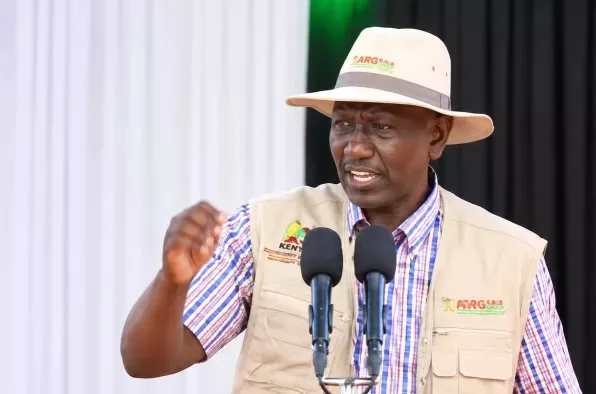
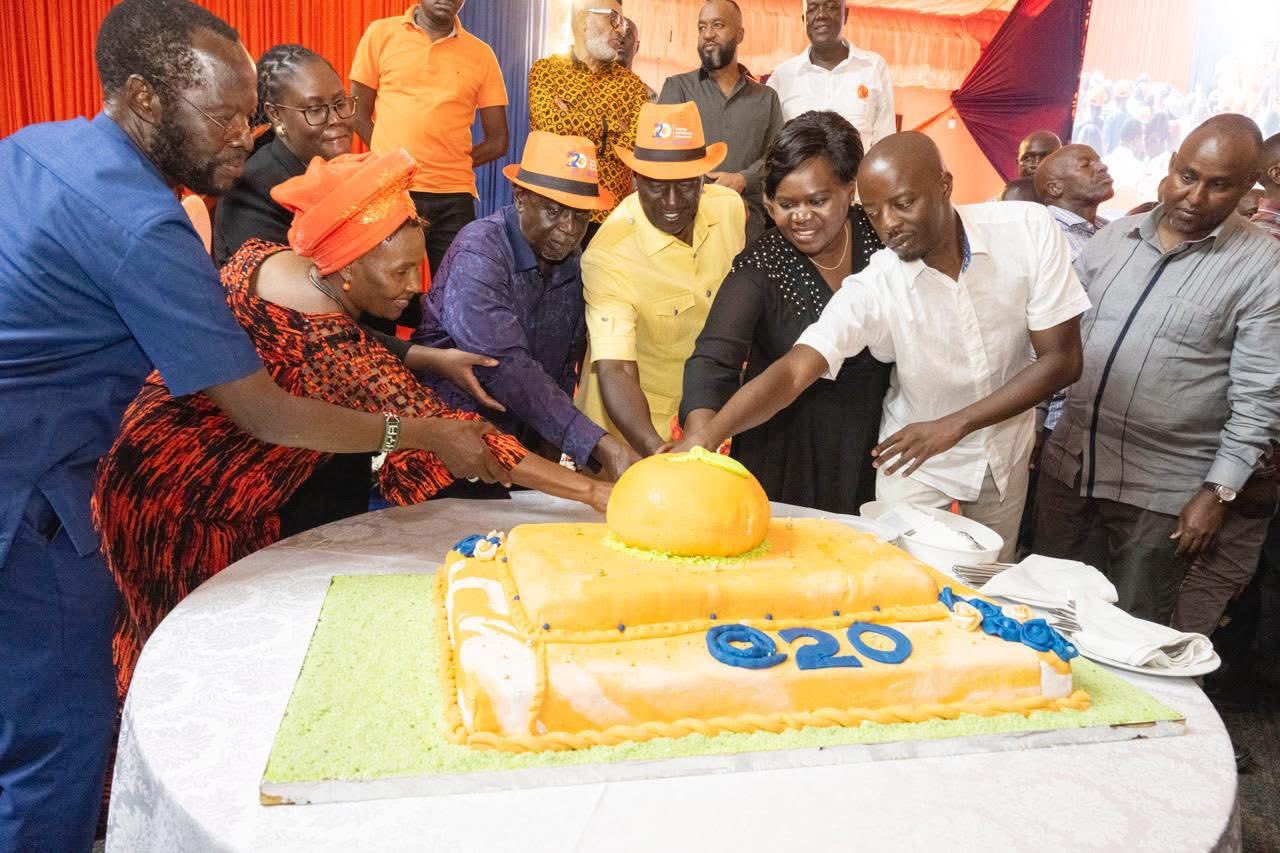
 President William Ruto with ODM senior officials during the party's 20th anniversary in Mombasa/FILE
Kenyan politics has always been animated by spectacle, but rarely has it been as saturated with attention-seeking as it is today. Public discourse is increasingly crowded by voices more interested in performance than purpose, optics more than outcomes.
In this environment, political cooperation is easily caricatured as betrayal, while permanent agitation is mistaken for principle. Yet history suggests some of the country’s most consequential moments have emerged not from noise, but from pause, recalibration and unlikely convergence.
The broad-based government that emerged from the cooperation between President William Ruto and the former ODM boss Raila Odinga did not arise suddenly, nor was it the product of political convenience alone.
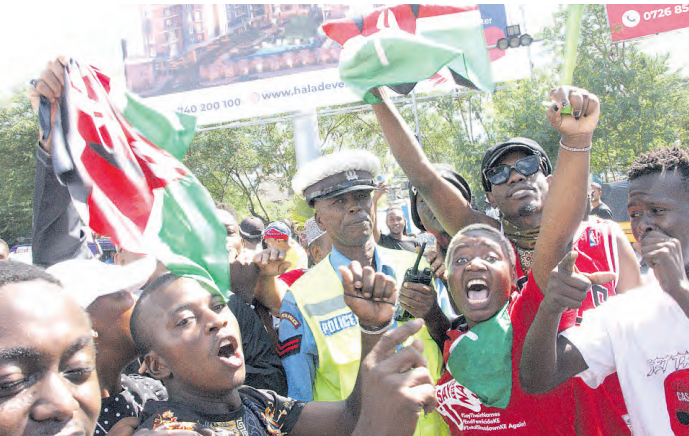
It was shaped by a sequence of national pressures, most notably the Gen Z protests of mid-2024, which exposed a widening gap between the political class and a restless, economically strained citizenry.
Those protests were not partisan. They were generational. Young Kenyans, largely detached from the old binaries of party and personality, challenged the state on issues of economic justice, taxation, governance and accountability.
The demonstrations did not overthrow government, but they profoundly unsettled the political establishment. They forced a reckoning with the limits of confrontation as a governing strategy and created space for sober political reflection.
It was in the period that followed, particularly into early 2025, that Ruto and Raila formalised cooperation that would give rise to a broad-based government.
Over the second half of 2024, Ruto appointed ODM figures such as John Mbadi to Cabinet Secretary positions, a subtle but clear partnership with Raila. This was a considered response to a fragile national moment.
It acknowledged that Kenya’s stability, economic recovery and institutional legitimacy required a wider political consensus than any single coalition could muster.
To understand why this cooperation had not been impossible as many might have perceived and also carried deeper meaning, one must return to the origins of the Orange Democratic Movement in 2005.
ODM was conceived during the constitutional referendum that pitched the orange against the banana under the stewardship of then Electoral Commission of Kenya chairman Samuel Kivuitu. That referendum was not merely about a draft constitution. It was a referendum on power, inclusion and the character of the Kenyan state. The orange came to symbolise resistance to elite-driven governance and a demand for a people-centred political order.
At its inception, ODM was a movement of ideas before it became an electoral vehicle. Its core vision revolved around devolved development, social justice and national stability anchored in inclusion.
It was led by figures such as Raila, Ruto, Kisumu Governor Anyang’ Nyong’o, Henry Kosgei among others, and a cohort of reformist thinkers and politicians. They articulated a politics that sought to relocate power closer to the people and discipline the state through institutions rather than personalities.
Over time, electoral competition, internal contradictions and the brutal logic of winner-take-all politics diluted that clarity. Yet Raila’s own political evolution is instructive. As the years progressed, his focus increasingly shifted from perpetual agitation to stabilisation of the republic. The handshake with President Uhuru Kenyatta was the clearest expression of this shift.
His later cooperation with President Ruto followed the same logic: that development and institutional reform are often secured through engagement with the government of the day, not endless confrontation.
This is the context that some within ODM, particularly younger figures who have built careers around opposition politics, appear unwilling to accept.
Voices such as Edwin Sifuna’s represent a politics fluent in sharp rhetoric and perpetual resistance, but often detached from the historical arc of the former Prime Minister’s leadership.
His latter years were not about shouting louder than the state. They were about bending the state, patiently and pragmatically, towards inclusion, development and stability. To reduce that strategy to betrayal is to misunderstand both the man and the moment.
Agitation without a pathway to outcomes eventually hollows itself out. It energises supporters in the short term but delivers little to citizens burdened by the cost of living, unemployment and weak service delivery. Politics that prioritises expediency over national interest may win applause, but it does not build institutions or economies.
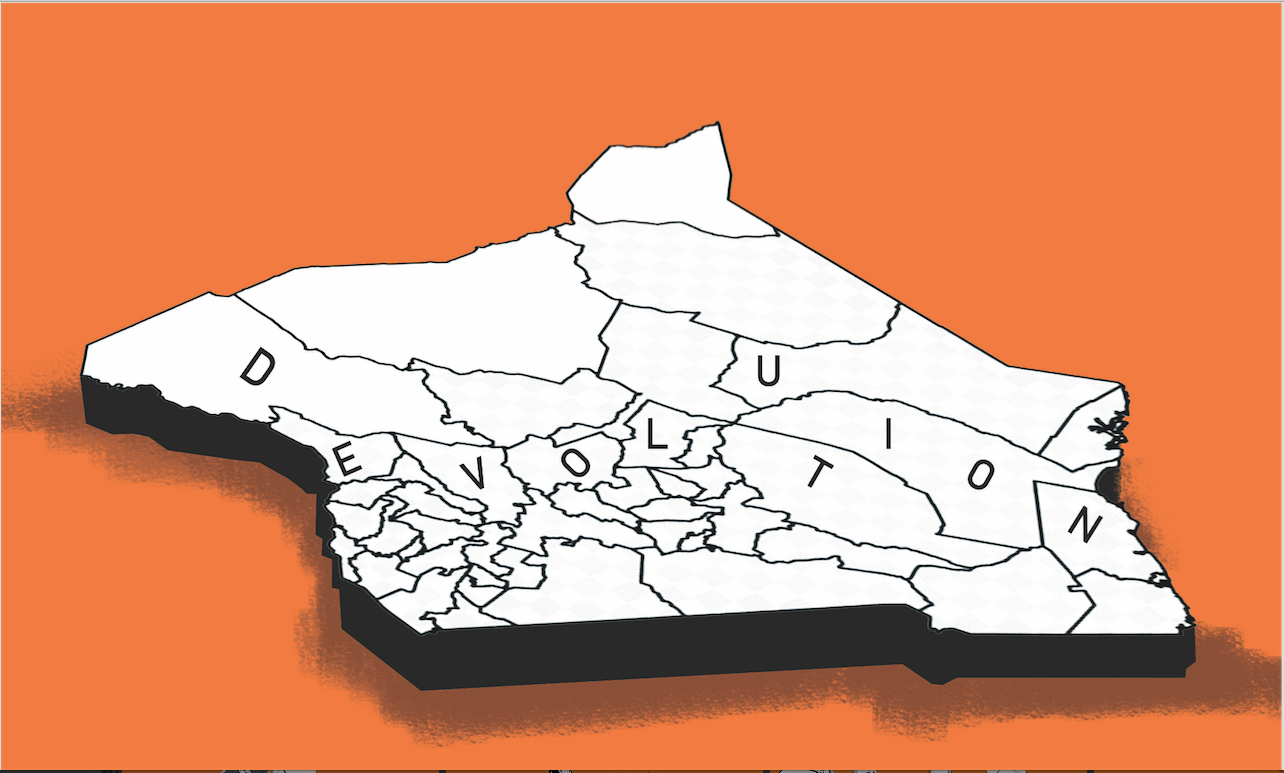
Ruto’s broad-based government must be understood within this frame. By opening government to ODM and incorporating individuals associated with its intellectual tradition, he signalled a recognition that Kenya’s challenges are structural, not partisan. Economic reform, devolution and social stability require diversity of thought, experience and legitimacy.
The inclusion of seasoned public servants and technocrats such as Nyong’o in his think tank is particularly consequential. These are not figures shaped by the adrenaline of rallies, but by decades of scholarship, policy formulation and public administration.
Their grounding in governance, health systems, devolution and institutional reform strengthens the state’s capacity to translate political intent into development outcomes.
For the President, this convergence offers an opportunity to deepen his development agenda beyond speed and scale to coherence and sustainability. Infrastructure alone does not transform societies.
Development requires institutions that function, counties that are empowered and a national government capable of coordination rather than constant political firefighting.
For ODM, cooperation within government presents a chance to see its original ideals finally institutionalised. This is something about which party must be bold and courageous.
Development becomes more than a constitutional promise. A people’s government becomes a question of service delivery rather than slogans. National stability must be a shared responsibility rather than a bargaining chip.
What is most striking about critics of this arrangement is how rarely the citizen features in their arguments. Too much of the resistance is driven by internal party positioning and the fear of political irrelevance.
It asks who gains politically, not who benefits economically or socially. It confuses perpetual opposition with moral clarity, even when such opposition offers no credible alternative.
Ruto’s development agenda combines youth empowerment with transformative infrastructure and social projects that are reshaping Kenya’s economic landscape. The Nyota Youth Project engages young Kenyans with skills, mentorship and startup capital, enabling them to participate actively in enterprise and innovation.
Alongside this, the government is advancing rural and urban road networks, county electrification and water projects, the expansion of the standard gauge railway, affordable housing developments, new hospitals and STEM-focused schoolsand investments in agriculture value chains, SMEs and digital infrastructure.
Together, these initiatives reflect a coordinated approach that empowers citizens, strengthens counties and builds the physical and institutional foundations for inclusive growth and national development.
Kenya’s democratic journey has reached a stage where maturity, not militancy, is required. The country does not lack voices. It lacks builders. It does not lack outrage. It lacks patience and institutional discipline.
History will not remember who opposed cooperation the loudest. It will remember whether leaders, at a moment of national fragility, chose stability over spectacle and substance over performance.
In that sense, the cooperation between Ruto and Raila, shaped in the aftermath of the Gen Z protests, may yet be remembered as a late but meaningful return to the original orange ideal, not as protest, but as governance.