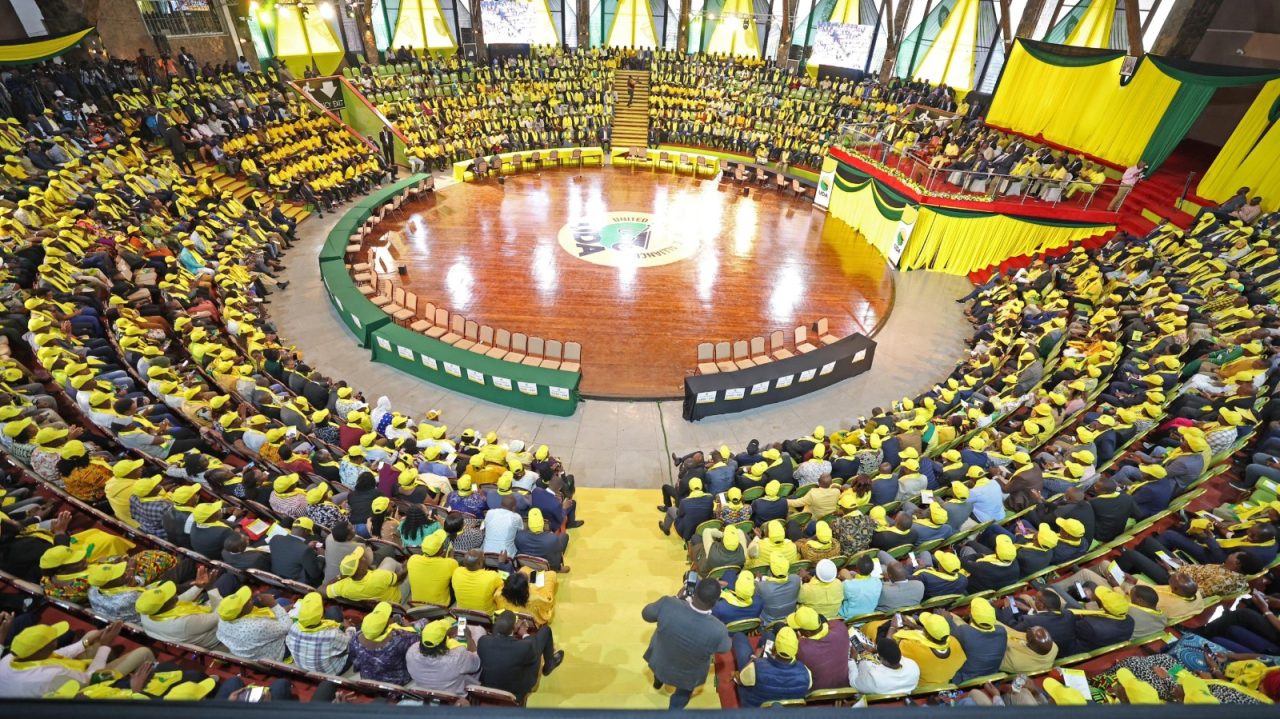
The announcement by the Kenya Human Rights Commission that it plans to sue UDA and its officials for large‑scale tax evasion and misuse of public funds has seen many Kenyans ending the week on a high note.
Drawing a line in the sand, the KHRC turned the spotlight squarely onto a party that never tires of demanding sacrifice from ordinary Kenyans yet refuses to meet its own basic obligations.
In a country where the taxman is increasingly aggressive toward the small-scale trader and the struggling mwananchi, the revelation that the party in power has allegedly bypassed the very system it oversees is not merely a legal oversight; it is a profound moral crisis.
At the heart of the legal action is a damning finding by Auditor General Nancy Gathungu: UDA “deliberately or negligently” failed to deduct and remit Pay As You Earn taxes, resulting in Sh69 million in unpaid PAYE tax liabilities.
The breaches list is long: the Income Tax Act, the Affordable Housing Act 2024, the NSSF Act 2013, the Public Procurement Capacity Building Levy Order 2023 and the Public Finance Management Act 2012— all cited as having been violated.
As the KHRC put it, “Clearly, the party does not believe in its own vision of affordable housing.”
That, the rights group stresses, is merely the tip of a very large iceberg. The party has been the largest beneficiary of the Political Parties Fund — a public kitty filled by taxpayers.
“The taxes we pay go into the fund, which is then given to outfits like UDA to fill their troughs. So, it is our money being mismanaged and stolen,” the KHRC said.
The irony is thick enough to choke on. For a government that has made "widening the tax base" its primary mantra, seeing its own headquarters flagged for tax evasion is the ultimate "egg on face" moment.
But the harm goes far deeper.
The education sector currently faces a funding shortfall of Sh260 billion, while health is short by Sh72 billion. Every shilling that should have been collected in taxes — but was not — is a shilling stolen from a child’s classroom or a mother’s hospital bed.
To add to the naughty list is a growing public grievance: the branding of public projects. Across the country, it has become common practice for leaders to plaster their names and faces on everything from boda boda shelters to school buses and water tanks funded by the public purse. This narcissism is a direct insult to the taxpayer.
What is mandatory for the people must be mandatory for their leaders. Salaries and remuneration for all public workers should be capped, and it should be made illegal for any leader to plaster their name on a public project – no matter how small.
The commission has now called for coordinated action by several oversight agencies. It wants the Kenya Revenue Authority to recover all outstanding taxes and penalties; the Office of the Registrar of Political Parties to review UDA’s compliance and eligibility for continued public funding; the Ethics and Anti‑Corruption Commission to investigate the misuse of public resources; and the Office of the Director of Public Prosecutions, working jointly with the KRA and EACC, to prosecute the officials found responsible for the alleged evasion and misconduct.
If the law is mandatory for the people, it must be twice as mandatory for their leaders, who are, after all, the people's servants.
Kenyans are waiting for the day when the corrupt are not just "mentioned" in reports but truly charged, forced to make public restitution and stripped of their ill-got gains.
Because Kenyans are a hard-working lot; it is time their leaders proved they are, too.