In a nation where justice is meant to be the bedrock of governance, Kenya's two premier ombudsman institutions, the Commission on Administrative Justice (CAJ) and the Office of the Judiciary Ombudsman (OJO), overseen by the Judicial Service Commission (JSC), have devolved into hollow shells, more adept at shielding maladministration than confronting it.
These bodies, entrusted with safeguarding citizens from bureaucratic abuse and judicial misconduct, have instead become accomplices in impunity, antagonising complainants with rudeness, delays, dismissals and outright defiance.
The CAJ, dubbed Kenya's national ombudsman, postures as a champion against delay, abuse of power and discourtesy. Yet it exemplifies the very vices it condemns. Public grievances abound, with staff rudeness captured in viral posts, unresponsive follow-ups on legitimate complaints and a pattern of forwarding cases without resolution.
Even when the CAJ boldly summons entities like the Judiciary over unresolved maladministration, specifically over 700 complaints in five years, with 60 per cent lingering, it often retreats amid legal tussles, suspending actions pending endless advisories. This hypocrisy erodes faith; the watchdog barks fiercely but rarely bites, leaving citizens in limbo.
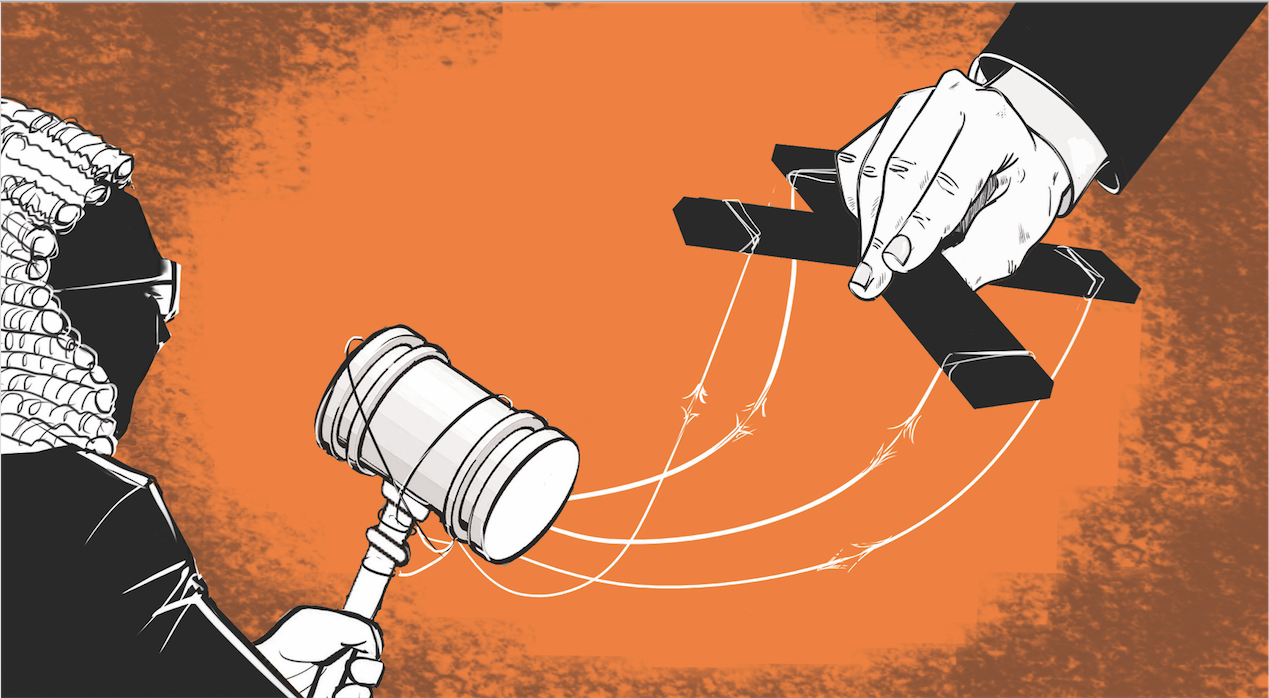
Worse still are the Judiciary Ombudsman and the JSC, embedded within the system they oversee — a fatal flaw breeding self-protection over accountability.
Complaints against judges for bribery, inordinate delays, “air judgments” and fraudulent orders are routinely dismissed en masse, often on flimsy grounds such as decisional independence. Critics, including prominent lawyers, decry a near-100 per cent dismissal rate, labelling the JSC a mafia cartel shielding corrupt jurists.
High-profile feuds, such as the CAJ's ultimatums to Chief Justice Martha Koome, later withdrawn, expose institutional arrogance; the Judiciary resists external scrutiny as interference, while internally burying grievances. Citizens face pressure to withdraw complaints, threats of finality (“tutamalizia juu”) and opaque processes that prioritise judicial privilege over public redress.
These failures are systemic betrayals. By fighting citizens rather than listening, both offices perpetuate a culture where power evades accountability, fostering corruption and distrust in governance.
Kenya could learn from the European Network of Ombudsmen (ENO), established in 1996 and coordinated by the European Ombudsman. This network unites over 95 national and regional ombudsman offices across 36 European countries, including the European Parliament's Committee on Petitions.
The ENO fosters seamless collaboration through liaison officers for quick referrals, enabling the European Ombudsman to transfer misdirected complaints directly to the appropriate national body, with complainant consent, for prompt handling.
Beyond transfers, members share best practices via seminars, newsletters, electronic forums and daily news services. They conduct coordinated parallel inquiries on cross-cutting EU issues, such as monitoring whether EU funds align with fundamental rights, allowing simultaneous national investigations that amplify impact without duplicating efforts.
This collaborative model ensures complaints are resolved at the most effective level, builds collective expertise and upholds citizens' rights efficiently, proving that ombudsmen can unite rather than isolate.
Reform is urgent, drawing from such global best practices that balance independence with robust oversight. Abolishing the Judiciary Ombudsman and funnelling all complaints solely through the JSC would concentrate power dangerously, amplifying bias. Kenyans should reject this consolidation.
Instead, let us adopt a hybrid model that retains a strengthened OJO as a semi-independent entity within the JSC, but mandate mixed composition, such as 50 per cent non-judicial members, including civil society and laypersons as complaint panels, injecting impartiality as in European judicial councils.
Let us establish formal collaboration mechanisms between the CAJ and OJO, inspired by the ENO, by appointing liaison officers for seamless case transfers, joint training seminars, shared best-practice forums and coordinated parallel inquiries on systemic issues like judicial delays or administrative overlaps.
Let us impose strict timelines of 90–180 days for resolutions, mandatory anonymised public reporting of complaint statuses and annual independent audits. Empower the CAJ as an external appeal body for unresolved cases, without infringing judicial decisional independence.
Let us enhance outreach through multiple accessible channels, awareness campaigns and protections against retribution. Align with International Ombudsman Institute standards centred on independence, neutrality and confidentiality, and UN guidelines emphasising timeliness and systemic reforms.
Kenya cannot afford guardians who guard only themselves. These offices must evolve into true servants of the people, or risk becoming obstacles in a democracy starved of justice. May we dwell in scrutiny, pith and ubiquity.
Social impact advisor, social consciousness theorist, trainer and speaker, an agronomist consultant for golf courses and sportsfields and author of 'The Gigantomachy of Samaismela' and 'The Trouble with Kenya: McKenzian Blueprint'