As Kenya edges closer to its first commercial oil production, one legacy question refuses to fade: what exactly did the Early Oil Pilot Scheme (EOPS) deliver, and was it worth it?
The debate has resurfaced with renewed intensity as the country races toward a December 2026 production target. Many Kenyans still ask why EOPS, undertaken between 2018 and 2019, did not translate into cheaper fuel or immediate financial returns. These questions are fair. I, too, have interrogated them closely.
To answer them honestly, we must be clear from the outset. EOPS was never designed to be a commercial oil production project. It was a technical pilot, undertaken deliberately to test, learn and de-risk Kenya’s first oil development before committing billions of dollars to full-field production.
When Kenya’s oil history is eventually written, EOPS will likely stand as the second most important milestone after the 2012 discovery of oil in the South Lokichar Basin. Not because it made money, but because it helped the country avoid far costlier mistakes.
EOPS was implemented under the Early Oil Pilot Scheme Agreement between the government and the Kenya Joint Venture consortium comprising Tullow Oil, Total and Africa Oil Corporation. It was carried out during the exploration and appraisal phase, when uncertainties about the reservoir, logistics, and market access were still significant.
At a cost of $62.73 million, the scheme’s purpose was technical and operational: to gather subsurface data, test production systems, validate logistics and generate real-world evidence to support a future field development plan. These are precisely the questions that cannot be answered on paper alone.
One of the most persistent misconceptions is that EOPS was meant to lower fuel prices. It could not have done so, by either design or scale. Kenya consumes about 110,000 barrels per day of refined petroleum products. EOPS involved small, one-off crude oil export parcels. Moreover, the oil produced was crude, not refined. Even at full pilot output, the volumes were negligible relative to national consumption.
Globally, early oil pilot schemes are learning investments. They rarely generate profits. Their value lies in de-risking multi-billion-dollar developments by identifying technical, operational and commercial pitfalls early. In this respect, Kenya’s EOPS performed exactly as intended.
Technically, the scheme delivered critical subsurface and well performance data. It allowed engineers to calibrate reservoir and production models and confirm proof of concept under real operating conditions.
This data now underpins the field development plan submitted by Gulf Energy E&P BV, currently under parliamentary review and public participation. In practical terms, EOPS data forms the bedrock of the near-term development of the South Lokichar Basin and will continue to inform operations long after first commercial oil.
Beyond the reservoir, EOPS tested what often determines success or failure in frontier oil projects, logistics and infrastructure. The scheme catalysed upgrades to roads in Turkana, including the replacement of the Kainuk Bridge.
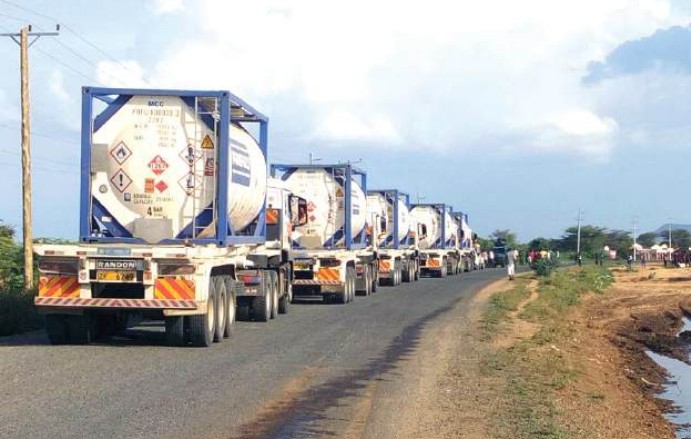
It stress-tested long-distance crude transportation, storage and export systems, providing invaluable operational experience for both national and county governments ahead of scaled development.
At peak, EOPS produced up to 2,000 barrels of crude oil per day from the Amosing and Ngamia fields. The crude was transported in heated, insulated tankers to the Kenya Petroleum Refineries Limited storage facilities in Mombasa. From there, 414,777 barrels were marketed and sold competitively on the international market.
Kenya’s crude achieved price discovery at a differential of about minus $3.5 (Sh451) to Brent, a widely used global benchmark. This confirmed that Kenyan crude is marketable and provided early insight into how it would be priced internationally.
Two export cargoes were sold: one shipped in August 2019 to ChemChina UK Ltd and another in September 2022 to Glencore Singapore Pte Ltd, generating total proceeds of $28.34 million.
The financial outcome is well known. With expenditure of $62.73 million against sales proceeds of $28.34 million, EOPS recorded a deficit of $34.38 million. This figure, however, must be understood in context.
Much of the cost reflects historical exploration expenditure, alongside development and operating costs such as production, transportation, logistics, storage, marketing, and port charges.
Seen against a full-field development projected to cost several billion dollars, the pilot’s cost represents a deliberate insurance premium. The alternative would have been to proceed blindly into commercial production, exposing the country to significantly higher technical and financial risks.
Crucially, EOPS also built local capability. It validated Kenya’s capacity to handle crude transportation, storage and export operations while training local personnel and strengthening engagement frameworks with communities and institutions. These are foundations that cannot be improvised once commercial production begins.
Today, Parliament is considering the field development plan and production sharing contracts for Blocks T6 and T7. The objective is clear: to progress to development based on sound technical solutions, robust environmental safeguards, tangible local benefits and competitive fiscal terms, all within the framework of the law and transparent oversight.
EOPS did not promise quick wins. It promised learning, and it delivered exactly that.
As Kenya moves toward first commercial oil, we do so with better data, tested systems, clearer market knowledge and stronger institutional readiness. That is the quiet but enduring legacy of the Early Oil Pilot Scheme, and it is why it remains a necessary chapter in Kenya’s oil journey.
The writer is the Cabinet Secretary, Ministry of Energy and Petroleum