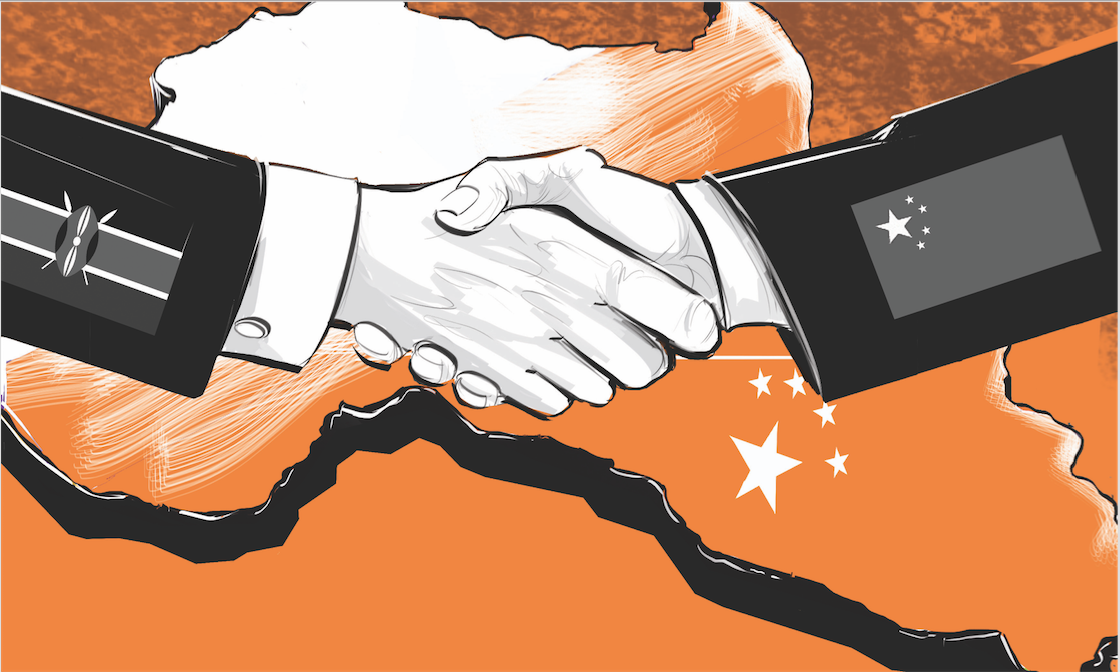
 For Kenya and much of Africa, this renewed Western engagement with Beijing carries important lessons—and opportunities /STAR ILLUSTRATION
It had been nearly a decade since leaders of the United Kingdom and Canada last visited China. Britain’s previous prime ministerial visit took place in 2018, while Canada had not sent a sitting prime minister to Beijing since 2016.
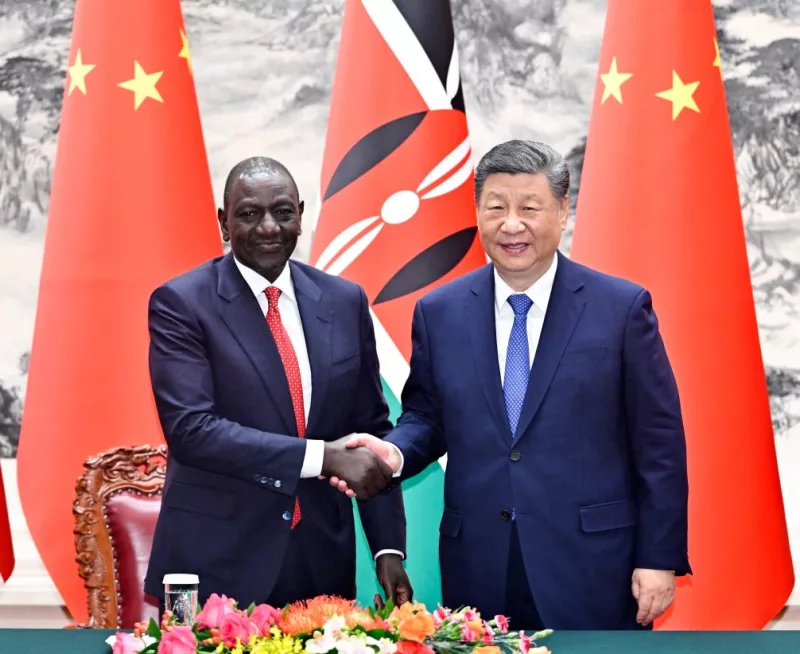
That long pause ended recently with visits by UK Prime Minister Keir Starmer and Canadian Prime Minister Mark Carney, following French President Emmanuel Macron’s trip late last year.
Since Donald
Trump returned to the White House a year ago, a growing number of US allies
have chosen engagement with China over diplomatic distance.
For Kenya and much of Africa, this renewed Western engagement with Beijing carries important lessons—and opportunities.
For years, African countries have been told, implicitly and sometimes explicitly, that engagement with China comes with geopolitical consequences. Yet the actions of Western capitals now tell a more pragmatic story.
When some of the closest US allies—Britain, Canada, France and other European states—actively seek dialogue and cooperation with China, it signals that engagement is no longer controversial but necessary in today’s global order.
This matters deeply for African foreign policy. Kenya, like many African states, has long pursued a non-aligned, interest-based approach to diplomacy.
The renewed Western presence in Beijing validates this strategy. It reinforces the idea that Africa does not need to choose sides in great-power competition, but rather choose outcomes that advance development, stability and growth
Western leaders’ return to China also underscores a simple reality: China remains central to the global economy. It is a major trading partner, a key source of investment, and an indispensable player in global supply chains.
For African economies seeking industrialisation, market access and infrastructure development, this centrality cannot be ignored. If advanced economies see value in maintaining strong channels with Beijing, African nations are justified in doing the same—openly and confidently.
Kenya’s own experience illustrates this point. Engagement with China has supported infrastructure expansion, logistics improvement and industrial capacity building, all of which underpin long-term economic transformation.
At the same time, Kenya has continued to strengthen ties with Western partners, international financial institutions and regional neighbours. This diversified diplomacy mirrors the very approach now being adopted by Western allies themselves.
Emmanuel Macron’s engagement with China is particularly instructive for Africa. France has consistently argued that countries should retain strategic autonomy—working with partners based on national interest rather than rigid alignment.
This philosophy resonates strongly with African states that have historically resisted external pressure to conform to narrow geopolitical blocs. Macron’s diplomacy reinforces the legitimacy of Africa’s long-standing preference for flexibility and dialogue.
The renewed Western engagement with China also has implications for Africa’s bargaining power. As global competition intensifies, Africa is no longer a passive arena but an active participant.
When major powers seek partnerships, investment opportunities and political goodwill, African governments gain leverage to negotiate better terms, diversify partnerships and align cooperation with national development priorities.
For Kenya, this moment presents an opportunity to sharpen its foreign policy messaging. Nairobi can position itself as a bridge between East and West—open to cooperation with all major partners while anchored in its own development agenda.
This approach strengthens Kenya’s role as a regional diplomatic hub and enhances its influence in multilateral forums.
The visits to Beijing also highlight the limits of isolation as a foreign policy tool. Even among advanced economies, prolonged diplomatic distance has proven unsustainable.
Dialogue, engagement and economic cooperation are increasingly seen as tools for managing competition rather than signs of weakness. This perspective aligns closely with Africa’s diplomatic tradition of consensus-building and peaceful engagement.
Importantly, the renewed Western presence in China does not signal a weakening of alliances, but an evolution of them. For African policymakers, this reinforces the importance of reading actions rather than rhetoric.
Global politics today is less about loyalty tests and more about strategic balance. Countries that adapt to this reality are better positioned to navigate uncertainty.
As Kenya charts its path in a changing world, the lesson is clear: engagement is not a liability; it is an asset. The return of Western leaders to Beijing confirms that pragmatic diplomacy, diversified partnerships and strategic autonomy are not just African preferences—they are becoming global norms.
In this emerging geopolitical landscape, Africa’s long-held approach may turn out to be not only relevant, but ahead of its time.