

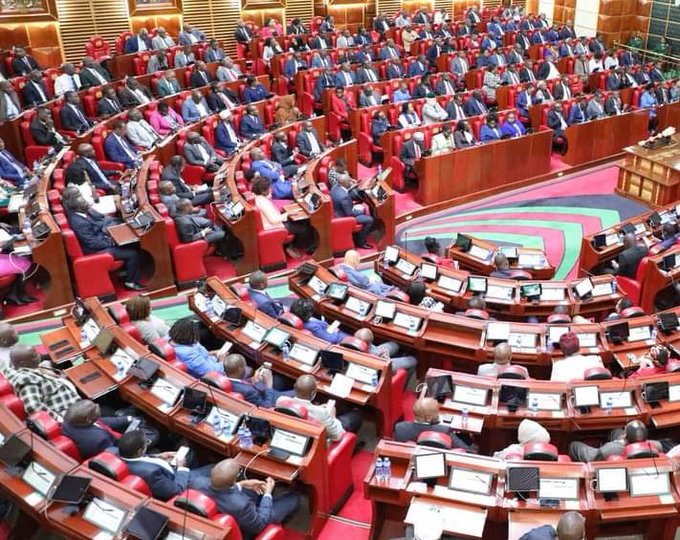
This year will be challenging for the nation as it moves to its fourth general election under the 2010 Constitution. While the constitution was initially hailed as a masterstroke, it has revealed internal weaknesses. In many instances, the law has failed to respond effectively to emerging challenges.
Most notable is its inability to resolve disputes arising from political disagreements. These conflicts often intensify during election periods. Since the 2007 general election, all presidential results have been contested. Under the stewardship of Samuel Kivuitu (now deceased), elections results sparked violence that led to deaths and mass displacement.
International mediation resulted in power sharing under the Grand Coalition and the eventual promulgation of the current constitution. However, it is now evident that its form and content are inconsistent with the political spirit of the nation. This has triggered two major attempts at legal reform. The first was the Building Bridges Initiative. The second is the National Dialogue Committee. Both were popular initiatives under Presidents Uhuru Kenyatta and William Ruto, respectively.
In both cases, Parliament played a secondary and largely nominal role. This partly explains the collapse of BBI and the slow implementation of the Nadco report. The process has lacked the urgency and momentum required for such a monumental task. There are genuine fears that it may stall entirely.
At the outset, President Ruto proposed that the reforms be shepherded by Parliament through a bipartisan arrangement. The opposition leadership distrusted this approach. The process was then expanded to include political and civil society actors outside Parliament.
These groups assumed control of the dialogue, with Parliament becoming subordinate. Nadcobecame a joint project of the head of state and opposition leader Raila Odinga through their respective allies.
With the sudden death of Raila, Nadco is now effectively leaderless. The opposition lacks a clear figure to co-drive the process with the President. Ruto himself had earlier preferred a Parliament-led approach.
As a result, the national implementation committee is reduced to making roundtable presentations to government agencies, with little tangible progress.
Recently, Parliament has sought to reclaim its constitutional authority. Through the committees on Constitution Implementation Oversight and Justice and Legal Affairs, it has begun identifying gaps in the constitution. Strategic engagements with supportive non-state actors are underway.
The joint constitutional audit workshops with Riana Development Foundation are commendable. The foundation is also working with NCIC and IEBC to address potential electoral challenges.
This is a crucial step in identifying sections of the constitution that require amendment. These fall into three categories. Some require only administrative action through statutory schedules or executive orders. Others need a two-thirds parliamentary majority. A third category will require a referendum.
Once the audit is complete, Parliament should undertake extensive public participation. This process will validate the findings and confer legitimacy on the review. The two committees should isolate provisions that promote conflict instead of harmony. They should then initiate measures to ensure effective constitutional implementation.
Where administrative action is required, the Executive should be guided accordingly. Where parliamentary action is needed, leaders in both Houses should mobilise support for new legislation. This will be best achieved through bipartisan engagement, as originally proposed by the President.
Through public participation, Parliament and the Executive will benefit from stakeholder input. Partnerships with civil society organisations such as Riana Development Foundation will help mobilise resources.
Some constitutional changes will require a referendum. Parliament must lead by forming multisectoral networks and conducting wide civic education. This inclusive approach will build public acceptance before the next general election.
Several constitutional issues deserve urgent attention. These include leadership and management structures in key institutions. The recent resignation of the IEBC chief executive follows a worrying pattern.
It suggests deeper systemic weaknesses. The problem lies in unclear relationships between commissioners and the secretariat led by the CEO, who is also the commission secretary. This confusion invites dysfunction.
This structural flaw is not unique to IEBC. It exists in most constitutional commissions. Another persistent source of tension is the political system. The constitution establishes a pure presidential system. Yet Kenya’s political culture draws from the Westminster tradition. This contradiction distorts political practice.
A pure presidential system does not provide for formal opposition or coalition governments. Yet since 2018, Kenya has operated through coalitions, first via the handshake and now through a broad-based government. Officially, Parliament has a majority and minority. In practice, the country has a government and an opposition. This anomaly must be corrected.
Separation of powers also requires re-examination. Globally, the Senate is the upper House. In Kenya, it is subordinate to the National Assembly in law and practice. More troubling is the fusion of state and government functions in the presidency.
The President is both head of state and head of government. As head of government, the President is equal to the Speaker and the Chief Justice. As head of state, the President stands above them.
This arrangement relies on personal restraint. Human nature, as Thomas Hobbes observed in Leviathan, is inherently self-interested. Where opportunity arises, power will be exercised for personal advantage. Constitutional reform should therefore align the law with Kenya’s political culture and leadership traditions.
Finally, devolution must be reassessed. Kenyans should decide through a referendum whether the current number of counties is optimal for development. There must be clarity on the relationship between national and county governments in terms of resources, responsibilities, and accountability.





