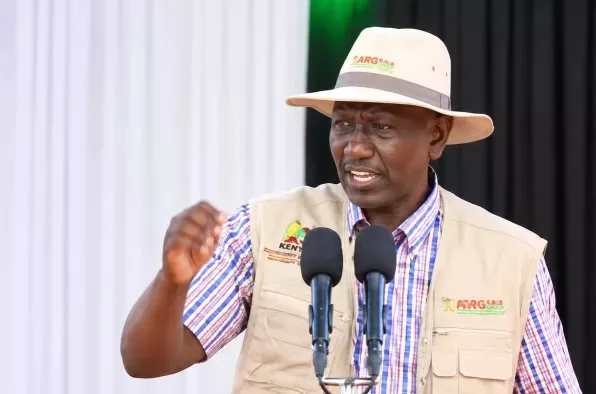
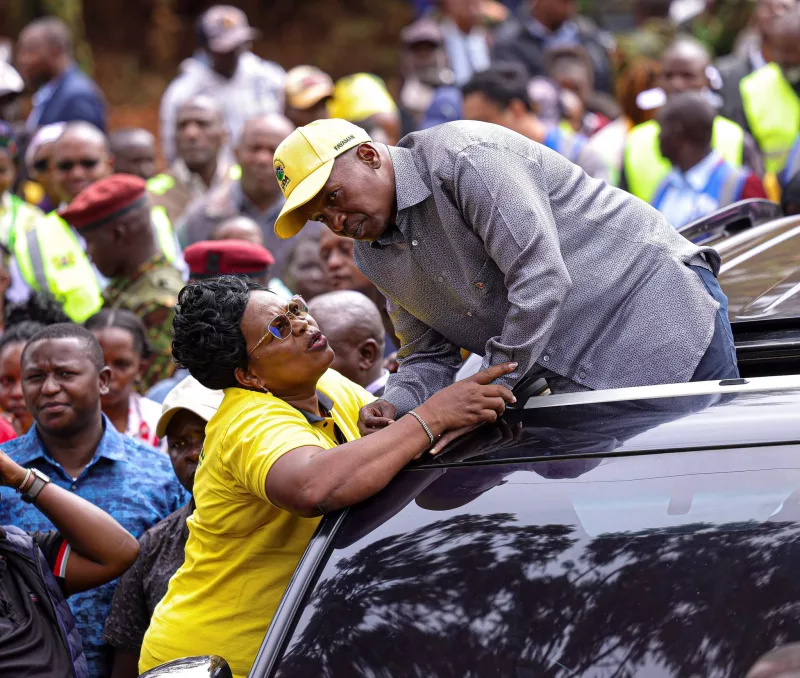
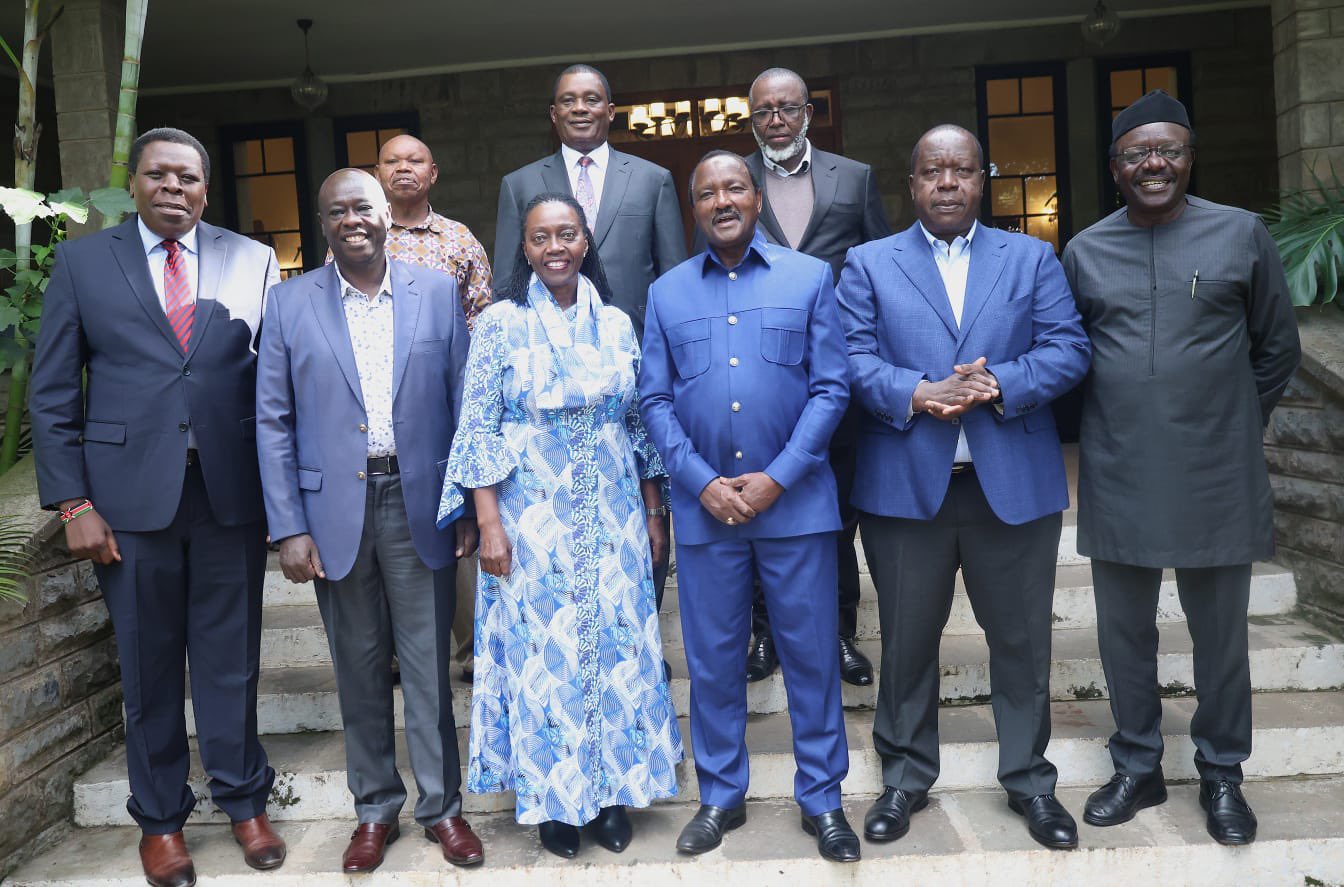
 A section of the United Opposition leaders /FILE
Be that as it may, Kalonzo’s appointment is significant because it places him in the driver’s seat in the quest to identify the joint opposition candidate for the 2027 election.
With former President Kenyatta seemingly pulling the strings within Azimio, the Wiper leader can at least be rest assured that former CS Fred Matiang’i, the supposed Jubilee presidential candidate, will be “sorted” when the rubber meets the road.
The current opposition can learn from two previous elections: 1997 and 2002. In 1997, despite several attempts led chiefly by Raila, the opposition refused to unite behind a single candidate to dethrone President Moi. They were comprehensively beaten when they ran separately.
Raila had indicated early in 1997, soon after leaving Ford Kenya and winning back his Lang’ata parliamentary seat on an NDP ticket, that he was open to backing Ford Asili boss Kenneth Matiba.
But Matiba opted out of the election and burned his voter’s card. The rest—SDP’s Charity Ngilu, Ford Kenya’s Michael Wamalwa Kijana and DP’s Mwai Kibaki—remained uninterested in sacrificing their ambitions.
The four leading opposition figures lost, later lamenting that their combined numbers would have been enough to defeat Moi. Comically, they held a joint press conference after the ECK announced the results, rejecting the outcome. By then, a disillusioned Raila had begun drifting toward cooperation with Moi’s Kanu, following repeated failed attempts to unite the opposition.
Five years later, in 2002, Raila’s actions helped create a near-joint opposition candidate in the form of Mwai Kibaki. ‘Near-joint’ because Simeon Nyachae went his own way after failing to secure the opposition’s joint mandate. His Ford People performed dismally, while a large part of the country handed a massive victory to Kibaki and Raila’s Narc-Rainbow coalition.
Two factors contributed to Narc’s success: a multi-ethnic political movement born from a disenchanted population, and widespread anger at Kanu and Moi’s misrule, which voters sought to stop from being perpetuated through Kanu’s choice, Uhuru. In 2027, the joint opposition will need to assess whether these conditions can be replicated.
In Kenya’s complicated ethnic landscape, one of the most difficult electoral tasks is getting a large community to back a candidate from another community. Raila had reached this level, able to secure support from distant regions and build the numbers that made him a national factor, even in defeat.
Among today’s joint opposition, only Kalonzo and former DP Rigathi Gachagua have previously mobilised their ethnic bases to support someone else: Kalonzo delivered Ukambani votes for Raila in three elections, while Gachagua helped deliver the Mount Kenya vote to Ruto in 2022.
However, Gachagua’s circumstances were different. First, Ruto spent nearly 10 years building a rapport with central Kenya. Second, UDA’s popularity among the Kikuyu was fuelled by the “shares” philosophy, tied to regional expectations from a Ruto presidency.
Third, Raila had long become a regional hate figure, making it easier to mobilise against him. Without the former premier, this anti-candidate strategy cannot be repeated.
Gachagua will not be on the 2027 ballot. His mobilisation talent is hindered by divisive ethnic rhetoric and a domineering leadership style, which has caused defections of legislators in Mount Kenya back to Ruto. It is unclear whether he could deliver votes for a candidate from another community.
Central Kenya is widely perceived as unwilling to back a candidate from another region. If the DCP leader were to deliver votes to a ticket with neither the presidential nor deputy candidate from the region, it would be a political miracle—and a major challenge for the incumbent.
Additionally, many ODM leaders have signalled that they will engage with all formations except those including Gachagua. This makes him political baggage, with influence limited to his region.
This reality suggests that the joint opposition’s presidential candidate will likely be Kalonzo. He is relatively acceptable nationwide, non-controversial and still popular within ODM for standing with Raila in three elections and delivering votes.
Kenya’s political waters are now turbulent, but once Ruto’s main opponent is clear, the dynamics will settle. The 20-year-old divide within ODM will become more evident as electoral ‘birds of a feather’ align. For the joint opposition, replaying the 2002 template—a single candidate riding national discontent with a powerful multi-ethnic movement—remains the best strategy. Then, we will know if it’s ‘Wantam’ or ‘Tutam’ for the incumbent.