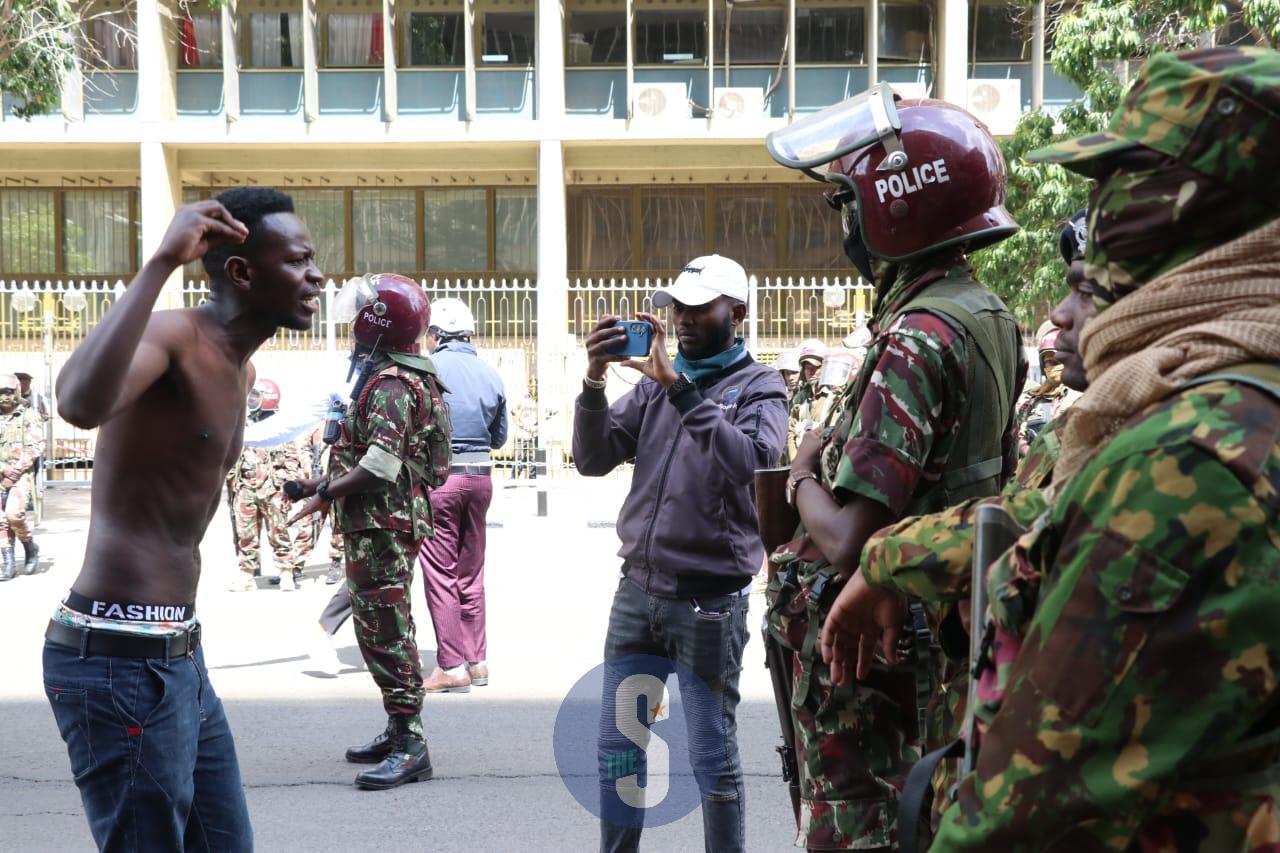
Over the past one year, authorities have continued to crack down on dissent, targeting peaceful protesters, activists and critical voices with a heavy hand, while demonstrating little political will to deliver justice to victims.
“The independent media, activists, human rights defenders and organisations and government critics faced threats, intimidation, harassment, arbitrary arrest and malicious prosecution,” the report says.
“In June and July 2025, the authorities switched off signals of at least three media houses and blocked livestreaming of protests by social media activists.”
As these happen, institutions mandated to provide oversight appear increasingly toothless or deliberately sidelined, suggesting the police operate under a different set of laws from the citizens they should protect.
The escalation of state-sponsored violence is exemplified in the tragic case of Albert Ojwang', a 31-year-old teacher and blogger who died in police cells under unclear circumstances.
Arrested on June 7 last year by officers from the Directorate of Criminal Investigations, Ojwang’ was reportedly transported for eight hours to Nairobi following his online criticism of a senior police officer. He was dead the following day.
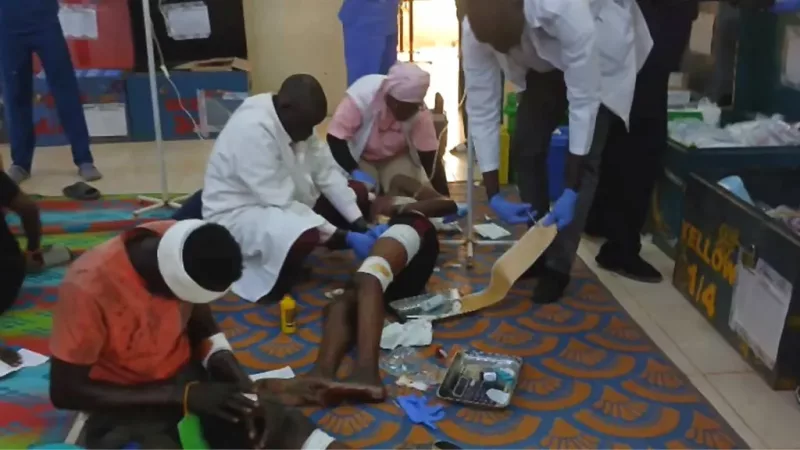
A postmortem report showed his death was a result of torture sustained while in custody. His death sparked widespread public outrage and protests, which were met with more lethal force.
“During the nationwide street demonstrations over Ojwang’s killing, a video appeared on social media which showed a police officer deployed to quell protests in Nairobi shooting a street vendor, Boniface Kariuki Mwangi, at close range on June 17.
"Media and human rights organisations reported that police killed at least another 31 people during protests over the killing of Ojwang’ while the Kenya National Commission on Human Rights reported that at least 26 and 15 people are still missing from the 2024 and 2025 protests respectively.”
These incidents are not isolated. Human rights organisations have documented a distressing continuum of violence.
A joint report by Human Rights Watch and Amnesty International Kenya in November 2024 found that authorities had “failed to investigate or prosecute any police officer or government official” over the killings during the cost-of-living protests.
Despite the mounting body count and the chilling frequency of enforced disappearances, the path to justice remains obstructed.
The Independent Policing Oversight Authority, tasked with holding the police to account, has struggled to keep pace with the scale of the abuses.
In April 2025, Ipoa stated it had registered 60 killings from the 2024 protests, 36 of which were under investigations. Only two cases had been taken to court.
There was no mention of investigations into the widespread allegations of abductions and disappearances, despite the KNCHR reporting that at least 26 people abducted in 2024 remained missing.
“The authorities have also yet to investigate or prosecute anyone for at least 65 killings and at least 400 others who sustained life threatening injuries during the 2025 protests as reported by various local media groups,” the report reads.
In August 2025, President William Ruto appointed an 18-member panel to verify and compensate victims of protest-related violence since 2017. However, the court quashed the appointment, declaring it unconstitutional.
“The result was going to be either a whitewash or a cover-up. There is no way an alleged perpetrator can set up a mechanism to investigate its own culpability. It is the reason other truth-telling and justice-seeking initiatives led by the former executives have failed,"the Kenya Human Rights Commission said after the court decision.
The report says the state’s assault on fundamental freedoms extends beyond physical violence to a deliberate stifling of expression and information.
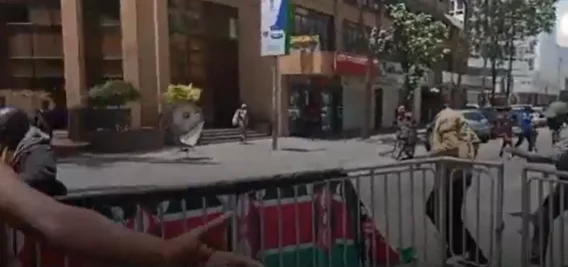
“On June 25, during protests to commemorate the June 2024 protests, the Communications Authority of Kenya (CAK) ordered media, including social media blogs, to stop live coverage of protests. The CAK later switched off three television stations over their coverage of the protests."
At least five journalists were physically attacked by security officers as social media activists were particularly targeted, with arbitrary arrests.
This repressive environment persists against a backdrop of public frustration over government accountability, particularly regarding taxation and spending.