Article 244 of Kenya’s constitution anchors the National Police Service as a professional, disciplined and accountable institution.
It mandates respect for human rights, transparency, integrity, and partnership with the public.
By law, security agencies are required to preserve peace, protect life and property, prevent and investigate crime, enforce the law impartially, assist the public, and exercise power strictly within constitutional, humane, and non-discriminatory limits.
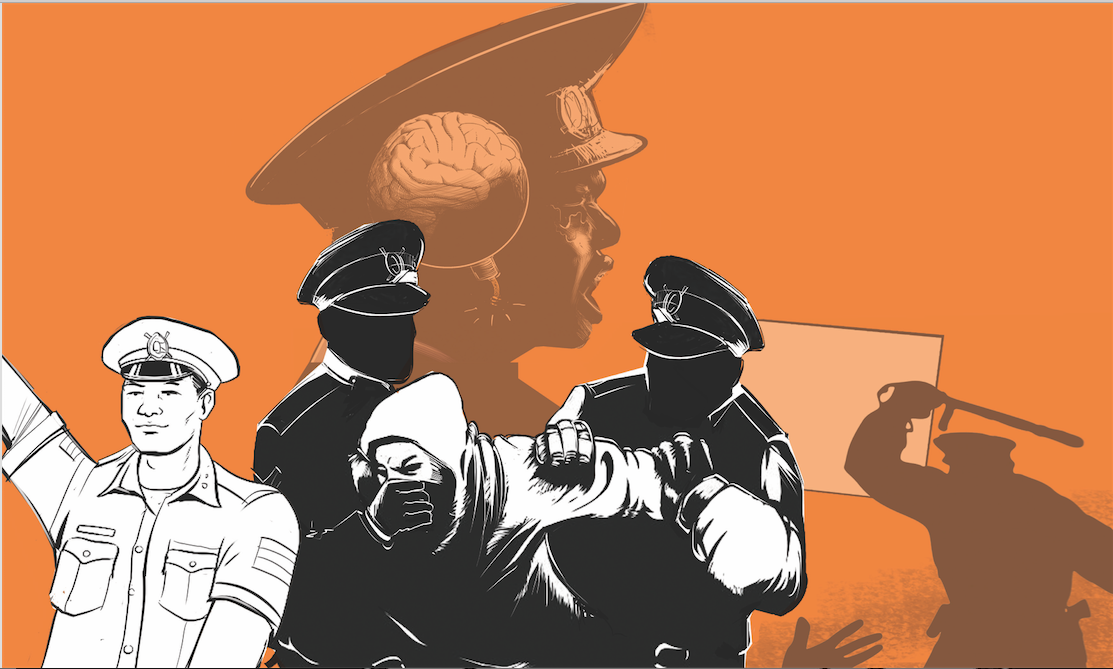
Yet, it seems the cycle of impunity and escalating police violence will never end. Citizens are neither safe nor secure in police custody.
In recent weeks, the victims have included Richard Raymond Otieno, a human rights defender brutally killed at dawn in Elburgon; 12-year-old Bridgit Njoki Wainaina, fatally shot in Kiambu; and 17-year-old Gaala Aden Abdi, a refugee, murdered with chilling finality.
Other cases—killings during protests, deaths in custody, and enforced disappearances such as that of Brian Odhiambo—highlight the lethal and often fatal use of force by police. These incidents constitute clear violations of the right to life.
The 2025 Missing Voices report documented 159 violations in 2024, including 104 police-related killings and 55 enforced disappearances—a 450 per cent increase in disappearances compared to 2023.
These findings align with the Kenya National Commission on Human Rights (KNCHR) State of Human Rights Report, which recorded 57 violations of the right to life between December 2024 and December 2025. During the same period, KNCHR received 661 complaints involving arbitrary detention, torture, abductions, and enforced disappearances—all in breach of Articles 26 and 29 of the Constitution.
Another report, released in December by the Independent Medico-Legal Unit, revealed 17 deaths in police custody over 11 months. In January 2026, six additional cases were reported, further intensifying public concern.
These incidents culminated in the violent disruption of a prayer service at Witima ACK Church in Othaya, Nyeri, on January 25. Video footage and eyewitness accounts showed police firing tear gas and live ammunition into a crowd of worshippers, including children.
The assault occurred despite a June 2025 High Court ruling, prompted by the Kenya Human Rights Commission, challenging police violence during protests—including the targeting of safe spaces such as ambulances, mosques, churches, and other protected sites. The Court ordered that law enforcement must not use live ammunition against civilians during protests, must not target protected spaces, and must refrain from deploying crowd-control measures against unarmed persons seeking refuge in hospitals, ambulances, emergency centres, and places of worship.
Even with these orders, law enforcement officers continue to violently disrupt peaceful assemblies protected under Article 37 of the Constitution.
What emerges is a blatant defiance of constitutional and judicial safeguards. These incidents have deepened the accountability crisis within the security sector. The principle of command responsibility must be enforced, ensuring that those in authority are held accountable for the actions of officers under their command.
The politicisation of the security sector must end. Its current manipulation entrenches impunity and raises serious concerns as the 2027 general election approaches.
Those in power must recommit to the rule of law, protect citizens’ rights, and ensure that all security operations remain lawful, restrained, and impartial.
Failure to do so endangers lives and erodes the foundations of our constitutional democracy.
Programme Manager for Political Accountability in State Institutions at the Kenya Human Rights Commission