
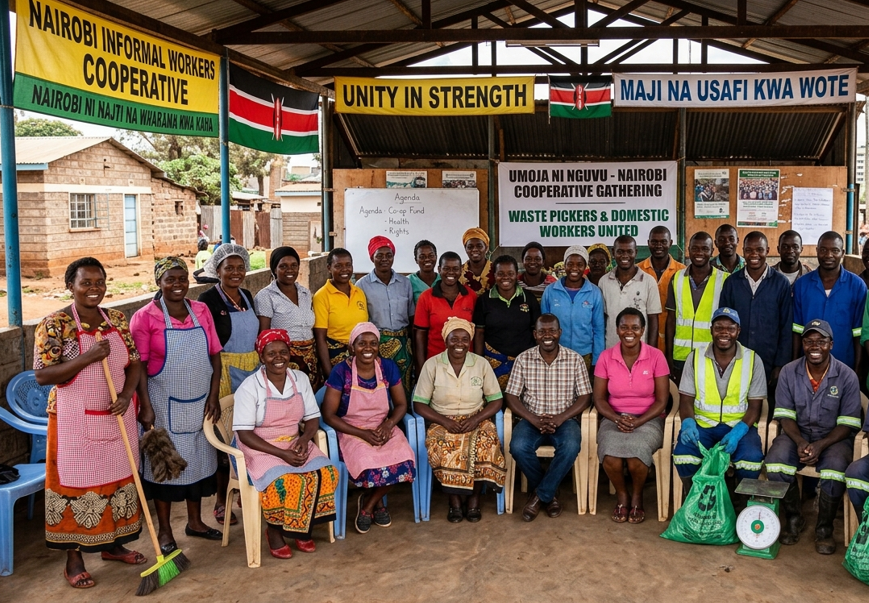
As the world marks International Workers’ Day, this year’s theme calls for the celebration of workers. Yet in Kenya, 1st May has increasingly become just another public holiday - stripped of its historical and political significance.
May Day was born out of struggle: a collective demand by workers to assert their agency, secure dignity, and shape democratic systems that serve their interests.
Over time, however, this history has been steadily depoliticised. The urgency of worker-led organising, the power of unions, and the role of political action in advancing socio-economic justice have faded from public consciousness.
This year, the Domestic Workers and Waste Pickers Cooperative Society joins the world in convening domestic workers, waste pickers, and transport workers at Dhobi Women’s Park in Eastleigh, Nairobi. The gathering will serve as a platform for workers to dive deep into their lived realities, share daily struggles, and strengthen models such as cooperative societies.
At the heart of this convening is a clear demand: that the Kenyan government ratify International Labour Organization (ILO) Conventions No. 189 and 190, which seek to guarantee domestic workers’ rights and improve their living conditions. For waste pickers, the call is equally urgent - formal recognition within the waste recycling chain, alongside fair wages, social protection, and access to healthcare.
Workers in Kenya continue to meet their obligations, they pay exorbitant taxes, sustain households, and invest daily in the national project. Yet they remain systematically denied access to healthcare, adequate housing, food security, and a clean, safe environment.
Waste pickers, for instance, are the invisible backbone of Kenya’s recycling system. They recycle waste, performing essential environmental labour under precarious conditions. Domestic workers, on the other hand, sustain households while still carrying responsibilities in their own homes. Recognising their dignity requires more than rhetoric; it demands formal recognition of their labour as labour.
Organisation remains the most powerful tool available to workers. Without collective organisation, workers are excluded from decisions about wages and conditions that directly affect their lives.
On this May Day 2026, workers must organize for social justice and livelihoods to remain at the centre of Kenya’s National democratic project.
Waringa Wahome is the secretary of the Domestic Workers and Waste Pickers Cooperative Society & Sellah Omuka is the convener of Dhobi Women Network.