Kenya did not stumble into multiparty democracy by accident. It was forced open by citizens who challenged a closed political system that allowed only one party and one centre of power.
That struggle mattered because it created space for competition, dissent and accountability. Today, that space is shrinking again. This time, not through a constitutional amendment, but through political capture.
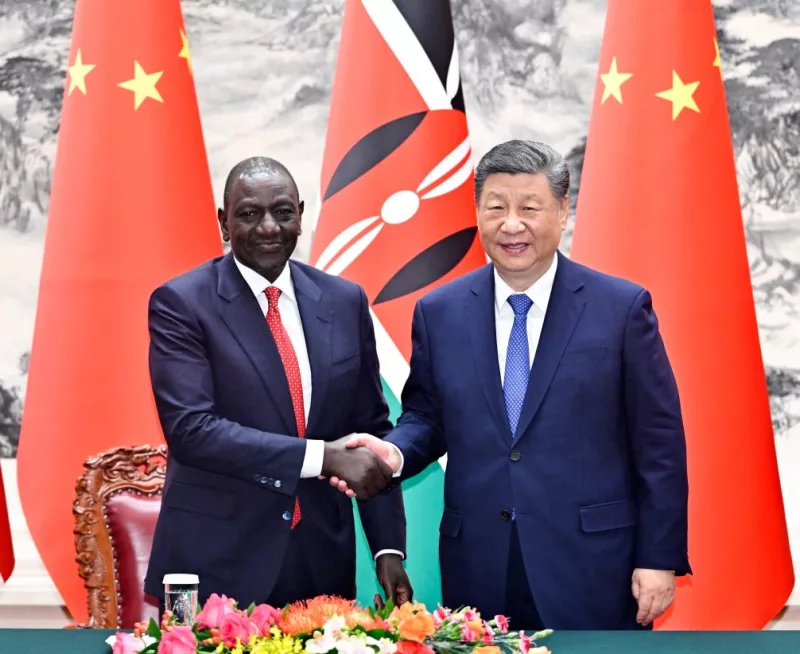
President William Ruto’s regime is overseeing a deliberate effort to weaken, absorb, or neutralise political parties outside his control. The goal is to concentrate power by emptying multiparty democracy of meaning while keeping its shell intact.
This did not start yesterday. Shortly after the 2022 election, the regime moved aggressively to capture Jubilee, the party that had controlled the presidency for 10 years and of which Ruto was a member. Through inducements, Jubilee MPs were pushed (or chose to) pledge loyalty to UDA. Party officials who resisted were targeted. For close to two years, Jubilee was weakened, and its national footprint was shrinking.
The same script is now being played out with ODM. Under the banner of a ‘broad-based government’ and a vague coalition agreement, the ruling regime is steadily pulling ODM into its orbit. Cabinet slots, parliamentary committee positions and state appointments are being used to reward cooperation. The result is a major opposition party that struggles to act like one.
This matters because ODM is not just another party. For years, it has been the main vehicle through which millions of Kenyans expressed opposition to the state. Its weakening leaves a vacuum that smaller parties cannot fill.
Kenya’s constitution anticipated this danger. Articles 91 and 92 require political parties to have internal democracy, national character and independence from state control. Multipartyism was meant to be a safeguard. But today, parties exist largely to negotiate access to power, not to articulate alternative policies or hold the government to account.
The consequences are visible. Parliament has become compliant. Oversight committees are chaired by politicians whose loyalty lies with the Executive. The line between government and opposition is increasingly blurred through co-optation.
This political convergence has unfolded against a backdrop of deep public anger. In 2024 and 2025, Gen Z-led protests erupted across the country, demanding accountability, jobs, affordable education and an end to corruption. These protests were notably non-partisan and constitutional. They exposed a political class that no longer speaks for the public.
Ruto’s response was telling. Rather than engaging the substance of the demands, it relied on containment, force and political co-optation. With much of the opposition already folded into government, there was no organised political voice to translate street demands into institutional pressure. That is what a weakened multiparty system looks like in practice.
Meanwhile, social services continue to deteriorate. Public hospitals are underfunded. Schools are strained. The cost of living remains high. And political elites remain preoccupied with coalition arithmetic and power-sharing deals. As such, multiparty democracy now appears to offer little relief to ordinary citizens. But get this right – the problem is a regime that cannot allow multipartyism to thrive because if it does, it will crumble under its own weight.
As the 2027 election approaches, we must do everything possible, on the streets and off, to ensure that the power of multipartyism is more effective than before.
If ODM is fully absorbed, and smaller parties are squeezed out by money and state power, Kenya will enter the election with the appearance, but not the substance, of political competition. Ballots will be cast, but choices will be limited.
This is how democracies regress in the modern era. Not through coups or bans, but through slow suffocation like the one we are witnessing now. Parties are not outlawed. They are domesticated. Opposition is not crushed. It is recruited.
Kenya has been here before. The lesson from past struggles is vigilance. Multiparty democracy survives only when citizens insist on it, defend it and refuse to be pacified by elite consensus.
If Kenyans do not push back against the quiet capture of political parties, they may soon discover that while multipartyism still exists on paper, it no longer exists in practice. And by then, reclaiming it will be far harder than defending it now.
Programme manager for political accountability in state institutions at the Kenya Human Rights Commission