As the global order fragments under the strain of geopolitical rivalry, economic nationalism, climate shocks and rapid technological change, Kenya and India are quietly reassessing a relationship spanning more than six decades.
What was once sustained largely by historical goodwill and steady commercial ties is now being reimagined as a strategic partnership shaped by necessity rather than nostalgia.
A recent high-level dialogue, Reshaping India–Kenya Cooperation in the 21st Century, jointly convened by the High Commission of India in Kenya and the Global Centre for Policy and Strategy, brought this shift into sharp focus and underscored the urgency of translating shared intent into coordinated action.
The timing of this recalibration is not accidental. The certainties that underpinned post–Cold War globalisation are eroding, replaced by contested supply chains, securitised trade and intensifying competition across the Indo-Pacific and the Western Indian Ocean.
For middle powers such as Kenya and India, this volatility presents both risk and opportunity. As India’s High Commissioner to Kenya, Adarsh Swaika, aptly observed, the present moment of “profound global uncertainty, volatility and transition” demands partnerships that are resilient, adaptive and forward-looking rather than episodic or narrowly transactional.
Kenya–India relations rest on deep historical foundations. Centuries-old Indian Ocean exchanges, shared anti-colonial experiences, democratic values and enduring people-to-people ties have long shaped the relationship.
The Indian diaspora in Kenya has played a particularly important role as a living bridge between the two societies, embedding economic, cultural and social connections that have survived political transitions and global shocks. Over the past decade, these foundations have been reinforced by renewed political and economic momentum.
Regular high-level exchanges have strengthened strategic trust, while economic engagement has expanded significantly. India is now among Kenya’s leading trade partners, with bilateral trade valued at about $3.5 billion, and nearly 200 Indian companies operating across manufacturing, pharmaceuticals, ICT, energy, banking and infrastructure. These investments contribute not only to trade volumes but also to employment creation, skills development and local value addition.
Yet the strategic environment has evolved faster than the relationship itself. Eastern Africa has acquired growing geopolitical salience due to its position astride critical maritime corridors, emerging energy routes and its rapidly expanding population.
At the same time, India is asserting a broader global role and seeking reliable partners beyond its immediate neighborhood. In this context, Kenya’s position as Eastern Africa’s diplomatic, financial and logistical hub offers India a gateway to continental frameworks such as the African Continental Free Trade Area.
For Kenya, India represents a relatively predictable and trusted partner, offering technology, development experience and financing alternatives grounded in partnership and mutual respect rather than heavy geopolitical conditionalities.
As Swaika emphasised, India increasingly views Kenya not only as a bilateral partner but also as a vital regional interlocutor in articulating Global South perspectives on climate action, sustainable development and global environmental governance.
This convergence of interests explains why calls to recalibrate the relationship have grown louder. A narrow focus on trade balances and ad hoc projects is no longer sufficient. What is required is a strategic partnership anchored in long-term interests, institutionalised dialogue and coordinated action across security, economic and technological domains. Maritime and defence cooperation illustrates this evolution.
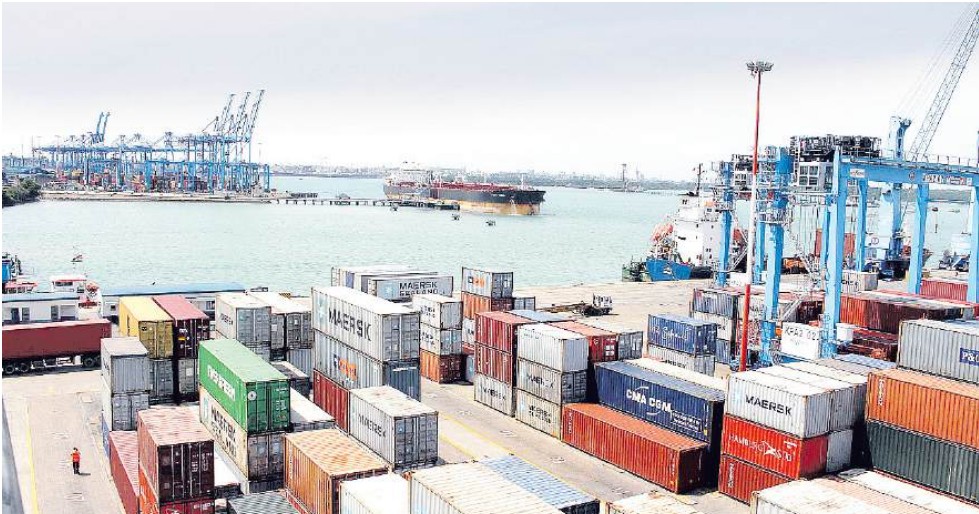
The Western Indian Ocean has become a zone of heightened contestation, facing threats ranging from piracy and illicit trafficking to hybrid security challenges linked to great-power competition. Recent efforts to deepen cooperation in defence, peacekeeping, humanitarian assistance and disaster response reflect shared responsibilities in the Indian Ocean Region.
The articulation of Kenya’s Bahari maritime vision, alongside India’s Sagar doctrine (Security and Growth for All in the Region), provides a conceptual basis for aligning maritime security with blue economy development and regional stability through joint training, enhanced maritime domain awareness and coordinated regional engagement.
Economically, the relationship remains underexploited relative to its potential. The strategic emphasis is gradually shifting from headline trade figures toward value addition, industrial cooperation and resilient supply chains.
India’s manufacturing depth, combined with Kenya’s access to regional markets, creates opportunities in pharmaceuticals, agro-processing, textiles, ICT and light manufacturing.
With the right policy frameworks and infrastructure, Kenya could function as a production and distribution hub for Indian firms targeting Eastern Africa, while simultaneously advancing its own industrialisation and employment objectives.
Development cooperation is also being reframed. India’s demand-driven, capacity-focused approach—through lines of credit, grant-supported projects and technical cooperation—has supported priority sectors such as power transmission, healthcare, textiles and MSMEs.
Thousands of Kenyan professionals, civil servants and students trained in India over the years constitute a durable reservoir of human capital that continues to anchor the partnership.
Looking ahead, expanding blended finance, public–private partnerships and regionally integrated projects could amplify impact, provided initiatives are embedded within long-term national and regional strategies rather than fragmented interventions.
Digital cooperation has emerged as another strategic frontier. India’s experience in building digital public infrastructure—from identity systems and digital payments to scalable service delivery platforms—offers practical lessons that can be adapted, rather than transplanted, to Kenya’s context.
Collaboration in data governance, cybersecurity and AI-enabled public services could strengthen state capacity, enhance transparency and open new avenues for youth employment in a rapidly digitising economy.
Climate change and energy security further reinforce the logic of deeper engagement. Kenya’s leadership in renewable energy, particularly geothermal, intersects with India’s expanding clean technology ecosystem, creating scope for cooperation in solar energy, green hydrogen, climate-resilient infrastructure and critical minerals linked to energy transitions.
Importantly, the partnership is increasingly framed as transformational rather than transactional. The alignment between India’s long-term vision of Viksit Bharat 2047 and Kenya’s Vision 2030—both emphasising inclusive growth, industrialisation, digital transformation, clean energy and human capital development—provides a strategic anchor for cooperation over the coming decades.
Yet strategy alone will not sustain the relationship. Its most resilient asset remains human capital. Education exchanges, joint research, professional mobility and cultural diplomacy continue to underpin bilateral ties. The Indian diaspora in Kenya, in particular, holds untapped potential to play a more deliberate role in investment, innovation and regional integration if systematically incorporated into strategic planning.
Recent diplomatic engagements signal growing political will on both sides to institutionalise cooperation through regular strategic dialogue and joint frameworks.
The challenge now lies in execution: translating ambition into coordinated policies, bankable projects and measurable outcomes. In a world defined by uncertainty and competition, reshaping India–Kenya cooperation is less about commemorating the past than preparing for the future.
If managed with foresight and discipline, the partnership could emerge as a pillar of stability and shared prosperity in Eastern Africa and the wider Indian Ocean region—demonstrating how middle powers can navigate a fragmenting global order through strategic alignment rather than reactive diplomacy.