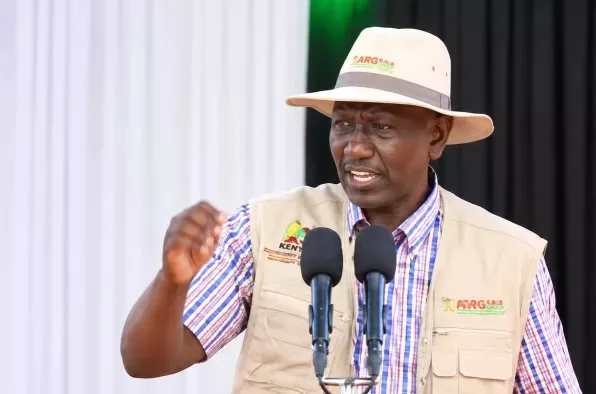
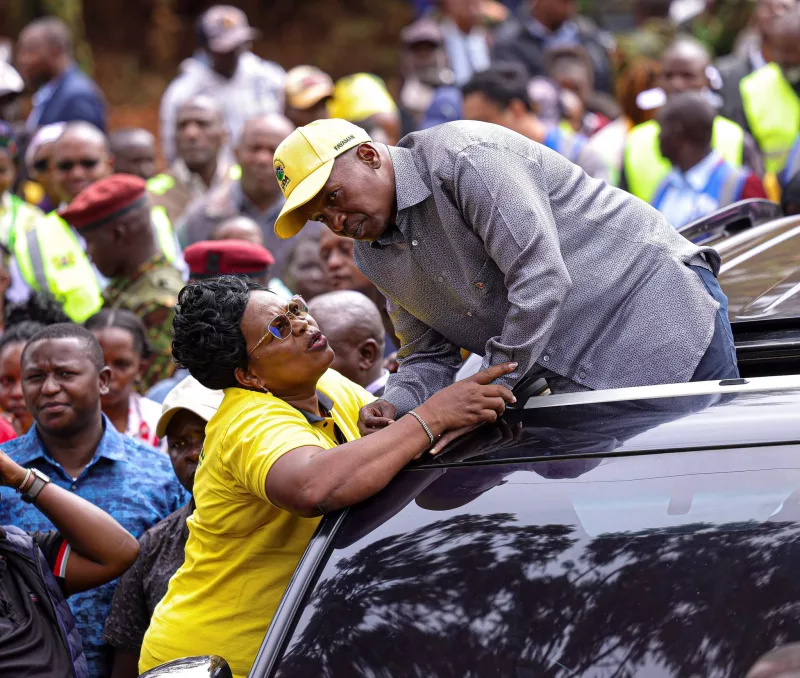
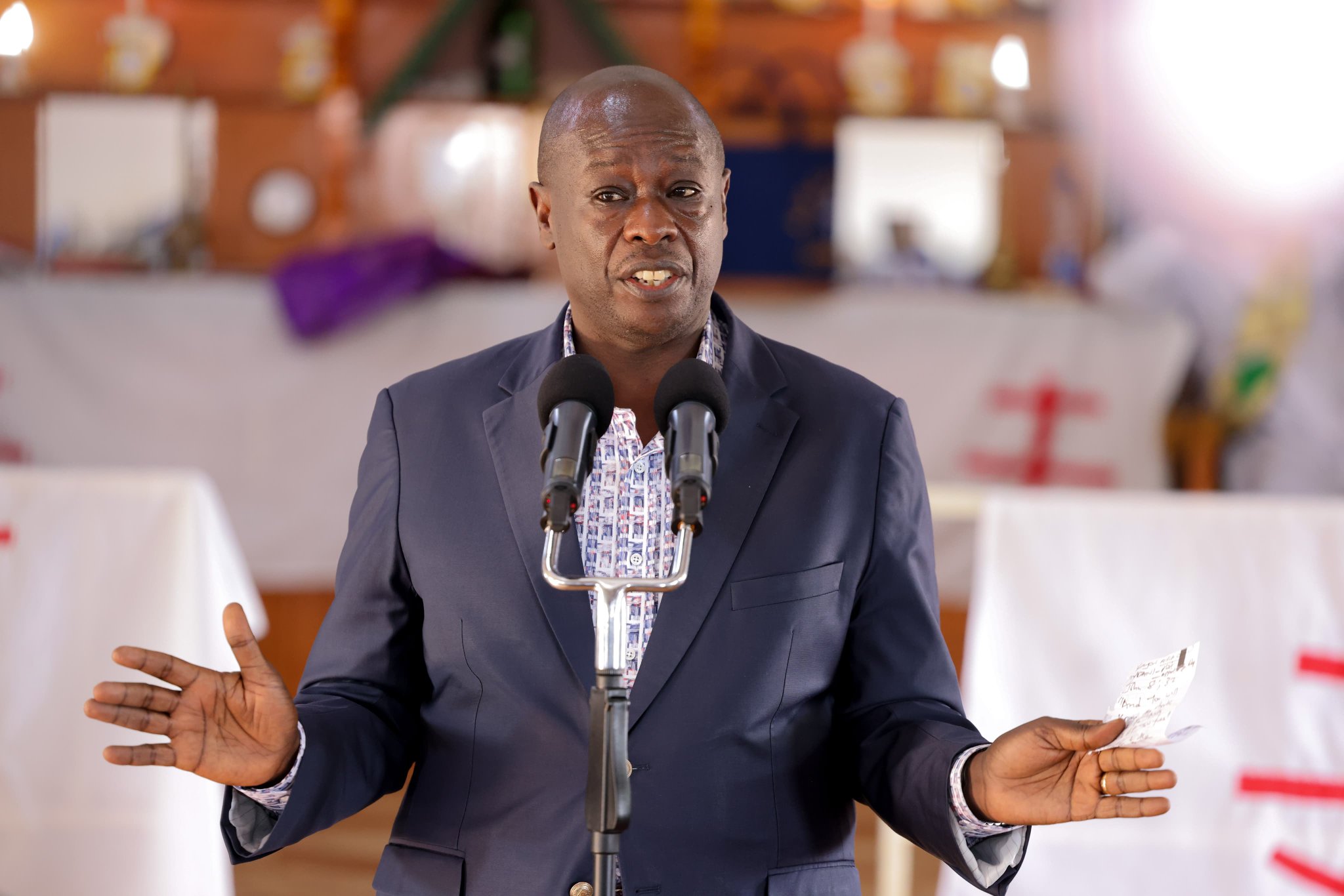
 Former Deputy President Rigathi Gachagua was the victim of an attack at a church service in Othaya, Nyeri county /FILE
We live in a country where people like to play with fire. And perhaps because thosewho do it get away with it most times, the country hasn’t had a chance to internalisethe dangers.
Last Sunday, former Deputy President Rigathi Gachagua led a delegation ofallies to a church service in Othaya constituency in Nyeri county.
They hadbarely settled down when the church came under attack by goons, escorted by what appeared tobe a police truck and, given the weapons they carried, they appeared to be masked policeofficers.
Almost immediately, government-allied bloggers went online with the rather sicknarrative that the former DP had stage-managed the attack.
But even if we were toassume that Gachagua was capable of organising a vicious attack on his owndelegation and church congregants, including women and children, itwould be a truly far-fetched theory, attempting to convince anyone that theformer DP had access to the guns, bullets and tear gas, for stage-managing theattack.
The most worrying thing in this country is not that it has too many fools walking everyinch of it, but that some of these fools have access to state power and theinstruments of state violence.
Video footage from the gangland attack in Nyeri lastweek shows armed people lacking the professionalism and discipline of a regularsecurity force. And yet their access to these same weapons demonstrates both a weaknessof command structure and an apparent disturbing emergence of rogue elements within thesecurity apparatus.
Regardless of which of the two possibilities applies to last weekend’s chaos, theoverriding conclusion has to be that any security officer who lacks the discipline andintuition that should have been instilled during training already lacks thesituational awareness and emotional intelligence to decipher the deeper nationalsecurity implications of his actions. And it is not the first time for this absence ofawareness to be broadcast to the nation.
During the ‘sufuria’ demonstrations in 2023, called by then ODM leader RailaOdinga to demand electoral reforms and to protest the rising cost of living, Raila’sown delegations came under vicious attacks by the police, who lobbed teargascanisters into cars in his convoy and used live bullets to target both leaders andprotesters.
It was easy to see, as with the Gachagua case last Sunday, that thepolice officers allegedly involved did not fully appreciate the national security implications ifharm came to either Raila or Gachagua.Given how regular these close calls have become recently, we can deducethe command and intelligence structures of the security services are eitherignorant of these incidents before they happen or fail to educate their surrogates onthe dangers of their actions to Kenya’s ethnic and political fabric.
And of the danger to thesustenance of our democracy and national stability. Even worse is the possibility thatsenior security officials who are made aware of these plans may possibly think thiscountry is immune to the breakdown of law and order that has seen some of Kenya’sneighbours sink into instability over the years.
By far the most delicate moment of Kenya’s stability, in recent years, must be themoment when Raila, aggrieved by his declared loss in the 2017 elections, decided to swearhimself in.
Initially, he wanted to be sworn in as president but later, obviously, after consulting,to the non-existent post of ‘People’s President’, a sort of climbdown. There must have beenmany options available to the state in dealing with the former PM at that time, includingarresting and charging him with treason, or scuttling the entire function using force.
Given how charged the nation was at that time, and the massive numbers who trooped to UhuruPark for Raila’s ‘swearing in’ there would have been a bloodbath if a counterforce of securityservices or pro-government goons had intervened.
But President Uhuru Kenyatta, summoningenough wisdom to save a nation, and, according to him, disregarding the hawks around him whowanted him to crack hard on Raila and the ODM battalion, chose to keep security forces awayfrom the function. No shots were fired. No blood was shed.
That level of wisdom is critically needed in navigating the remaining year and a halfbefore the 2027 general election. The attacks on Gachagua by goons and policehave become too common.
I still consider the former DP the vilest politician in ageneration. His divisive politics and rabid rhetoric make me cringe. But I am alive tothe fact that he has admirers, and they are myriad. It is in the interests of the nation that he is keptsafe and sound.
His right to speak and annoy the ruling order is enshrined in the constitution,even when he speaks words that should come with a TV rating.
The attacks on the DCP leader have become common, but they are not the only cause forworry. In recent demonstrations, including the famous Gen Z protestsof 2024 and 2025, groups of masked men have been seen patrolling the streets,assisted by the police. In some cases, clashes have occurred between protestersand these protected, masked individuals.
I am not certain that the state apparatushas degenerated to a level of outsourcing the restoration of law and order to maskedthugs. The danger, however, is that once deployed, these goons and their police handlersmay not know the potential consequences of one stray bullet, or a stone, aimed at,God forbid, a top political leader.
But there is an even greater issue around this. The rise of the goon culture andpolitical vigilantes will spread fast across the country, once every politician, electedleader or aspirant, decides to engage youths for ‘security’ and to disrupt opponents’functions.
No one person or formation can claim monopoly over money for hiringyouths, or even access to jobless youths, in a country where this ‘resource’ aboundsand is readily available.
Essentially therefore, the prevailing philosophy will start tobe that every leader whose meeting gets disrupted by goons will simply invest in hisown gangs to protect himself and confront opponents.
The youth demographic in Kenya, especially the jobless and despondent variety, isnot just a ticking time bomb due its availability to be exploited by politicians, but itsaffinity to wear a tribal face when deployed.
It therefore goes that goons not onlypose a danger politically, but the ethnic prism around their mobilisation enables suchpolitical risks to turn tribal fast.
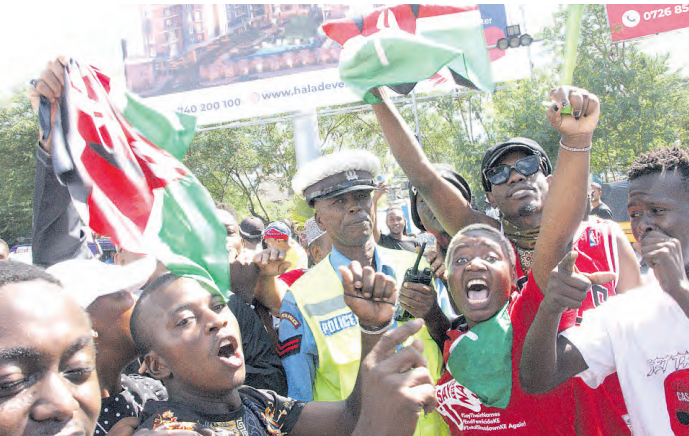
During the 2024 Gen Z protests, we all briefly toyed with the idea that a newgeneration of young, ‘tribeless’ Kenyans had emerged. Their method of protest wasfancy and hip; they bore smartphones and miniature Kenyan flags, speaking onelanguage and categorically declaring a break with the past.
But soon afterward, the mostvisible faces of the protest leaders drifted to political formations that eerily rhymedwith their surnames, confirming again that ethnicity was still a huge part of thenation’s sociopolitical platform.
The import of this is that the ethnic angle to youth mobilisation will continue a littlelonger. And when among these youths emerge vicious gangs and goons sponsoredby politicians, it is never too long before violence rears its ugly head inresidential neighbourhoods as ethnic clashes.
Kenya’s urban informal settlementshave borne the brunt of this before, and the intelligence and security agencies oughtto have mapped out this problem and kept it on their radar as we approach anotherelection.
The goon culture poses an existential danger to national stability. Andgetting away with it every time is no reason to rest on our laurels.