The recent expiry of the African Growth and Opportunity Act, America’s flagship trade preference programme, has left a lingering chill across the continent.
For two decades, Agoa provided valuable, albeit unpredictable, access to the American market. Its lapse underscores a volatile truth: reliance on a single, politically mercurial partner is a precarious foundation for an emerging economy.
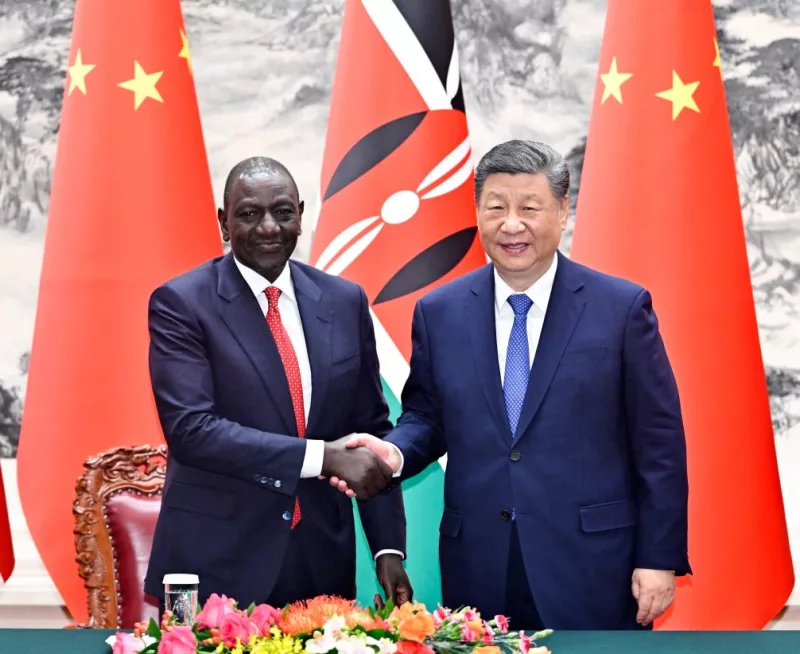
In this context, Kenya’s recent preliminary trade deal with China is not merely a new agreement; it is a strategic, pragmatic and essential pivot crucial for securing the nation’s economic future.
This deal, focusing on market access for agricultural products and supporting industrialisation, addresses the core pillars of Kenya’s development: wealth creation at the grassroots, industrial capacity building and sustainable foreign exchange earnings.
The most immediate and tangible impact will be felt in Kenya’s agricultural heartlands, directly driving wealth creation for farmers. China’s vast middle class, with its growing appetite for high-quality, exotic produce, presents a colossal opportunity.
The deal specifically targets avocados, cashew nuts, herbs and aquatic products—sectors dominated by smallholder farmers. Gaining streamlined access to the world’s largest consumer market can transform livelihoods.
For instance, Kenya only began exporting fresh avocados to China in 2022; formalising and expanding this under the new deal could see earnings skyrocket from the current $12 million (about Sh1.5 billion) annually.
This isn't just about exporting more; it's about exporting smarter, commanding better prices and bringing sustained income directly into rural households, thereby stimulating local economies and reducing poverty.
However, Kenya’s ambition must extend beyond exporting raw materials. The true genius of this framework lies in its potential for industrial capacity upgrades and value chain development.
Historically, Africa has exported raw commodities only to import finished goods at a higher cost. China’s expertise in establishing efficient, scalable manufacturing ecosystems can be leveraged to move Kenya up the global value chain, turning primary products into finished goods and fostering a culture of industrial innovation.
This directly feeds into the critical goal of export diversification. Kenya’s export basket has historically been narrow, leaving it vulnerable to sector-specific shocks.
The deal with China broadens this base. By adding new agricultural lines and, more importantly, opening pathways for manufactured or semi-processed goods, it reduces economic vulnerability.
Diversification is a cornerstone of economic resilience, and a partnership with the world’s manufacturing powerhouse provides a practical roadmap to achieve it. It shifts the narrative from being a commodity supplier to becoming a competitive processor and manufacturer for a dynamic market.
The culmination of increased and diversified exports is strengthened foreign exchange earnings. Kenya, like many developing nations, faces persistent pressure on its shilling due to a high import bill and dollar-denominated debt servicing.
Reliable forex inflows are the economy’s lifeblood. By securing preferential access to a market of 1.4 billion people, Kenya can generate a more stable and growing stream of yuan and dollar earnings.
This bolsters the Central Bank’s reserves, stabilises the currency, reduces the cost of imports, and provides the government with greater fiscal head room. It is a fundamental step towards greater macroeconomic stability.
The post-Agoa reality is that Western trade engagements are often laden with political conditionalities and subject to domestic political swings. China, conversely, offers a model centred on inclusive trade, joint economic development, true multilateralism and non-interference in political sovereignty. For African nations seeking rapid, tangible economic transformation, this partnership clarity is compelling.
China is already Africa’s largest trading partner for 16 years, with two-way trade exceeding $295 billion in 2024. Kenya is not acting in isolation; it is aligning with a continental trajectory. From Ethiopia’s industrial parks to Rwanda’s digital investments, African nations are pragmatically leveraging Chinese capital and market access to build their productive capacities.
Kenya’s preliminary deal with China is a mature response and a deliberate diversification of economic alliances. It wisely focuses on sectors that create immediate wealth (agriculture) while laying the groundwork for long-term structural change (industrialisation).
By doing so, it seeks to transform Kenya from a perennial aid recipient and commodity exporter into a competitive trade and processing hub for the Global South.
The writer is a scholar of international relations with a focus on China-Africa Development Cooperation. X: @Cavinceworld