In recent months, a disturbing trend has emerged that casts a dark shadow over Kenya’s publicly professed policy of encouraging citizens to seek work opportunities abroad.
More than 500 Kenyan nationals are reported to have been recruited into the Russian armed forces and sent to fight in the ongoing war against Ukraine, many without fully understanding what they were signing up for—and some completely unaware they were enlisting at all.
This stark reality has sparked outrage among human rights advocates, families of the victims and ordinary Kenyans who are grappling with the implications of their fellow citizens being caught up in a foreign conflict under murky and exploitative circumstances.
For many young Kenyans, the promise of work abroad – with lucrative pay and the chance to support their families back home – has long been a compelling dream.
The Kenyan government has actively promoted labour export as a legitimate career path, touting foreign employment as a way to reduce domestic unemployment and increase remittances.
Yet this noble policy has, arguably, lacked the guardrails necessary to protect vulnerable jobseekers from unscrupulous recruitment agents who masquerade as legitimate employment facilitators.
Instead of safe jobs abroad, many young Kenyans have found themselves on the front lines of a brutal war in Ukraine, fighting under the banner of the Russian military. They were lured with promises of good salaries and stable employment, only to discover upon arrival that the “job” involved military service or other perilous work directly tied to the war effort.
Beyond individual cases, broader reporting and official communication point to dozens of other Kenyans who have been stranded, injured or are otherwise stuck in Russia or on the war front.
According to Kenyan authorities, some nationals have been injured and are seeking help from the embassy in Moscow, with very few having been repatriated. However, the full scale of the problem remains unclear.
Heartbreaking personal stories of victims of this debacle raise urgent questions about the effectiveness of Kenya’s foreign employment strategies and its international protections for citizens abroad.
While the government has publicly celebrated the benefits of overseas employment, its oversight of recruitment agencies and protection mechanisms for Kenyan workers has been strikingly inadequate, particularly when compared with the scale of exploitation now emerging.
Compounding the problem are unscrupulous agents who have found fertile ground in Kenya’s young and job-hungry population. Desperate Kenyans are offering seemingly legitimate opportunities without transparent oversight, contract vetting or clear lines of accountability between the Kenyan state and host countries. The result has been a tragic exodus of vulnerable men into harm’s way with minimal state intervention.
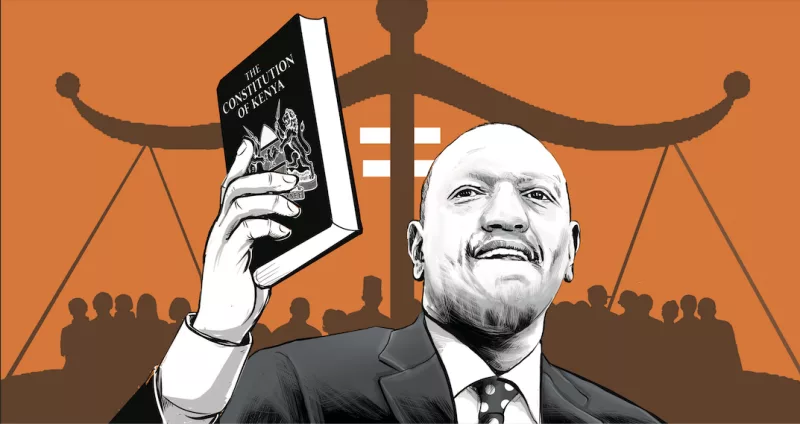
The Ministry of Foreign Affairs and the Kenyan Embassy in Russia have a constitutional and moral duty to protect Kenyans abroad—especially in situations of conflict, exploitation and human trafficking.
Yet, to date, their response appears reactive rather than proactive. Few Kenyans know exactly what the embassy is doing to monitor, protect and assist its nationals in Russia, beyond occasional reports of repatriation.
This is a national crisis.Kenyans have been trafficked into war. Families are grieving, anxious and desperate for answers. Some Kenyans have lost their lives; others remain stranded in hostile conditions with no access to help. This situation exposes a serious failure of protection and oversight by the government.
Fingers point to the Government of Kenya, which has a constitutional and moral duty to protect its citizens—both locally and abroad. In the case of recruitment into the Russian Army, whether Kenyans took up these jobs knowingly or unknowingly, the responsibility of the state remains unchanged. Citizenship does not end at the border.
Despite repeated reports in the media and mounting public concern, the level of transparency from Kenyan authorities about the status and welfare of their citizens in Russia remains limited. Families back home are confused, unsure whether their loved ones are alive, safe or even reachable.
As this crisis unfolds, Kenyan citizens and their families are asking the same question: What exactly is the Kenyan Embassy in Moscow doing while Kenyans are suffering there? Why has there not been a more robust diplomatic response to safeguard citizens from deceptive recruitment networks? Why are there no clear, widely publicised mechanisms for distressed Kenyans to seek help?
The silence from Kenya’s diplomatic mission in Russia, coupled with the government’s slow and insufficiently proactive approach, suggests a troubling lack of urgency in protecting some of the nation’s most vulnerable abroad.
If Kenya is serious about promoting foreign employment as a pathway to prosperity, then it must also take its responsibility to protect its citizens from exploitation, trafficking and war seriously. Anything less is a dereliction of duty that risks not just the livelihoods but the very lives of Kenyan men and women seeking a better future.
As we ask these hard questions, the families continue to wait, hoping for answers that have so far been painfully slow to arrive.