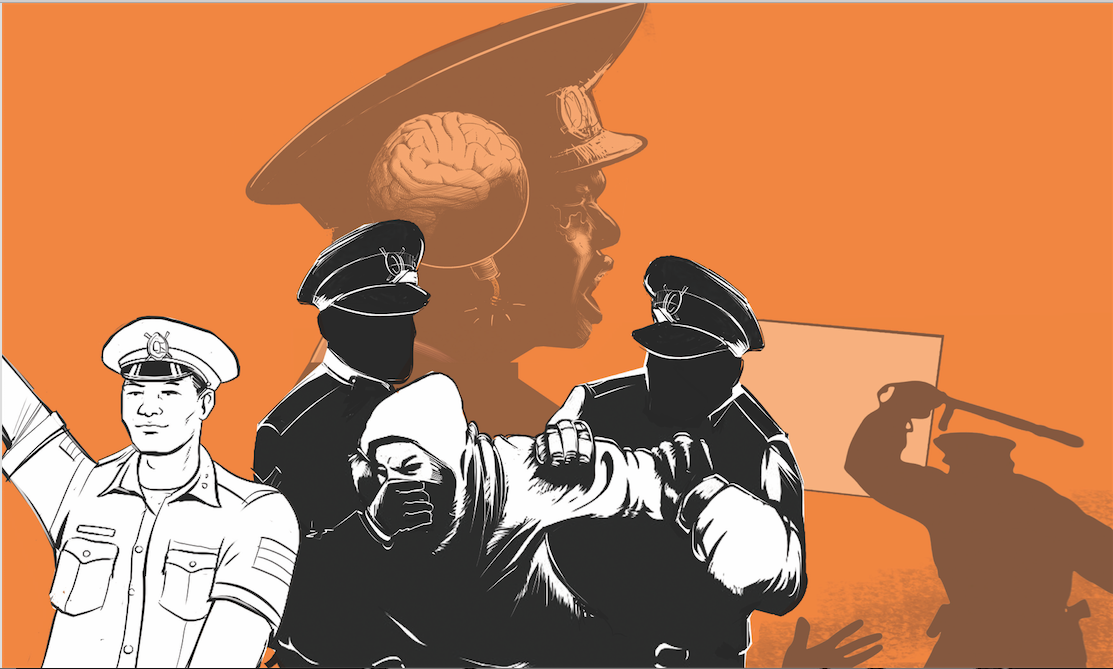
In the heart of Kenya's bustling cities and quiet villages, a shadow looms over public safety: our police force. Rooted in colonial oppression, the National Police Service (NPS) has morphed into an institution that often prioritises brute force over service.
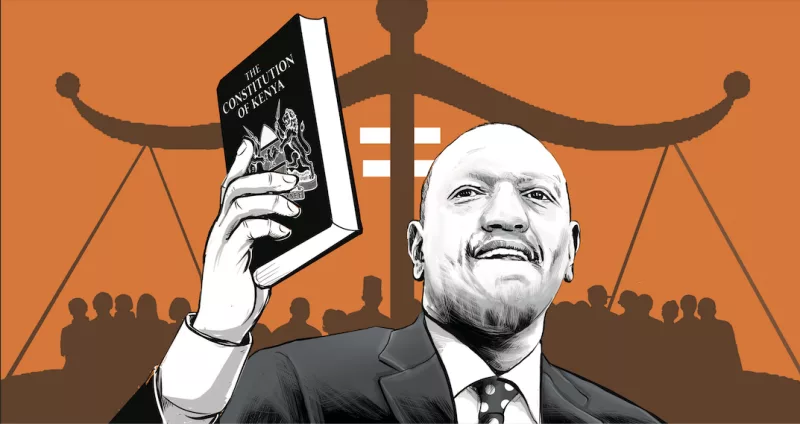
As we mark the 15th anniversary of the 2010 constitution, a document heralding 26 human rights provisions, it is clear that piecemeal reforms have failed.
The time has come to disband the NPS and reconstitute a new police service anchored in justice, not intimidation. This radical move is necessary for a nation aspiring to true democracy.
Consider the evidence from 2025 alone. During the June Saba Saba Day protests, at least nine lives were lost to police violence, with reports of excessive force echoing the brutality seen in the 2024 Finance Bill unrest.
In August, rights groups decried ongoing police excesses during demonstrations, while the tragic death of teacher and part-time blogger Albert Omondi Ojwang' in police custody spotlighted a culture of impunity.
These are symptoms of a system imprinted with colonial-era tactics, where officers are drilled into robotic obedience at Kiganjo Training College.
The Senate's revelation, by the Interior CS, that most officers receive no training beyond recruitment underscores this stagnation—a far cry from the constitution's human rights pivot.
Critics will argue that disbanding a 100,000-strong force risks a security vacuum. But a phased approach counters this: Launch independent, nationwide recruitment drives open to all, including current officers.
Tests for aptitude, constitutional knowledge, legal proficiency and physical fitness would sieve candidates, prioritising those motivated by service over salary. Stellar performers could earn exemptions in later stages.
Start with senior ranks, replacing failures swiftly—results delivered same-day, with new appointees stepping in immediately. This minimises disruption while purging entrenched elements. As rights advocates urged in August 2025, a total break-up is essential to combat corruption.
Elevating policing to a profession demands higher standards. Entry should require at least a C+ grade, with screenings for service-oriented mindsets.
In a high-unemployment nation, this might seem exclusionary, but police work is not a jobs programme—it's a guardianship of rights. Competitive, market-based remuneration would attract talent, while outreach targets marginalised communities for diversity.
The 2025 National Police Service Commission (Amendment) Act's psychosocial support centres are a step forward, humanising officers, but without a curriculum overhaul, they fall short. Integrate online Learning Management Systems for scalable training, with station commanders leading periodic sessions on human rights and de-escalation.
The Independent Policing Oversight Authority (IPOA) and National Police Service Commission (NPSC) can audit compliance, ensuring accountability.
Militarisation must end. Why do inspectors general parade in combat fatigues, signalling war on civilians? Daily patrols with G3 rifles and AK-47s erode trust. Differentiate postures: Data from crime reports could dictate combative gear in high-risk zones, friendly uniforms elsewhere. Mandate first-aid training—officers should not stand idle at accidents. Recent expansions, like 900 new stations and a bolstered Anti-Narcotics Unit, provide infrastructure for this shift.
Yet, 2025's protest infiltrations and fugitive officer cases reveal deep cultural resistance—a justification, not a barrier, for overhaul.
Central to this vision is reclaiming the Ministry of Justice as a core institution, like Finance or Health. The reconstituted police service should be anchored to the Ministry of Justice to reflect the new paradigm.
History shows its power: From Tom Mboya's 1963-1965 tenure to its 2013 scrapping amid Truth, Justice, and Reconciliation Commission findings and ICC trials, it has been dismantled when inconvenient to elites. As of December 2025, justice remains departmental, insufficient for constitutional order.
A revived Ministry, with the motto "Justice be our shield and defender", should anchor police policy, vetting every regulation: Does it uphold justice? Is it constitutional? This separates it from the overloaded Ministry of Interior, reducing political meddling.
Sceptics will cite costs, but these are investments in a safer Kenya. The 2024-25 Justice Sector Annual Report promises accountability, yet without structural change, it is window dressing. Youth-led movements in 2025 demanded radical reform; we must heed them.
Kenya deserves a police service that protects, not oppresses. Disband, reconstitute and anchor in justice—now. Our constitution demands it; the general will of the people of Kenya mandates it.
Social impact adviser, social consciousness theorist, trainer and speaker, agronomist consultant for golf courses and sportsfields and author of 'The Gigantomachy of Samaismela' and 'The Trouble with Kenya: McKenzian Blueprint'