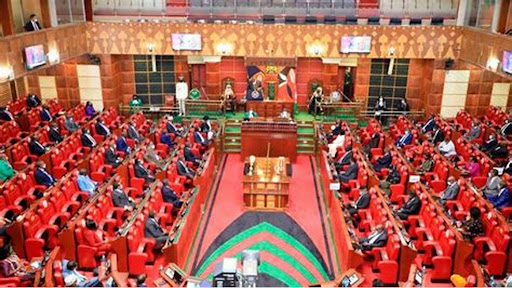
MPs, judges and the Public Service Commission have suffered a major legal setback in their ongoing battle with the Salaries and Remuneration Commission (SRC) over public sector pay.
The judgment by Justice Bahati Mwamuye, which nullified President William Ruto’s 21 advisory offices, has also strengthened the mandate of SRC to regulate salaries and benefits across all arms of government.
Justice Mwamuye declared that SRC’s advisory role on remuneration and fiscal implications is a “mandatory constitutional step” in establishing public offices and setting pay.
Holding that bypassing it renders such processes unlawful, the judge emphasised that “prudent and responsible” use of public funds, as mandated under Article 201(d), cannot be achieved without the SRC’s oversight.
The ruling comes amid a fierce and escalating battle between the SRC and both the Public Service Commission (PSC) and the Parliamentary Service Commission.
The agencies have been fighting over who holds ultimate power to set and review salaries for civil servants, judges, and even MPs.
United in opposition to the SRC, the rival agencies have sought to challenge the SRC’s authority, attempting to set their own pay and the attendant benefits.
While the PSC has argued that the SRC should be restricted to reviewing and advising on salaries, the court affirmed that the salaries body’s input is constitutionally required.
“By proceeding without the SRC’s analysis, the 1st and 2nd Respondents violated the spirit of Article 230 and rendered the establishment process procedurally and substantively incomplete,” the judge stated.
Public Service Commission has, over time, fought SRC’s attempt to regulate salaries of all civil servants, including teachers.
SRC currently wants its mandate expanded to set salaries for teachers, port workers, and members of COTU-affiliated institutions.
For the commission, SRC should restrict itself to reviewing and keeping under review the salaries of state officers.
It is also against the bid by SRC to directly engage public service institutions – ministries and state corporations.
Parliamentarians have on several occasions moved bills and legislative proposals to remove them under the ambit of the SRC, citing unfair treatment.
COTU boss Francis Atwoli has also, over time, decried what he termed as “SRC’s unchecked powers”.
But Justice Mwamuye held that the PSC cannot unilaterally decide on remuneration matters without SRC input.
“How can this be credibly done without input from the constitutional body tasked with ensuring the sustainability of the public wage bill? The PSC cannot unilaterally decide this,” the judge stated.
He held that SRC’s advisory function on fiscal sustainability is a mandatory step in governance, not a mere formality.
Justice Mwamuye emphasised this while nullifying the appointment of 21 presidential advisors, a process that bypassed the SRC.
The verdict has immediate implications for the ongoing regulatory and political standoff.
The statement strikes directly at the argument advanced by the PSC that the SRC should restrict itself to a passive, review-only role.
The judge emphasised that the failure by the President and the PSC to seek and incorporate the SRC’s advice on the advisory offices was a fatal constitutional flaw.
The court drew on precedents where the creation of other public offices, such as the Chief Administrative Secretary positions, was invalidated precisely because the SRC was not consulted.
The judge affirmed that for any public office with fiscal implications, the SRC’s input is not optional but “constitutionally inevitable.”
“The logic is irresistible here. The positions in question are graded in senior ranks and carry substantial remuneration packages,” Judge Mwamuye said.
For the PSC, which has positioned itself as the primary employer of civil servants and the rightful authority over job grading and salary structures, the judgment is a setback.
It legally entrenches the SRC’s role in any process that affects the national wage bill, including the creation of new posts and the determination of their remuneration.
For Parliament, whose members are in open revolt against the SRC over withheld house allowances and proposed cuts to sitting allowances, the ruling reinforces the commission’s authority.
MPs have long argued they are unfairly targeted, but the court’s reasoning suggests that the SRC’s mandate to ensure “fiscal sustainability” applies across all branches of government.
The PSC and protesting MPs now face an uphill legal battle to curtail the SRC’s powers.
The judgment effectively strengthens the SRC’s hand in its regulatory push.
Its proposed rules, particularly those requiring SRC clearance for collective agreements and its role in setting state officer pensions, are now backed by clarified judicial interpretation.
Attempts to legislate a reduced role for the SRC, such as through the Parliamentary Service Bill, which aims to remove MPs from the SRC’s ambit, face a higher constitutional hurdle.
INSTANT ANALYSIS
The High Court has also settled a far larger debate that in the contest over who guards the public purse, the Constitution rests final authority with the SRC. It implies that for any public institution, whether a ministry, state corporation, or Parliament, the SRC’s perspective on fiscal impact is not an intrusion but a constitutional requirement.