 Nairobi Governor Johnson Sakaja putting in a shift at the Dishi na County Central kitchen./HANDOUT
For thousands of learners, especially those in informal settlements, a guaranteed meal at school remains the strongest motivation to attend class. Hunger has long forced many children to miss school or drop out altogether, despite their desire to learn.
Education experts note that school feeding initiatives do more than address hunger. They improve concentration, boost enrollment, reduce absenteeism, and enhance overall academic performance. Well-fed learners are more attentive in class and more likely to complete their studies.
In Nairobi and other urban centres, county-led programmes such as Dishi na County have become lifelines for families grappling with the rising cost of living. By easing the burden of providing daily meals, parents are better able to keep their children in school.
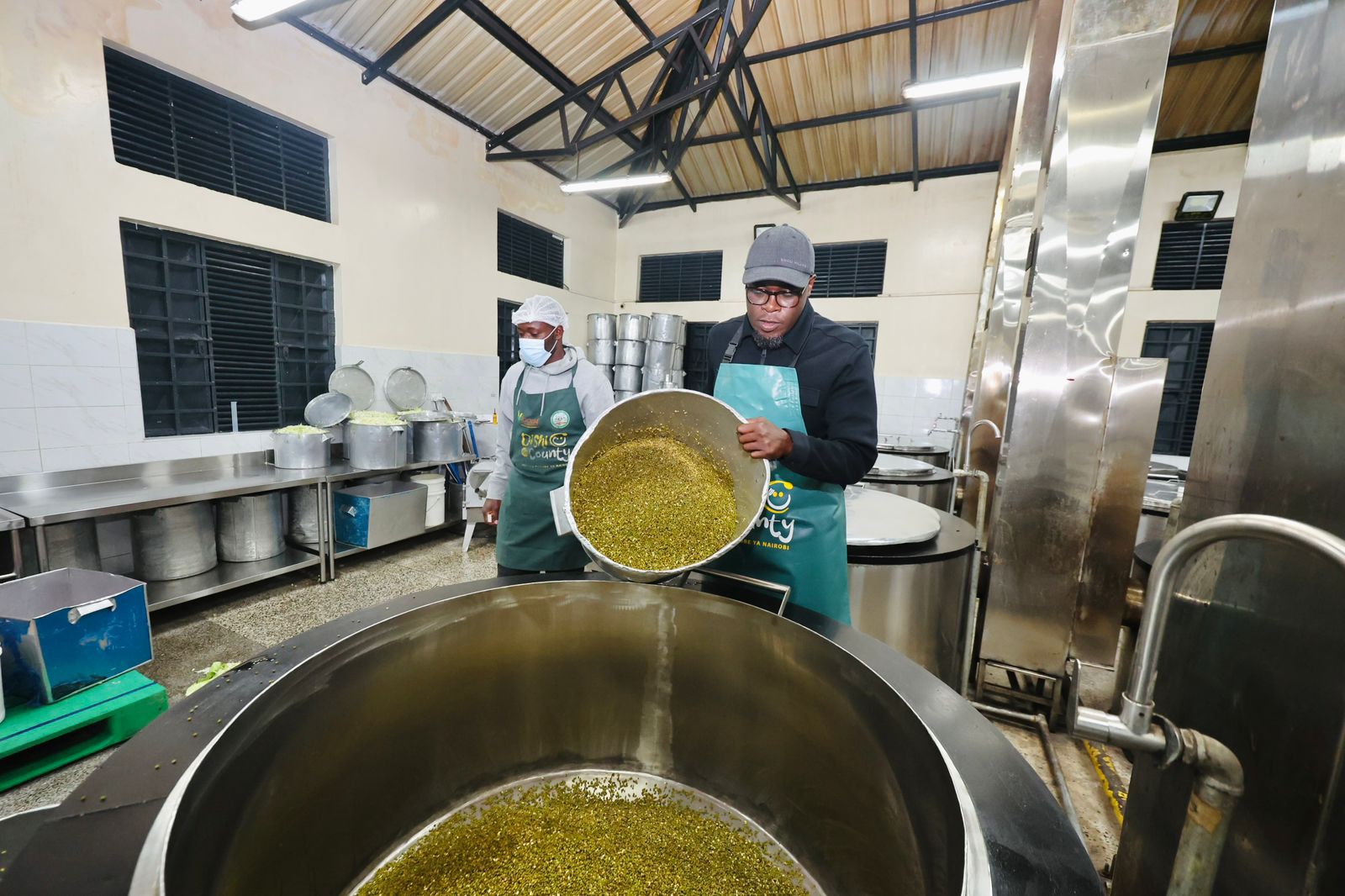 Nairobi Governor Johnson Sakaja putting in a shift at the Dishi na County Central kitchen./HANDOUT
Determined to confront this challenge, Sakaja launched the Dishi na County programme upon taking office. Today, the initiative feeds 316,000 learners across 230 public primary schools, making it one of the largest county-led school feeding programmes in the country.
“To make this possible, we have built 17 central kitchens across all sub-counties. Food is prepared there and transported daily to public schools. For the last three years, this programme has helped keep many children in school and significantly improved enrolment,” Sakaja said.
According to the governor, school enrolment has increased by more than 40 per cent since the programme’s inception — clear evidence of the powerful link between nutrition and education.
Parents say the impact is immediate and visible.
“When children know they will eat at school, they wake up early and are eager to attend classes,” said a parent from Eastlands. “Absenteeism has dropped, and discipline has improved.”
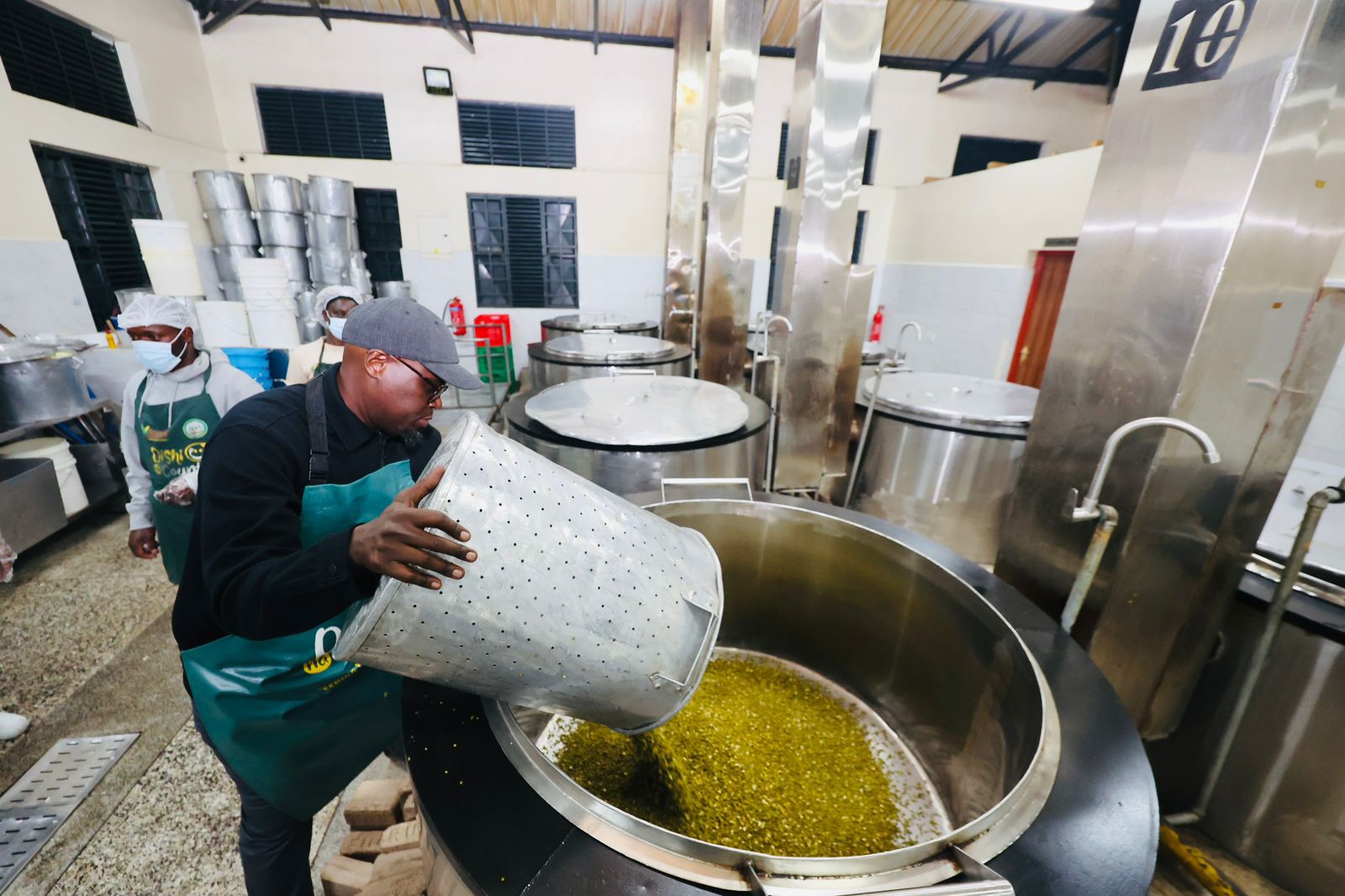 Nairobi Governor Johnson Sakaja putting in a shift at the Dishi na County Central kitchen./HANDOUT
Data from the Food and Agriculture Organization (FAO) shows that well-funded and consistently implemented school feeding programmes can increase enrollment by up to 10 percent and significantly improve attendance.
Civil society organisations have stepped in to bridge the gap, partnering with communities and donors to support feeding programmes in hard-to-reach areas. However, education stakeholders argue that long-term success depends on sustained government investment and strong policy support.
“School feeding should not be treated as charity,” said education policy analyst Dr Muthoni Kariuki. “It is a strategic investment in human capital. A hungry child cannot learn.”
As Kenya continues to pursue universal access to quality education, expanding and strengthening school feeding programmes remains critical. Beyond filling stomachs, these initiatives nourish young minds, fuelling concentration, curiosity and the thirst for knowledge that education seeks to ignite.