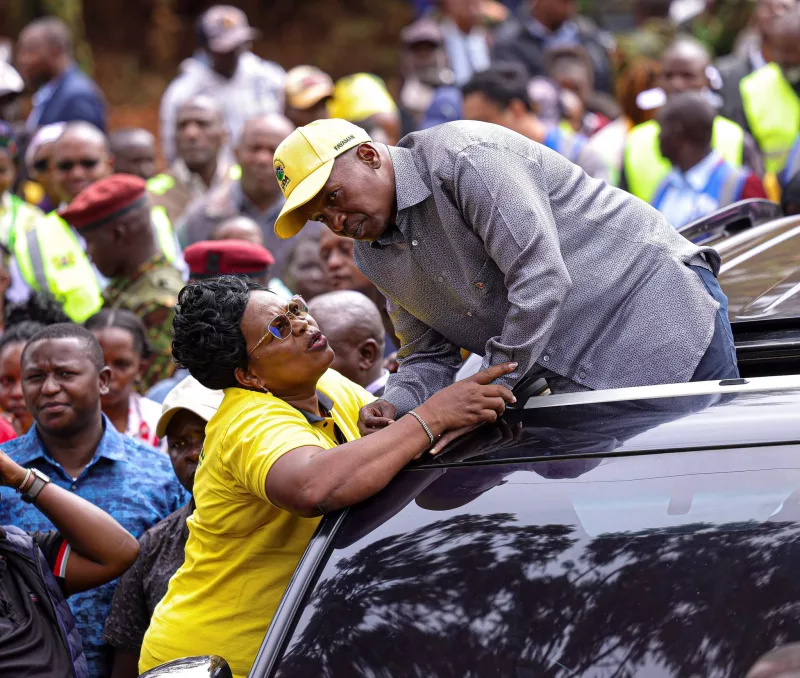
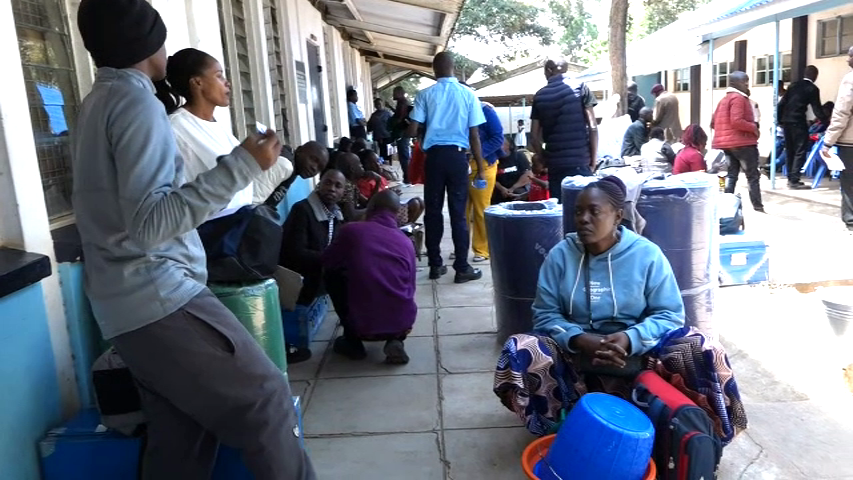
 Parents and learners during the admission of the grade 10 cohort at Nanyuki High School in Laikipia/ ALICE WAITHERA
In the next three years, the current Grade 10 students will be expected to transition into training. This will be within the framework of the three pathways identified by the curriculum.
However, it is unfortunate to note that no preparation of worth is taking place in this regard in the higher institutions of learning.
The universities have been plagued in recent times with endless industrial disputes. These have numerously disrupted the operations of the institutions, especially the academic calendars.
The tertiary colleges have grown in leaps and bounds in the last decade. The ballooning student population has not received a corresponding increase in staffing.
Therefore, the two levels of post senior school education and training have inherent challenges that have inhibited their preparedness for the new education system.
While the equipment and laboratories for training can be easily recalibrated to respond to the new curriculum needs, the greatest challenge lie in the orientation of the staff.
Majority of both technical and teaching staff in these institutions have been trained under the 8-4-4 system. There still exists a small cohort of old professors carried over from the defunct 7-4-2-3 system.
The new CBE system has been developed to redress the inadequacies of the previous two systems. Yet the key drivers of learner development have not been carried along. The lecturers and administration have been discharging their respective responsibilities with the business as usual attitude.
There have been no deliberate strategies developed to provide seamless transition into the new system. Thus as with the senior school scenario, universities and TVETs will find the admitted students at their gates without the necessary infrastructure to facilitate their learning.
CBC is normally discussed in passing as if it belongs somewhere else but the universities and TVETs. If the events of this year’s Grade 10 admission recur in 2029, then the outcomes would be devastating and catastrophic. The government must therefore initiate reforms early enough and demand demonstrable progress towards preparedness for the CBE.
The Competency-Based Education has entered its third and most critical stage, the senior school. Students joining Grade 10 reported to school on January 12. However, there still existed glaring challenges exposed by the hiccups in the admission of the students.
Myriad complaints were raised by parents and teachers on the confusion surrounding the initial placement process. Many were dissatisfied with the schools that they were placed in.
This forced the ministry to agree to allow parents and students to revise their choices on the ground by visiting their preferred schools. The principals of high-performing schools went through untold stress as the demand outstripped the available spaces in the senior school sections. This illustrated inadequate preparedness on the part of the key stakeholders.
The main victims were the young pioneer CBE students, who patiently waited for their parents and teachers to settle them in their preferred schools.
This confusion does not bode well for those following in the footsteps as the second in line. As it were, almost a third of the KJSEA graduands have not been settled so far.
This points to systemic failure of the curriculum implementation and the trend must be stopped. Bottlenecks and bumps should be identified early and addressed effectively.
It is generally agreed that the KICD has not been prompt in developing and delivering the learning content and materials in time. Many a time, recommended study books are authorised and published as schools open.
The TSC has not consistently retrained the teachers, who are expected to guide the learners. Many still use the delivery skills acquired during their training under the 8-4-4 system to discharge the requirements of the new curriculum.
The CBE requires concomitant infrastructural resourcing. Except for the private schools, the much-needed learning equipment has been lacking. This has not only created inequalities but led to less capacity to cover the curriculum. The resultant inconsistencies are open and a hindrance to the progress of the new system.
University staff by nature can be liberal and conservative as circumstances may dictate. The lecturers are normally liberal when an idea is appealing to them and inclusive.
But they turn conservative and sometimes extreme protectionists if they find a proposal anathema to them. They are some of the most learned people in society. Yet as they climb the academic ladder, their respective fields continue to narrow and focus on linear knowledge strands.
But this specialisation when deployed strategically allows them to interrogate new ideas from the other fields with the objectivity that enriches these proposals for better results. While they remain employees of the institutions, the cadre can only provide their goodwill through persuasion using logic.
Instructions that are incongruent with scientific reality will hardly move them. Thus CBE faces its greatest hurdle in the lecture halls, training workshops and test laboratories. The presidential working party on education, under the leadership of Prof Raphael Munavu had in its leadership seasoned professors.
In spite of their presence, no significant attention was paid to the education and training at the higher institutions of learning. Therefore, its final report focused on recommendations on how to transition and where to domicile the senior school. The only strategic decision in this regard was the new funding model for new students admitted to university and tertiary levels.
These institutions felt left out and conveniently ignored the unfolding changes. The unpreparedness of this final stage of human academic terrain will spell doom for the otherwise noble system.
It is imperative that these men and women of gowns are incorporated into the mainstream implementation process of the CBE immediately to forestall any eventual pitfalls. This cadre exists in three formations: the ordinary staff, the unions and the management.
The leadership of the universities and colleges in their respective senates, management boards and academic boards should initiate processes to align their curriculum with the philosophy of the CBE. Fortunately, the majority of TVETs are already implementing competency learning to some considerable extent.
Granted that the two technical universities were established to entrench this new approach to training, the extent of success is subject of debate. The implementation of industry-based learning, which is the enhanced version of the previous industrial attachment, faced challenges from inadequate supervision.
The staff available at the university level were not initially grounded in hands on training approach. They thus lacked the enthusiasm to inspire the students in this direction.
It is therefore not in doubt that the existing curricula in the universities and TVETs require reevaluation and alignment to the new system. The learning environment should also be critically examined to identify the gaps early enough.
The universities through government capitation must then move to devote resources for infrastructure improvements. The lessons of incomplete projects under the hurried implementation of the 8-4-4 system final phase in 1989 should come in handy.
It might be necessary to undertake trial tests before the students are admitted. The most important aspect of these reforms would involve the retooling of the lecturers. Short courses and training workshops should be organised for the teaching and technical staff to re orient them for the CBE.
For good measure, the courses should be assessed and certified to enable such staff expand their career opportunities and exploit the value of the skills elsewhere.
The government should assist the institutions strengthen their partnerships with international training and research organisations. This would be through international stakeholder engagements where the government boldly declare and showcase the new system.
Finally, the universities and TVETs must as a matter of priority revise and make public in good advance the new admission criteria for the courses available. This might also be the best opportunity to discontinue the courses that are considered outdated and not market oriented.