Destructive protests have rocked Iran in recent weeks, claiming thousands of lives. Ignited by a worsening economic crisis, citizens took to the streets to demonstrate. Currency depreciation, high cost of living and skyrocketing food prices (attributed to the ‘maximum pressure campaign’ by the US and other Western powers through sanctions) have made life tremendously difficult for ordinary people.
The ensuing economic pressure has meant that people cannot afford basic necessities. Iran says the protests are legitimate but that they were also hijacked by “terrorist elements” with the accusations squarely levelled at the US and Israel.
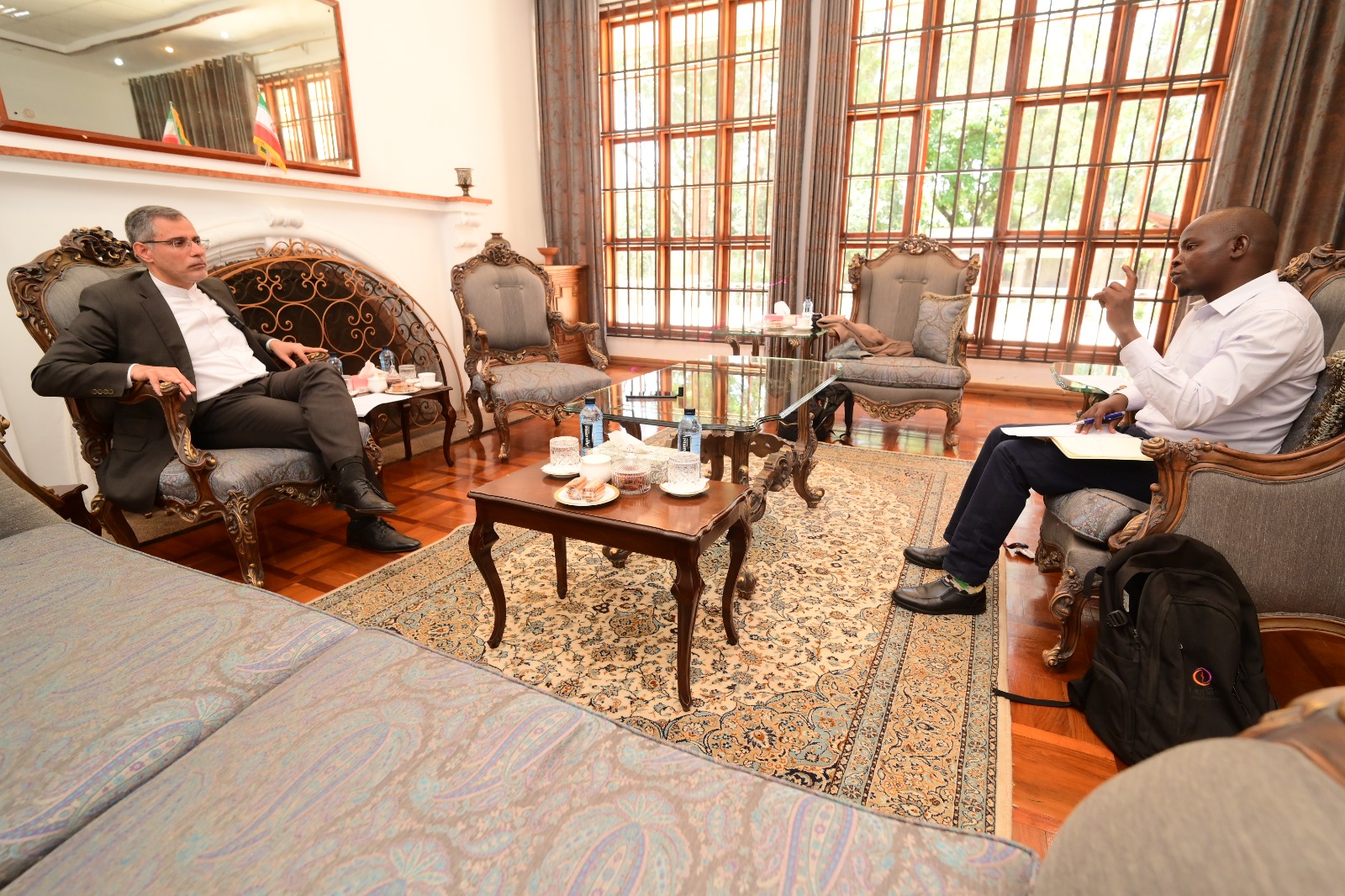
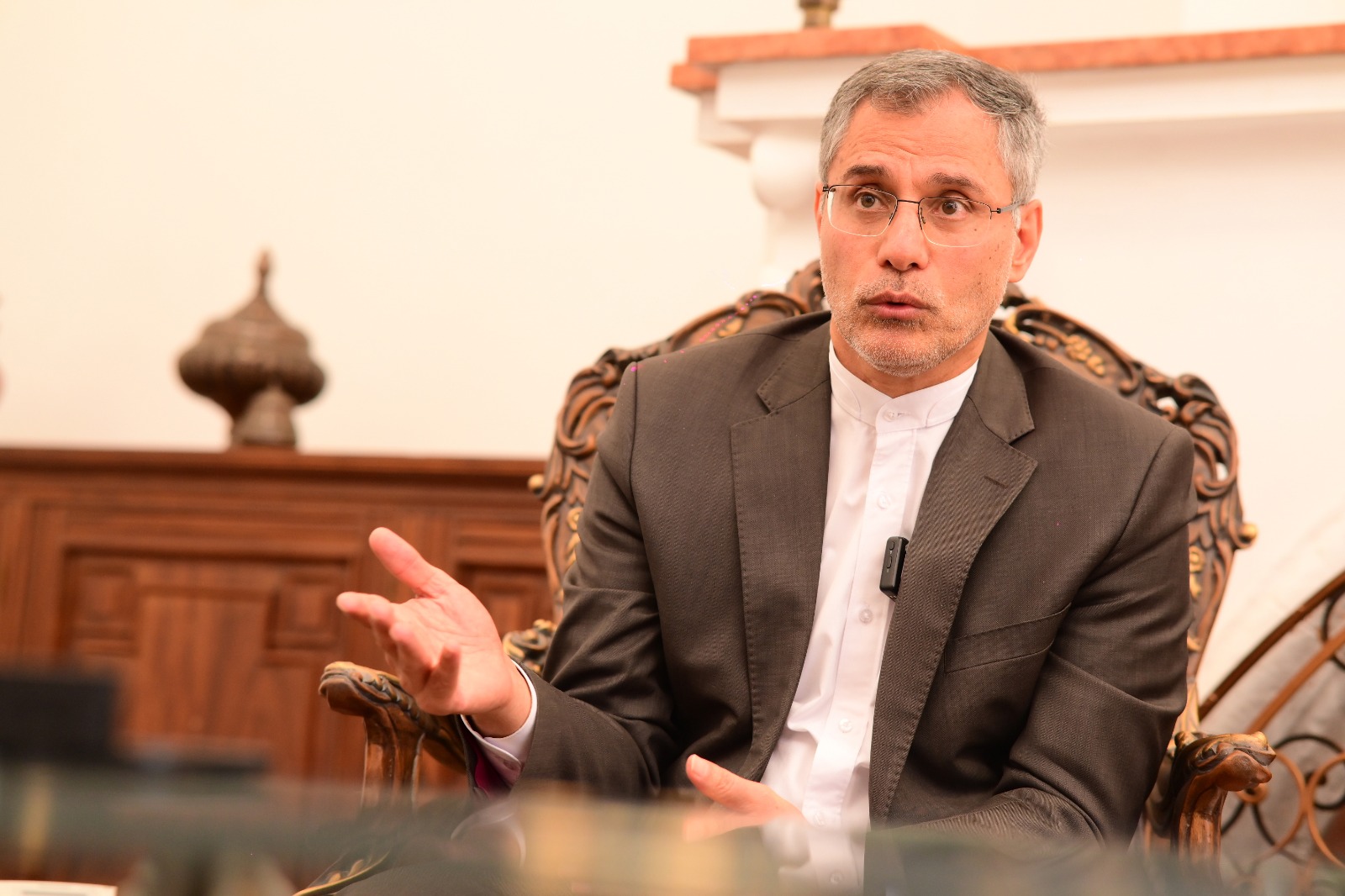
In an exclusive interview with Siasa editor Nicholas Awuor, the Islamic Republic, through its Ambassador Ali Gholampour and its Ministry of Foreign Affairs, has affirmed the respect for “human rights, including the right to peaceful protests”.
Iran has, however, rejected the “acts of terrorism committed during the unrests regardless of the incentives.”
On Kenya-Iran bilateral relations, Gholampour, while acknowledging the expanded economic cooperation between the two countries, insists that more needs to be done in terms of strengthening trade agreements.
On the issue of tea exports that abruptly stopped in 2023, the ambassador exudes hope that the crisis will be resolved amicably for the benefit of both sides. He blames export disruption on an ongoing court case in Iran that implicated Debsh Tea Company (the central buyer of Kenyan tea).
The firm allegedly embezzled about $1.4 billion (Sh180.8 billion). Since then, there have been diplomatic negotiations, with the Kenyan government forming a joint committee to address the trade ban. There have also been calls to restore trust by implementing stricter quality controls to ensure Kenya-Iran ties return to normal.
Gholampour, dressed simply in a suit without a tie and with a permanent smile fixed on his face, ushers us to a large room with a tiny Iranian flag, a huge mirror and two coloured portraits of Ayatollah Khomeini and Ayatollah Ali Khamenei. The interview has been edited for length and clarity. Here are the excerpts:
Tea trade disruptions and Iran–Kenya relations
Export of tea to Iran accounts for about 90 percent of trade between Kenya and Iran. Since 2023, however, there have been disruptions linked to quality and compliance issues. What exactly happened?
Historically, Iran and Kenya have enjoyed very good relations. There have been strong cultural, political, economic and business engagements between the two countries, especially after the Iranian Revolution and Kenya’s independence in the 1960s, and continuing to the present. Both are developing countries and have many shared experiences.
Because of this background, both sides have always tried to build a solid foundation for expanding relations, particularly in trade, investment and economic cooperation.
Iran’s policy priority has been to expand relations with Africa as a whole, and especially with East Africa. Kenya holds a special place because of its geopolitical position in the region.
Iran is one of the largest consumers of tea in the world. Although Iran produces tea domestically, there is a significant gap between production and consumption, which is why we import tea.
Tea is an essential daily product for our people, and Kenyan tea is very well known in Iran for its quality and taste. Iranian consumers value it highly.
However, around two years ago, a major corruption scandal emerged in Iran involving tea imports. An Iranian company that was responsible for importing tea became the centre of what turned out to be the largest corruption case of its kind in the country’s history.
Nearly one hundred individuals were brought before the courts, including senior officials and even ministers, who were convicted and imprisoned. The company’s CEO was also jailed. The scale of the corruption was unprecedented and generated enormous public sensitivity and pressure.
Public opinion, the media, Parliament and the Judiciary all demanded accountability. The government had to respond to this pressure. It later emerged that the Iranian company had a Kenyan partner involved in exporting and supplying tea to Iran.
Because this matter is still a judicial case, I cannot provide details or judgments; that authority rests solely with the courts. But what is clear is that resolving the case requires cooperation from all parties involved, including the Kenyan company.
During the seventh session of the Iran–Kenya Joint Cooperation Commission, held in Nairobi in August 2025, a high-level Iranian delegation led by the Minister of Agriculture travelled to Kenya. Through extensive dialogue, both sides agreed to cooperate within their respective legal frameworks to find a mechanism to resolve the issue.
They also agreed on a timeline and a process to allow trade—specifically, tea trade—to resume once progress had been made. It is important to emphasise that this issue relates only to tea and does not define the broader relationship between Iran and Kenya.
Progress has been made, but the process is ongoing and requires continued, focused cooperation. Because this is a complex judicial matter involving multiple institutions in Iran, it cannot be resolved overnight.
At the same time, this issue is extremely important for Kenya, particularly for the many small- and medium-scale tea producers whose livelihoods depend on exports.
It is equally important for Iran, as we wish to continue importing high-quality Kenyan tea. There is a shared interest in resolving this matter, and I remain hopeful that, with continued cooperation from the Kenyan government, we will reach a solution soon.
Strengthening trade and technology cooperation
Beyond tea, both countries have expressed interest in strengthening trade and technology relations. What areas do you see as priorities, and what needs to be done to deepen cooperation?
Both sides are determined to work together to establish joint projects, particularly in investment and trade expansion. Iranian public and private sector companies are ready to invest in Kenya and also to use Kenya as a hub for regional trade and investment in East Africa. Kenya offers attractive incentives, including special economic zones and concessions for foreign investors.
However, there are serious obstacles. The most important is the absence of a bilateral trade agreement between Iran and Kenya. This issue was recognised during the Joint Cooperation Commission in August 2025, and both sides agreed to begin negotiations on such an agreement. A trade agreement is crucial because it reduces tariffs, avoids double taxation and removes non-tariff barriers that raise the cost of doing business.
Kenya has many trade agreements with other countries, regionally and internationally, and Iran also has similar arrangements elsewhere. The lack of such an agreement between our two countries reduces competitiveness and limits trade volumes. Negotiating and implementing a trade agreement takes time, but we are hopeful that discussions will begin soon.
Another major obstacle is the impact of unilateral sanctions imposed on Iran, particularly by the United States. These sanctions are not multilateral and are not in line with the UN system. One of their most serious consequences is the absence of a functional banking and financial system between Iran and Kenya. Without banking channels, it becomes extremely difficult for companies to conduct transactions, transfer funds or make investments.
Some countries have found mechanisms to work around these constraints, but in the case of Kenya, no such system currently exists. This creates high risks for businesses and discourages long-term engagement. What begins as a political issue ultimately becomes an economic one, affecting trade continuity.
Another challenge is the limited complementarity between the two economies. Both countries are developing economies, and in some sectors they compete rather than complement each other. However, there are many areas where complementarity does exist, and those are the sectors we should prioritise.
Logistics also pose challenges. While there is a direct shipping line between Iran and Kenya, there are no direct flights, which increases the cost of doing business. Despite these difficulties, the political will on both sides to expand trade remains strong.
Technology transfer and sectoral opportunities
Which Iranian sectors are best placed to invest or transfer technology to Kenya?
Iran is always ready to share its technological achievements with friendly countries such as Kenya. Iranian companies are strong in pharmaceuticals, hospital equipment, agricultural machinery, and industrial manufacturing. Iran produces high-quality medicines and medical equipment comparable to European and US standards.
In agriculture, Iran manufactures a wide range of machinery, including tractors, harvesters and processing equipment. These industries are ready to establish production lines or joint ventures in Kenya. There is also interest from Iranian automobile manufacturers to assemble or produce vehicles locally, potentially rebranded for the regional market.
However, investors require guarantees. Iranian companies—both public and private—need assurances regarding asset protection, banking support and government backing. Sanctions also create psychological barriers. If these issues are addressed at the public policy level, many Iranian firms would be willing to invest in Kenya.
Opportunities for Kenyans in Iran
Are there opportunities for Kenyans, particularly young people and professionals, to benefit from cooperation with Iran?
Yes. Iran offers scholarships to Kenyan students interested in pursuing university education in various fields. Applicants can apply online and, once selected, benefit from fully supported studies in Iran. There are also opportunities for academic exchanges between universities, including exchanges of professors and lecturers.
In addition, the Iranian House of Technology in Nairobi serves as a platform for startups and knowledge-based companies. It connects Kenyan and Iranian innovators for joint ventures, training and technology exchange. Kenyan startups are welcome to engage with this centre.
Protests and internal developments in Iran
International media have reported high death tolls during recent protests in Iran. What is your response to these claims?
To understand these events, one must look at the broader geopolitical context. Since the Islamic Revolution, Iran has pursued an independent foreign policy, reducing external influence, particularly from Western powers. This independence has come at a cost, including sanctions, economic pressure and political hostility.
Sanctions have strained Iran’s economy, affecting currency stability, business activity and living costs. These pressures contributed to peaceful economic protests, which the government initially tolerated and managed with restraint. However, after several days, armed and organised groups hijacked these protests, turning them violent.
According to Iranian authorities, these groups were supported and encouraged by foreign intelligence services. Public infrastructure was attacked, security personnel were killed and chaos ensued. In response, the government temporarily restricted internet access to prevent coordination of violence. After these measures, calm returned.
Regarding casualty figures, I do not have exact numbers. Official figures will be released by Iranian authorities.
Iran, Israel and the nuclear issue
Given recent conflict with Israel and ongoing tensions over Iran’s nuclear programme, are we facing another regional war?
International law is clear. The use of force is only permitted in self-defence or with UN Security Council authorisation. Iran is a signatory to the Non-Proliferation Treaty as a non-nuclear state and has the right to peaceful nuclear technology under international supervision.
Iran’s nuclear facilities are under extensive inspection by the International Atomic Energy Agency, which has repeatedly confirmed that Iran’s programme is peaceful. Claims of an imminent threat are unfounded and have no legal basis.
Recent attacks on Iranian facilities violated international law and occurred while diplomatic negotiations were ongoing. These actions undermine international stability and set dangerous precedents.
Reflections on the Iranian Revolution
As Iran marks the anniversary of the Islamic Revolution, do you believe its goals have been achieved, and are there lessons for countries like Kenya?
The revolution replaced a monarchy with a system based on public participation and elections. Despite decades of sanctions, war and pressure, Iran has achieved significant progress in science, technology, industry and self-reliance. Challenges remain, particularly economic ones, but resilience has been a defining feature.
The key lesson is independence. Each country must choose its own path, but Iran’s experience shows that self-reliance, though costly, can yield long-term benefits. Ultimately, the future of any nation lies in the hands of its people.