

Things are falling apart. The centre can no longer hold. Mere anarchy is loosed upon Kenya’s political scene. And before I go all William Butler Yeats on you, dear reader, allow me to remind you that a few weeks ago, in these very pages, I suggested that the trio of Nairobi Senator Edwin Sifuna, Embakasi East MP Babu Owino and former Prime Minister Raila Odinga’s last-born daughter, Winnie, should carry out a hostile takeover of their party, ODM.
My opinion was premised on the belief that the ODM faction that has been on a lightning dash to sign a working arrangement with President William Ruto was moving too fast for the membership and leaving the masses behind.
Besides, the Oburu Oginga-led faction has shown no real interest in building consensus within the party, in order for the competing interests in the Orange movement to find a rallying point.
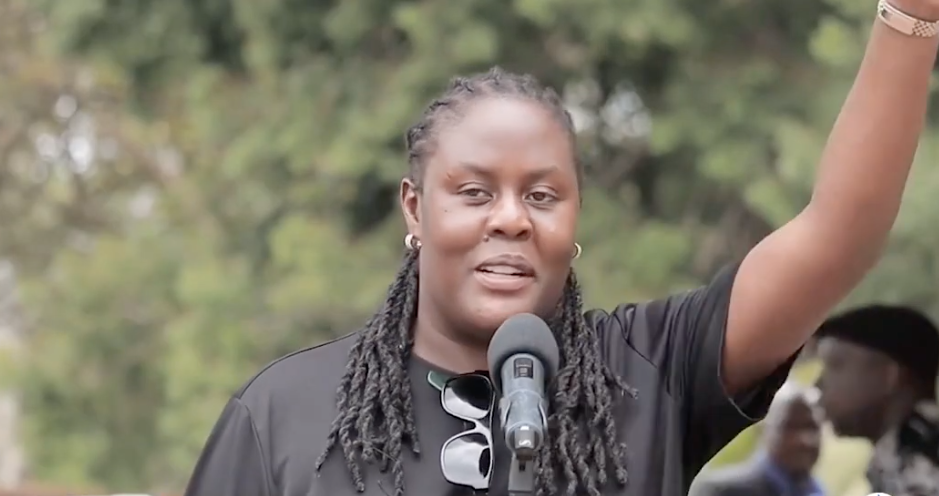
But even I had not imagined that Winnie would draw a line in the sand as boldly as she did in Kibra last Sunday. As far as political statements go, none was bigger than the storming of Kamukunji grounds, just three days after her uncle and ODM leader, Oburu, had led a pro-government rally at the same venue.
And for her perceived enemies, the young EALA MP dedicated two lyrically potent and chilling numbers: ‘Hit ’Em Up’ by American rapper Tupac Shakur, and Hamnitishi by Kenyan singer E-Sir. The contempt was served in a truckload.
The biggest problem facing ODM today is that there is no Raila to bring people to the table, to talk and work together. The second problem is related to the first: in the absence of a unifying figure, everyone holds onto their own viewpoint as supreme.
Consequently, those pushing for a deal with Ruto presume that the people are with them. Ditto those opposing any such arrangement. The problem is that the side that is wrong in this equation will only wake up to reality at the next general election.
And there is no shortage of precedent. History clearly shows that it took the 1997 general election for Ford Kenya — the party whose leadership Wamalwa Kijana inherited after the death of Jaramogi Oginga Odinga in 1994 — to come to terms with the damage caused by Raila’s departure to the NDP in late 1996.
This anecdote remains one of the clearest signs that deal-makers and transition manipulators do not always have their finger on the political pulse of the masses as they go about choosing political formations.
It is not difficult to discern Winnie’s thinking. Her uncle Oburu, having taken the reins from her father, has surrounded himself with a cabal of party officials who brook no dissent and routinely take the position that those opposed to their arrangement with the President should leave the party.
This group, seemingly enjoying unfettered access to state privileges, has alienated younger party officials and, possibly, a large section of youthful party members.
Moreover, their increasingly vindictive style sits uneasily with the democratic tenets that Raila cultivated within the movement.
The Kibra event last weekend, at the very least, laid bare the fault lines within the larger Odinga family. Simply put, the house of Raila — including his widow and children — and the house of his sister Ruth Odinga, represented at the rally by her son, have clearly shifted to one side, leaving Oburu’s lineage on the other.
Ordinarily, elders and assorted counsel-givers would be falling over themselves to mediate, but it is doubtful that anyone ever anticipated an open dispute within the great Odinga clan.
There is no doubt that Raila worked tirelessly for over four decades to build a political movement in his image — one that relied almost entirely on him for its survival.
ODM may not endure long after his passing, but in the interim, one cannot begrudge his children for feeling that a horde of Johnny-come-latelies have descended on the party and converted it into an instrument for their own ambitions and thirst for power. Worse still, these new beneficiaries, unlike Raila’s tradition of open democracy, do not take kindly to being questioned.
At last weekend’s Kibra rally, one speaker declared that Winnie was the custodian of the ‘title deed’ to Raila’s political property. My thoughts drifted back to 2007, when the original ODM-K was torn apart by divisions over the choice of presidential candidate.
Much of the debate then revolved around who held the party’s ‘title deed’ — a reference to the registration and statutory instruments. As it turned out, these were in the hands of Kalonzo Musyoka and his lieutenant, Daniel Maanzo.
They promptly undressed their opponents by decamping with the party, leaving the rest politically homeless.
Party registration instruments, on their own, are meaningless without the people who animate the organisation. I am not certain who today holds ODM’s instruments.
But the remark about the ‘title deed’ was telling. If Raila’s children are indeed the bearers, and they seek to inherit their father’s political movement, the opposing side cannot simply dismiss them.
After all, being young, they have a legitimate grievance if they feel that their uncle cannot negotiate the political destiny of youthful party members who hold a long-term stake in a future that does not belong to the elderly.
For President Ruto and those salivating over a slice — or the entirety — of ODM’s support base ahead of the 2027 general election, the emergence of a new force within the party poses a serious challenge.
It is not only the triumvirate of Sifuna, Babu and Winnie that unsettles the status quo. Last weekend’s ODM delegates’ meeting in Kakamega ended up as two parallel events: one led by former governor and current Cooperatives Cabinet Secretary Wycliffe Oparanya, and the other by incumbent Governor Fernandes Barasa. ODM in Kakamega county now has two chairmen — Barasa and Lugari MP Nabii Nabwera, an ally of Oparanya.
There is a school of thought that suggests the Kenya Kwanza administration covertly encourages these competing interests in order to weaken ODM at the negotiating table while expanding President Ruto’s political options. Whatever the credibility of such claims, if younger leaders opposed to a deal with UDA begin touring the grassroots, a formidable wing will emerge within ODM — one that cannot be ignored. What Winnie has done is lay the groundwork for this wing, which may yet eclipse the other side of the divide, even with its well-funded and well-branded public rallies.
All this unfolds at a moment when the President appears to be enjoying renewed rapprochement with his former stronghold in the Mount Kenya region. Some hardcore supporters of former Deputy President Rigathi Gachagua have quietly drifted back to Ruto.
One analyst suggested that the region’s principal grievance with Ruto was his rapprochement with Raila, long viewed there as a political nemesis — and that Raila’s death has cleared the path for their return. Be that as it may, the pieces on Kenya’s political chessboard are shifting rapidly, and many surprises still await the players.





