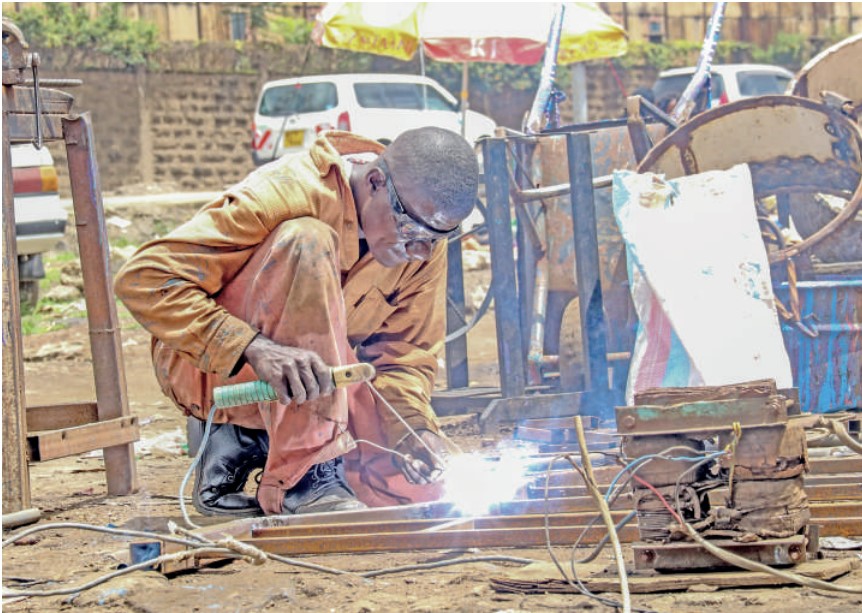
Jua kali artisans, mechanics, carpenters and other informally trained workers are poised for formal recognition after a House committee approved a Bill that will certify skills gained outside the classroom.
A House team has given the green light to the Industrial Training (Amendment) Bill, 2024, paving the way for millions of Kenyans in the informal sector to have their expertise formally assessed.
The Bill, sponsored by Kisumu Central MP Joshua Oron, seeks to amend the Industrial Training Act (Cap 237) by introducing a framework for the Recognition of Prior Learning (RPL).
The system will allow individuals who have gained expertise through hands-on experience, apprenticeships, or informal training to apply for official assessment and certification.
For decades, artisans in the informal sector have honed skills without formal accreditation, limiting their employment prospects, mobility and income potential.
The proposed law aims to bridge that gap.
“Prior learning recognises that people who work in formal, informal and even jua kali sectors gain knowledge and skills through practice,” the Labour Committee, chaired by Kilifi South MP Ken Chonga, said in its report.
“They should have an opportunity for recognition of their acquired knowledge and skills,” the report by the House panel adds.
The National Industrial Training Authority (Nita), the Kenya National Qualifications Authority (KNQA) and organisations representing persons with disabilities gave views on the Bill.
Nita, an entity which will be central to implementing RPL, endorsed the amendments as necessary.
“The Bill provides a clear legal mandate to operationalise the National Recognition of Prior Learning Policy.”
Nita emphasised that embedding RPL into law would “enhance socio-economic inclusion, skills development, employability and upward progression” for workers.
The industrial training authority proposed clarifications to ensure the implementing agency has flexibility in rule-making and that certification aligns with the country’s national qualifications framework.
KNQA, responsible for overseeing the national qualifications system, raised concerns about potential mandate conflicts.
It emphasised that a national system for assessing prior learning exists under its authority.
KNQA recommended that the Bill be reworded to avoid duplication and ensure Nita operates within the existing national qualifications system.
The agency recommended that the Bill tasks Nita with maintaining a structure for assessment within its current scope, rather than establishing a wholly new system.
The Office of the Attorney General recommended the deletion of clauses granting Nita powers to set up assessment systems.
It argued that assessment squarely falls under KNQA’s mandate as per the Kenya National Qualifications Framework Act.
The committee, however, opted to refine rather than remove these clauses.
The United Disabled Persons of Kenya (UDPK) highlighted the Bill’s initial silence on disability inclusion.
“The Bill does not mention persons with disabilities as a target group, despite their marginalisation in skills training and certification,” UDPK noted.
They proposed amendments to define disability and reasonable accommodation, and to mandate data collection disaggregated by disability to track inclusion.
MPs acknowledged the concerns but said protections are well spelt out in the constitution and the Persons with Disabilities Act, 2025.
Prior learning will now be defined as knowledge or skills acquired in earlier study and work or through experience, aligning with the national RPL policy.
MPs also recommended that Nita be tasked with “establishing a structure that assesses and certifies” skills acquired informally.
This will, however, be within the scope of industrial training, acknowledging the existing national system overseen by KNQA.
The Nita board will “maintain” (rather than “establish”) systems for RPL, recognising pre-existing frameworks.
The National Assembly is expected to consider the Bill when it resumes sittings in the fourth session starting next month.
If enacted, it stands to fire up the informal workforce, potentially boosting their employability, entrepreneurship and contribution to national development.
MPs at the committee observed the success of this initiative will ultimately depend on effective, accessible and inclusive implementation.