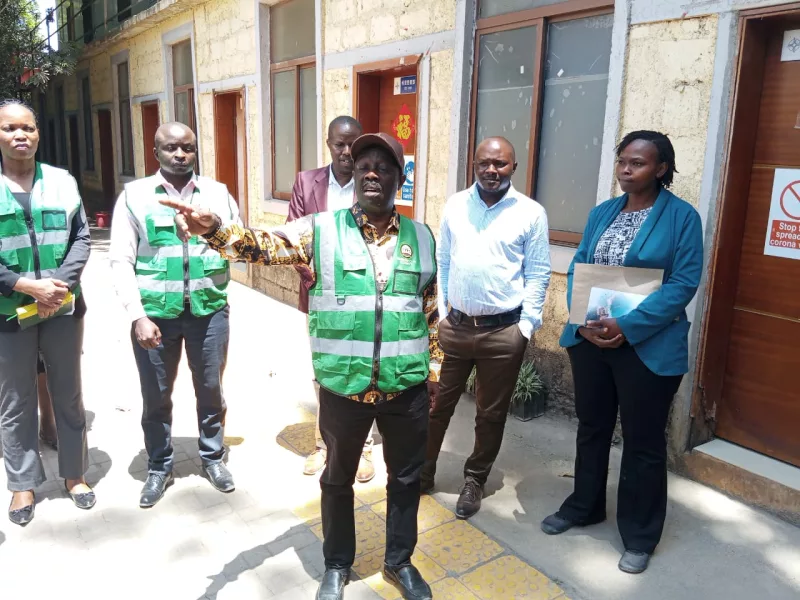
 Kefri director general Jane Njuguna during the signing of an MoU seeking to tackle mathenge /KEFRI
In Kenya’s arid and semi-arid regions, the invasive mathenge weed (prosopis juliflora) has become a serious ecological and socio-economic menace.
The hardy weed, declared a national disaster in 2022, has ravaged farmland, rendered livestock toothless, blocked roads and waterways, and even caused house walls to crack.
To address the growing problem, the Kenya Forestry Research Institute (Kefri) has signed a Memorandum of Understanding with Riziki Nature-Based Solutions Ltd, a nature-based solutions firm, as part of ongoing efforts to manage mathenge.
Kefri director general Jane Njuguna said the partnership will support farmers and communities in controlling the weed.
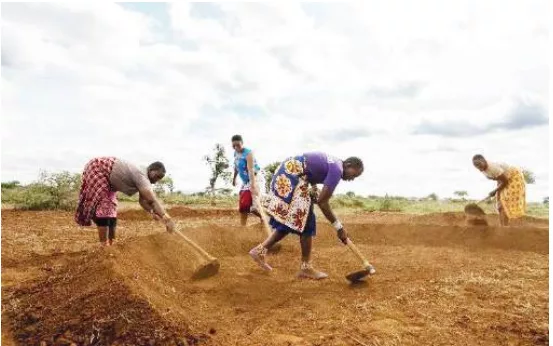
“The company is helping to uproot mathenge on farmers’ lands using the destumping technique, which involves complete removal to prevent regeneration. The invasive biomass is then converted into value-added products such as biochar,” she explained.
Biochar, produced through high-heat, low-oxygen processes, improves soil health, enhances water retention, boosts microbial activity, and sequesters carbon.
The collaboration aligns with Kefri’s mandate in forestry research, technology development and sustainable forest and landscape management. Under the MoU, Kefri and Riziki will jointly work on invasive species management, capacity building, research, knowledge exchange and resource mobilisation.
Mathenge was introduced to Kenya from South America in the 1970s to rehabilitate arid lands due to its fast growth, resilience and multiple uses—including fodder, honey production, shade, firewood and building poles.
However, it has since become invasive, replacing indigenous vegetation and threatening livelihoods.
Despite its challenges, mathenge has some benefits: its pods provide carbohydrates, sugar and protein for livestock and occasionally humans during dry seasons.
Kefri reports the largest biomass is found in Tana River, Turkana and Baringo counties, with significant infestations in Taita Taveta, Samburu, Isiolo, Mandera, Marsabit, Wajir, Kajiado, Migori and Malindi.
In Baringo South, for instance, the weed now covers 50 square kilometres, affecting 13 villages.
Previous attempts to exploit mathenge commercially, including a 2014 multimillion-shilling project to generate power from the weed, failed due to logistical challenges.
Through the Kefri-Riziki partnership, Kenya aims to control mathenge, protect indigenous vegetation, create sustainable livelihoods and mitigate climate impacts through carbon sequestration.