The country is facing a grim and undeniable reality: police killings have reached unprecedented levels. What was once treated as sporadic excess has now hardened into a disturbing pattern.
Every other day, there is a report of yet another life lost at the hands of the police, in a different part of the country, under circumstances that raise more questions than answers.
This is no longer a crisis on the horizon. It is here, it is ongoing, and it is claiming lives with terrifying regularity.
Barely days into the new year, the bloodshed began. On January 1, 14-year-old Dennis Ringa was killed. A child. A life that had barely begun ended violently at the hands of those entrusted with protecting citizens.
Just 10 days later, on January 11, 19-year-old Shukri Adan was killed. Again, a young person whose future was abruptly erased.
On January 14, the country was shaken by the killing of two police officers in an incident that underscored the depth of insecurity and dysfunction within the system itself. In that same incident, Salim Masha, 23, was also shot.
He later succumbed to his injuries on January 17 while receiving treatment. Then, on January 18, George Matheri was shot during an altercation with the police.
These are not isolated names or unfortunate coincidences. They are markers of a rapidly deteriorating security situation. In less than three weeks, multiple lives were lost in police-related shootings, cutting across age, status and circumstances. When deaths linked to law enforcement become this frequent, the nation must confront a painful truth—something is fundamentally broken.
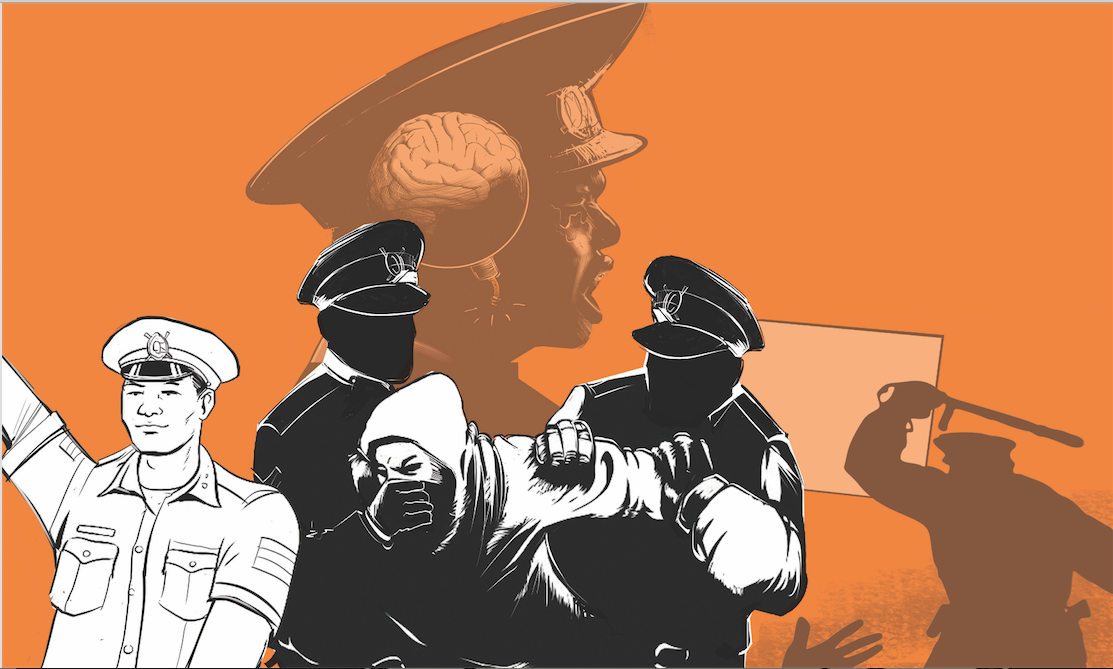
It is now clear that we are witnessing a breakdown of the national security structure. The result is a police force that appears increasingly trigger-happy, resorting to lethal and excessive force as a first response rather than a last resort.
The casual manner in which bullets are deployed speaks to a system that has lost both discipline and accountability. This is not how a professional, civilian-focused police service behaves. It is how a force behaves when oversight has collapsed and consequences are rare or nonexistent.
Such a state of affairs does not emerge in a vacuum. It points directly to failure at the top. Those in authority within the national security structures are failing in their duties. Leadership is not about issuing statements after deaths occur. It is about preventing those deaths in the first place through sound policy, strict command responsibility and unwavering accountability.
When killings multiply, it is not only the individual officers who must answer for their actions but also the commanders, inspectors and policymakers who allow a culture of impunity to thrive. They must be relieved of their duties.
For too long, the country has been fed the comforting but dishonest narrative of “a few bad apples.” That excuse has now expired.
The sheer frequency of these killings, their spread across regions and their repetition under different commands make it impossible to maintain the fiction that this is merely about rogue officers. This is about a system producing bad outcomes consistently—and when bad outcomes become routine, the problem is structural.
The security system, as it stands, is so broken that it requires a complete overhaul. Cosmetic reforms, reshuffles, uniform changes and recycled promises will not suffice. Training, recruitment, use-of-force policies, independent oversight and real-time accountability mechanisms must all be fundamentally rethought.
A police service that views citizens as enemies cannot coexist with a democratic society. Trust, once destroyed, is incredibly hard to rebuild—and right now, that trust is being buried alongside the dead.
The human cost of this crisis cannot be overstated. Behind every name is a grieving family, a shattered community and a lingering sense of injustice. Mothers and fathers are left to bury their children.
Young people grow up fearing the very uniform meant to offer protection. Communities withdraw cooperation, further weakening public safety and deepening the cycle of violence. This is how nations unravel—not in a single dramatic moment, but through repeated, unaddressed abuses.
The way forward demands honesty and courage. Extrajudicial killings must be declared a national disaster. This is not rhetorical excess; it is a recognition of scale and urgency. A national disaster requires the intervention of all actors—state and non-state alike.
Parliament, the judiciary, independent oversight bodies, civil society, religious institutions and media must all play their part. Silence and half measures are no longer neutral positions; they are complicity.
Anything short of this decisive response will be a mockery of the cries and pain of Kenyans who have suffered and continue to suffer at the hands of the same police who swore to protect lives and property. The country stands at a crossroads. It can choose denial and inertia, or it can choose accountability and reform. Lives depend on that choice, and the time to make it is now.
Chief executive officer, VOCAL Africa