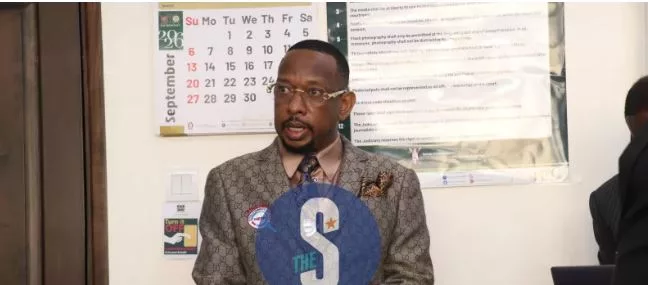
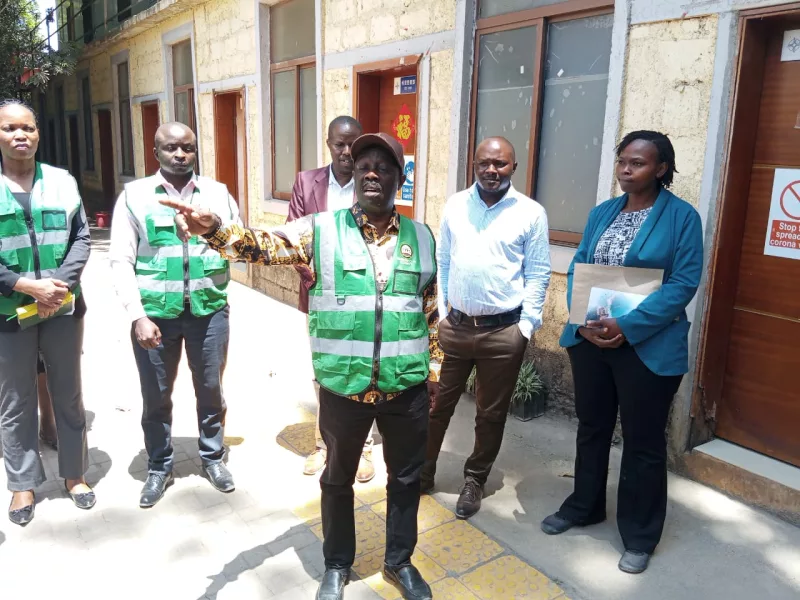
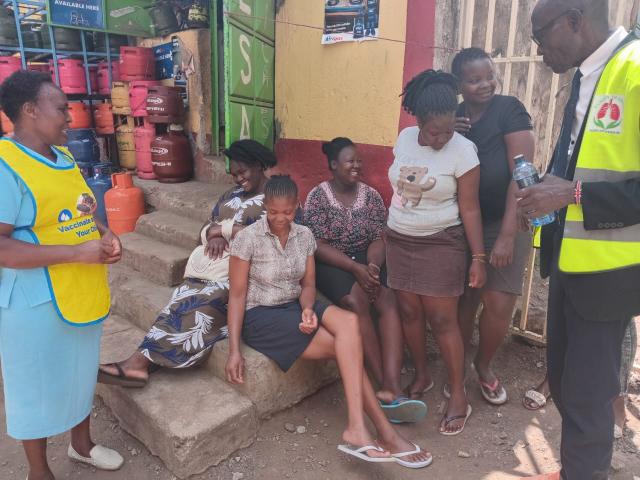
 Edward Omollo sharing the importance of couples counselling on all methods of family planning.
 Dandora dumpsite has long been branded a public health hazard, even as it remains the final destination for the waste generated by millions of Nairobi residents. But for the community living around its perimeter, it is not just a threat to their health, it is also a workplace and a lifeline.
For 67-year-old Edward Omolo, the place is familiar. He has lived in Dandora since 1977 and has watched the dumpsite grow into a 30-acre mountain of waste that today sustains thousands of livelihoods while exposing residents to silent health risks.
Most mornings, Omolo walks through the narrow paths leading to the dumpsite, where young men and women spread out across the trash sorting plastics, metal and paper for resale. Some have built makeshift shelters inside the site and live with their families amid smoke from burning waste, toxic dust and flies drawn to decomposing organic matter.
“People depend on this place,” he says. “It is work. But it also comes with illnesses, and many do not know how to protect themselves.”
Omolo is a community leader and a community health promoter based at Dandora II Health Centre. His work involves moving between households around the dumpsite and engaging the informal waste pickers who earn a living from it.
According to data from the Nairobi County, Nairobi generates an estimated 2,400–3,000 tonnes of waste per day. Only about half is formally collected. The rest is burnt, dumped in rivers, scattered across informal settlements or ends up in Dandora, one of the largest open dumpsites in the region. The site receives between 850 and 2,000 tonnes of waste daily and has increasingly become a safety net for an estimated 6,000–10,000 people, many of them young and unemployed.
The informal recycling value chain they support feeds factories across Nairobi and Thika, with plastic bottles, scrap metal, cardboard and old electronics finding new life in manufacturing. But this economic activity comes at a serious public health cost.
Residents living near the dumpsite have long reported chronic coughs, asthma, skin conditions, diarrhoeal diseases and neurological complications in children.
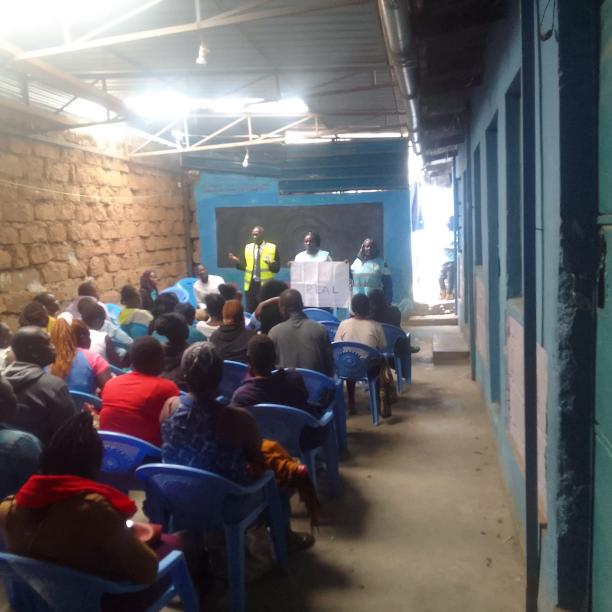 Edward Omollo, a community health promoter during a community sensitisation on good health practice in Dandora area 4.
Omolo says occupational therapists at Dandora II Health Centre are now working with more families raising children with cerebral palsy and developmental delays, which many parents associate with environmental exposure.
Previous studies by UNEP and local researchers found high levels of lead, mercury and cadmium in the soil and in the blood of children living near the site. In some parts of the dumpsite, lead levels were recorded at more than 80 times above recommended limits. Respiratory specialists at Kenyatta National Hospital have also publicly noted higher rates of respiratory infections and tuberculosis among patients from Dandora and nearby estates.
A new research initiative is now examining whether exposure to heavy metals in dumpsites like Dandora, Kachok (Kisumu), Nakuru and Mombasa may be contributing to antimicrobial resistance (AMR) in surrounding communities. Scientists have previously documented similar trends in India and Ghana, where heavy metals in soil and waste were linked to bacteria that resist commonly used antibiotics.
The Kenya-based project, known as AMELIORATE, is being implemented by the Technical University of Denmark (DTU), the Kenya Agricultural and Livestock Research Organization (KALRO), the Kenya Medical Research Institute (KEMRI) and the University of Nairobi (UoN) with financial support from the Danish Embassy. It is using a One Health approach to investigate risks to human, animal and environmental health arising from unmanaged urban waste.
Omolo welcomes the research. “If the results can show what people here are really exposed to, maybe we can get better interventions,” he says.
Though he has never earned income as a waste picker, his regular outreach puts him in the same hazardous air. “I once got an upper respiratory infection and was admitted,” he recalls.
Even with protective gear, he says health workers remain at risk, yet wearing masks and gloves sometimes intimidates waste pickers who feel stigmatised. “Sometimes you have to remove the gear so they can talk freely.”
Safety concerns at the dumpsite extend beyond health. Over the years, residents have reported cases of assault, rape and disappearances. Many of the young women Omolo works with are single mothers pushed into the dumpsite economy by circumstance rather than choice.
Local partners such as Médecins Sans Frontières (MSF) have introduced youth-focused programmes at Dandora II Health Centre, offering counselling, medical care and livelihood support for vulnerable residents.
Still, Omolo believes that long-term solutions must look beyond treatment. He advocates for household waste segregation, a stronger recycling industry and alternative livelihoods for young people.
“If people are empowered,” he says, “we will no longer be at risk. Waste can be sorted before it comes here, and recycling plants can be set up. Young people can have other options.”
Talks of relocating the dumpsite to another area had started and at one point, Ruai had been identified as the new site for relocation. However, there were aviation concerns over the place being a flight path and this brought the plan to a halt. The proposal has not moved since, leaving authorities searching for another viable location.