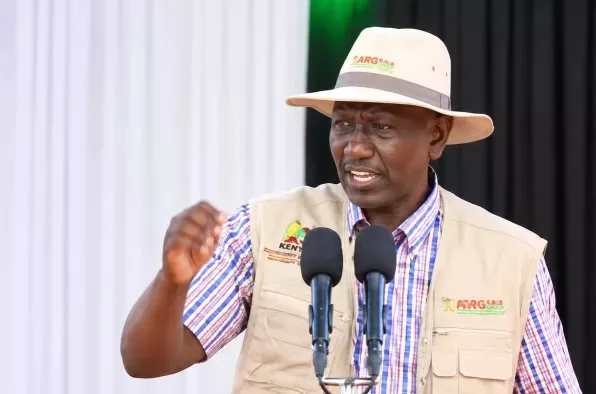
“Ruto proposes death penalty for drug traffickers.” Is this what the President meant when he talked of being “half-way to Singapore” this year?
Singapore is one of several Asian countries sentencing convicted drug dealers to death - and carrying out the sentence. In a recent four-month period, Singapore executed eight people for drug trafficking. About 50 convicted drug dealers are on death row.
Singapore is criticised a good deal by United Nations agencies and human rights organisations. Arguments include that the death sentence does not deter any more than other serious sentences.
That a mandatory death sentence prevents trial courts taking into account the particular act and the particular offender. Also that generally the brains behind drug trafficking escape and the humbler collaborators bear the brunt of the criminal law.
Indeed, when Kenyans get caught up in situations of that sort, the country, even the government, will take steps to get them released or at least spared death - remember the case of Margaret Nduta who was to be executed in Vietnam?
What is Kenya’s problem?
Ruto commented that there was not much point in fining drug dealers who could treat this as a minor expense of their trade. He said people could be fined as little as Sh1 million. In fact. things are much more complicated, and generally more serious than this. A Sh1 million fine may be reasonable for engaging in the illicit alcohol trade, rather than ‘hard drugs’.
When it comes to drugs such as heroin, cocaine, or methamphetamine, the sentences are: for possessing less than one gram, a fine of not less than Sh5 million shillings, or to imprisonment of not less than five years, or to both. For possessing one to 100 grammes, it’s a minimum of Sh30 million or as long as 30 years, and for possessing more, a minimum of Sh50 millionor as long as 50 years in prison.
The DCI reported in October last year that that “Joyce Akinyi was convicted of narcotics trafficking, resulting in a 25-year prison sentence and a hefty fine of Sh9,018,000.” Earlier two luxury vehicles had been confiscated as the proceeds of crime.
The real problem is not a lack of severe sentences, but what we see in other contexts - that big fish are rarely prosecuted, prosecuted half-heartedly or not convicted. If we have no death penalty, but dealers realistically expect to be detected, properly investigated, arrested, detained and prosecuted on the basis of strong evidence ¾ and they have to pay expensive lawyers and have their drugs seized and destroyed - we don’t need the death penalty.
We know that the involvement of rich, powerful and well-connected people, coupled with corruption, makes the enforcement of the criminal law (not just drug laws) very difficult.
Suppose the death penalty was applied?
Cabinet Secretary for Interior Kipchumba Murkomen said on television that the President just talked about death penalty “as a father” but has been persuaded that it is not necessary. But if the law was changed to require, or allow, the death sentence for drug dealing, what would happen if someone was sentenced to die?
Death is a possible sentence for murder, and mandatory for armed robbery and treason. In 2023, 131 people were sentenced to death. Not one was executed. No one has been executed since 1987.
Was the President telling us that if the law was changed, and people were actually sentenced to death for drug offences, he would sign the execution warrants? He who - like his three predecessors - has already commuted hundreds of death sentences to life?
By the way, we have no one qualified to carry out death sentences by the method required by Kenyan law - by hanging. It requires considerable technical skill.
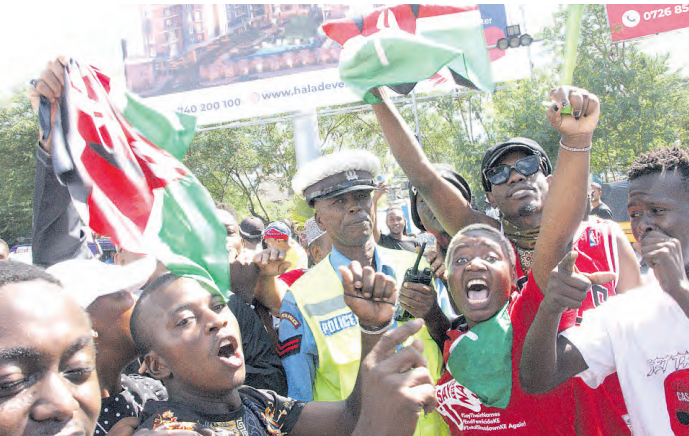
Let me be clear: I am not in favour of executions, for any offence - any more than I favour executing, without trial, young people for demonstrating in the streets, possibly committing no offences and certainly not capital ones.
The Supreme Court has already held that a compulsory penalty of death for murder is unconstitutional (not the death penalty completely, CS Murkomen). Unfortunately, the court then seemed to lose their will and be reluctant to imagine that logic would make such sentences unconstitutional for robbery with violence. However, a mandatory death penalty for drug offences would surely be challenged in court.
Looking ahead
Dealing with problems of the drug trade and consumption requires a multi-pronged approach. To stop the trade, we need to ensure that drugs do not pass through Kenya undetected - and certainly not carefully chaperoned by complicit Kenyans, however “big” they may be.
Ruto was focusing on the damage to Kenyan users. For this we need to focus as much on the users as on those who supply drugs.
The UN High Commissioner for Human Rights said in December 2024 that “The so-called War on Drugs has failed, completely and utterly. ….Drug policies that prioritise health and human rights are more effective and more humane. Focusing on inclusion and education over incarceration means that drug consumption falls. Choosing social reintegration over stigmatisation means drug-related infections decrease. And prioritising people over punishment means more lives are saved.”
A recent report by the Eastern and Southern Africa Commission on Drugs similarly proposed developing prevention and treatment programmes, while improving the capacity to disrupt supply chains. It also proposed decriminalisation of drug possession for personal use. Sending people to prison for possessing a tiny amount is not compatible with educating them about the risks, nor with encouraging people to seek help for drug addiction.
It was encouraging to hear the CS talk about treatment - although he focused mainly on alcohol.
One important issue is surely: why do many people feel life is sufficiently hopeless that they are prepared to take drugs?
Mr President, please stop the unthinking rhetoric. Death penalty for drugs is among the things about Singapore we don’t want to emulate.
A last thought
Our current situation with the death penalty is deeply distressing. People are sentenced to death. Their lawyers surely know that they will not be executed. But it must be hard to convince the prisoners themselves. Perhaps for some years they will languish on death row. They are probably not treated as people who have a future ¾ why try reforming someone who is going to die? Eventually their sentence will be reduced - probably to life.
Courts have held that the death penalty in Kenya is not unconstitutional because Article 26(3) says: “A person shall not be deprived of life intentionally, except to the extent authorised by this Constitution or other written law.” But this is not relevant because no one is deprived of life.
Maybe we should challenge not the death sentence but what actually happens to those “sentenced” to death, namely not death - but a period of harrowing uncertainly. Imagine the torment they go through. It’s like some cruel, unfunny, joke.
The system came about through executive (presidential) action. I sympathise with judges who find they have no choice but to play a part in this travesty of justice and sentencing - a system that the Supreme Court has played a major part in perpetuating by their statement that their death penalty decision “applies only with respect to the mandatory nature of the death sentence under [the murder provisions] of the Penal Code”.
I can’t help wondering, however, what those judges who still sentence people to death in murdercases think they are doing.
I suggest that this whole system of sentencing someone to death but not carrying it out violates Article 29 (f) of the Constitution - everyone has the right not to be “treated or punished in a cruel, inhuman or degrading manner.”