The late Luo rhumba icon, Musa Juma, had a beautiful number called Rikni Nyombo, a phrase that loosely translates to “early marriages”. In the song, a man bitterly laments how a marrying too early ended up causing him pain and losses, because he hadn’t taken time to understand the partner and to internalise the possible challenges that would come with a lifelong union. The Kenyan political scene today reminds me of this tune.
As I opined last week, we are about 18 months to the general election, but the general political posturing makes it seem as though we are just weeks away. In all fairness, a lot of the current political moves are informed by panic. There is too much at stake at all levels of elective politics, and anxiety is prevalent in high places.
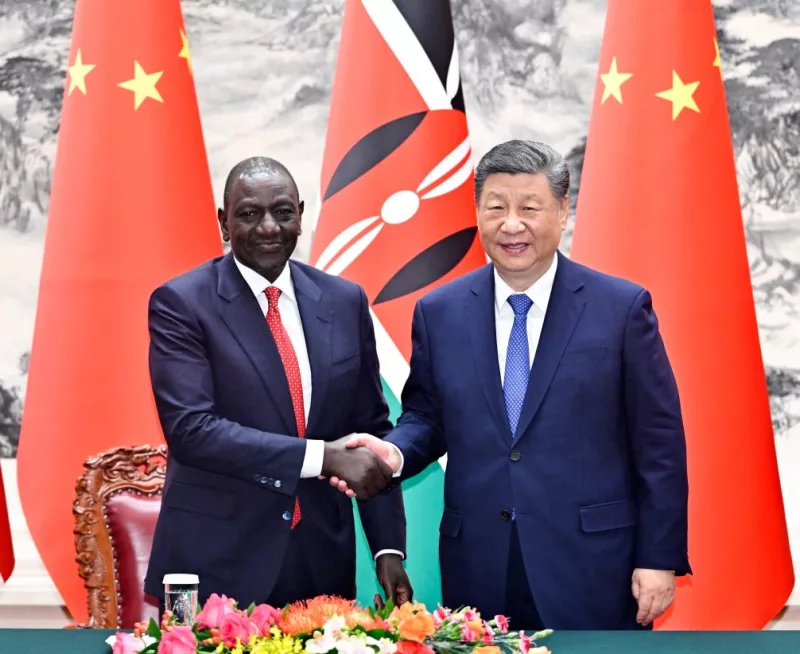
Besides, the death of Raila Odinga robbed the entire country of one predictable factor, leaving behind many variables and unknowns that he would have resolved. Against this backdrop, President Ruto seems to be in a bizarre hurry to strike a pre-election deal with Raila’s ODM party.
Where I come from, we would ask, “Who is dying? Why the hurry?” whenever any matter appears rushed. At a casual glance, the desire to capture ODM seems like a life and death venture for the President, while his supporters in the ODM faction backing the impending union appear even more enthusiastic than him to close the deal.
Out in the corporate world, mergers and other deals are premised on credible measurables. For instance, a company’s fair financial worth, incorporating its cash flows, comparable company analysis and asset valuations, would be determined to establish its sound financial position, before it enters into deals.
Politics may work in a different way, but since it’s a game of numbers, it behooves stakeholders, or at least those with desires to strike inter-party deals, to establish if these numbers really exist. Especially so for a party in transition, such as ODM.
The death and the therefore absence of Raila, presents an interesting perspective for political research. It is a fact that for many ODM followers, the actual party was the individual, Raila himself.
Across the country, many remained loyal to him, and it wouldn’t have mattered what party he led, as long as he was there. This is the first problem with the hurry to have ODM onboard the envisaged coalition with UDA; the deal presupposes that the Orange party’s “fair value”, in terms of its obedient membership, can be anything close to what it was in Raila’s time.
Political parties in Kenya, especially those dominant within the big tribes, are purely run on the whims of a big personality. To its credit, ODM broke this tribal barrier because of Raila’s charisma and wide appeal across ethnic lines.
In his absence, the first truism worth acknowledging is that there is no single personality within his party who can confidently come to a negotiating table and promise to deliver the voters to any potential coalition partner. This, indeed, is the second problem in this hurried marriage. Promises and vows made might never be kept.
But beyond just the anticipated (and much hurried) ODM-UDA union, we need a quick examination of pre-election deals in multiparty Kenya. Neither the 1992 nor the 1997 elections had any real pre-election arrangements between parties, because the opposition luminaries flatly rejected the idea of a joint presidential candidate, obviously egged on by the ruling party, Kanu.
So, the first proper arrangement in this regard was the post-1997 cooperation agreement between Raila’s NDP and President Moi’s Kanu, which culminated in the merger of the two parties in March 2002.
The co-operation itself had lasted about three years by then, but the merger happened nine months to the 2002 elections. Yet a few months into it, the two partners found out that they didn’t share values and that their vows had been hurried. Raila would lead a mass walkout from Kanu just six months from the merger.
Consequently, and most importantly for context, Raila’s declaration of support for Mwai Kibaki, via the now famous ‘Kibaki Tosha’ slogan, happened less than three months to the general election. Their Narc coalition would storm to victory that December 2002 in the country’s last dispute-free elections. The early marriage between NDP and Kanu hadn’t worked, but the last-minute cobbling together of interested parties, barely three months to the general elections, performed like magic.
Exactly five years later, and with the LDP wing of Narc having fallen out with Kibaki’s NAK faction, the political scene was replete with confusion as the 2007 election approached.
LDP had now transitioned to ODM, following their victory in the 2005 referendum. In mid-2007, a disagreement over the presidential candidate tore ODM apart, forcing ODM luminary, Kalonzo Musyoka, to flee with the party’s registration instruments.
Reeling from it all, Raila quickly acquired another variant of ODM, set up a party presidential nomination process at Kasarani Stadium on September 1, 2007, and created the brilliant Pentagon, just three months from that year’s general elections.
By the time the political scene woke up to what a powerful movement ODM was, the election dispute had turned into a civil war across the country, and the country was headed to a coalition government.
These last-minute coalitions have subsequently become a common feature of our electoral cycles. Cord, Nasa, URP-TNA, Jubilee and UDA, parties and coalitions of the past three electoral cycles, have cropped up just a few months, often barely three months, to the election.
Part of the reason is that real pre-election deals are easier to craft towards the end of the sitting Parliament, so that elected leaders are able to freely cross to, and run, their new outfits. But the more compelling argument is that it is difficult to sustain a political marriage that happens too long before the general election.
Aside from the fact that it gives opponents a glimpse into strategy and plans, it also fails to acknowledge the changing dynamics that are possible within that period of time. Of course, there is always the chance that some of the partners in such budding coalitions will be bought off once you show their faces too early.
There is yet another problem for an early UDA-ODM deal. As already stated, President Ruto, in courting ODM, seems more interested in the Luo community rather than the party itself. But Raila’s ODM had cultivated powerful bases in areas as diverse as the Coast, Western, the pastoralist communities up North and urban zones like Nairobi.
While leaders from Luo Nyanza push very hard for this marriage, what is the stake of these non-Luo bases in the deal, and what would be ODM’s fair value if these far-flung bases took a different path?
I have often wondered why the President doesn’t simply persuade the ODM members who love him to simply cross over to his UDA. Well, given that none of them has the courage to do it officially and occasion a byelection, they can still wait until the requisite time in 2027, then cross over officially.
Without Raila, the facade of ODM joining UDA in a coalition will become more and more pronounced. The President shouldn’t entertain a few leaders whose influence on the party bases is unclear.
Beyond just entertaining some fat cats from ODM, I am also persuaded that Ruto’s own UDA networks within these ODM zones can do a better job mobilising support for him.
Now that a Ruto presidency has been made acceptable in these areas, doesn’t it make more sense for Ruto to deploy the people in UDA and government who have stood with him for years, instead of the Johnny-come-latelies from ODM?
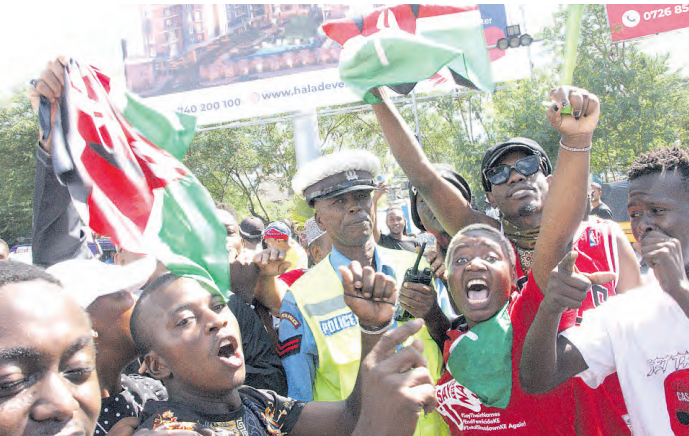
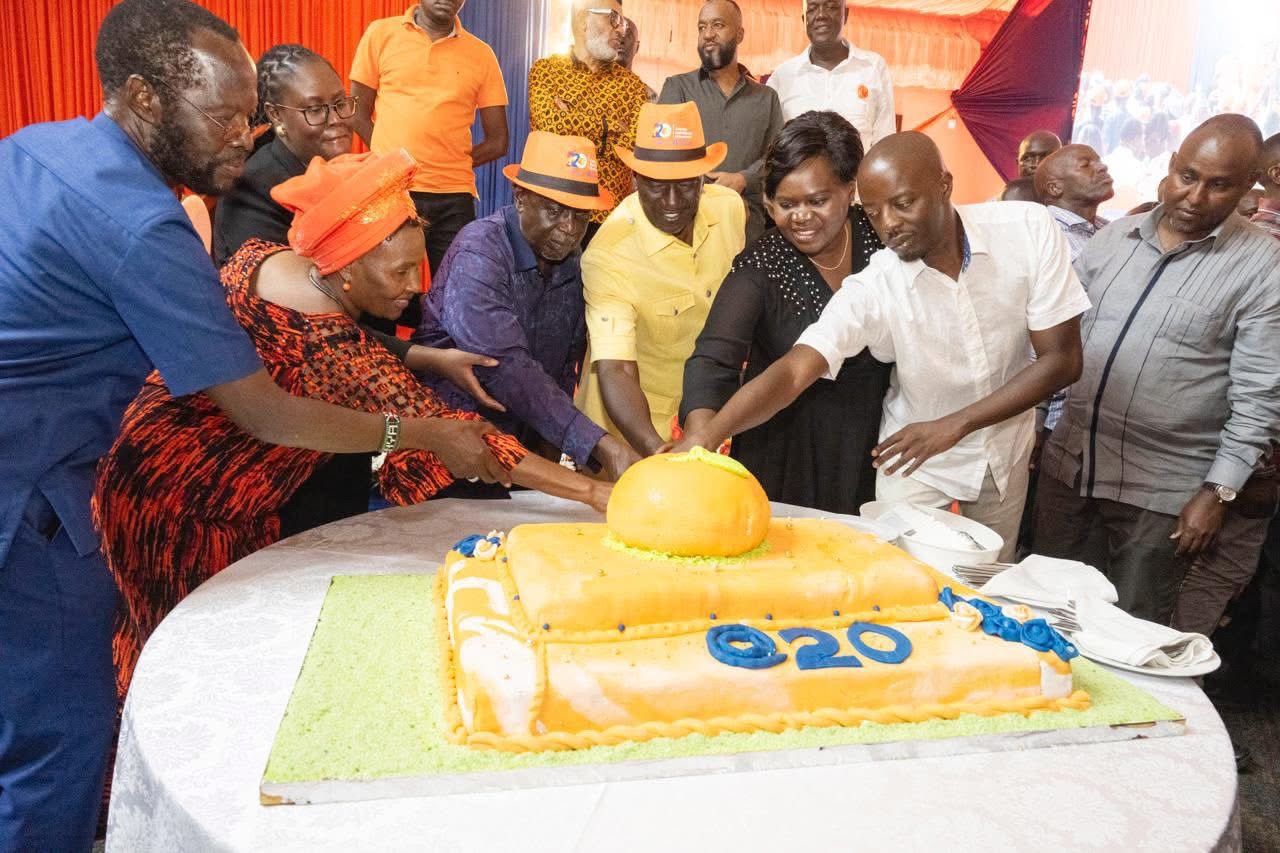
This philosophy rides on the principle of trust; it is built over time, not over transactions. There is no better evidence of the chaos that the President will have to endure from his newfound partners, than the rally held in Kibra on Wednesday this week, ostensibly to rubber-stamp the proposed coalition.
It was chaotic, unscripted, shallow and lacking in the order and discipline that Raila would have brought. The crowd itself appeared restless and in a hurry to get out of there. Simply put, no leader present seemed able to capture the attention and imagination of the people in Raila’s own political “bedroom”.
As if to cement the embarrassment, some leaders, chiefly Ruaraka MP TJ Kajwang, addressed the rally in dholuo, bang in the middle of the city. The venue of the rally, Kamukunji grounds in Sarang’ombe sard in Kibra constituency, is one of the most cosmopolitan there.
What was Kajwang’s motivation for speaking in the vernacular? Was the message simply that the proposed coalition, which they had gone there to popularise, was merely between the President and the Luo community?
Back to early marriages, there is something that former DP Rigathi Gachagua has been saying in recent times. Gachagua has made it clear that the joint opposition will field one presidential candidate in 2027, but that the individual will not be identified until closer to the election, because presenting him now would only lead to covert and overt action against him by the state and its agents. Indeed, candidates at whatever level, once unveiled early, attract adverse actions and politics from opponents. This applies across the board.
I may be wrong, but my instinct is that the new people in charge of ODM are clearly fearful that the more time passes post-Raila, the weaker their hold on the party and its members and that weakness will become more apparent.
It is therefore in their interest to strike a quick deal while hiding behind the state’s instruments, and transition to the elections carrying the perception of the people who brought the party to the President, even if they are aware that theirs is only a hollow victory.
If the President truly wanted a deal with the Orange party, I submit that his real path to a deal would have been to encourage ODM to consolidate its support across the country. It should release what the party is owed from the Political Parties Fund, or even part of it, and let it go through its transition unencumbered by the state.
All this before it actually comes up with a popular presidential candidate, who can then strike a pre-election deal closer to the 2027 election. This would be tidy, orderly, credible and more accommodating of ordinary ODM members. This would give him a real deal.
But maybe Ruto has his reasons for negotiating with factions of ODM only, especially those who don’t have the support they purport to have.