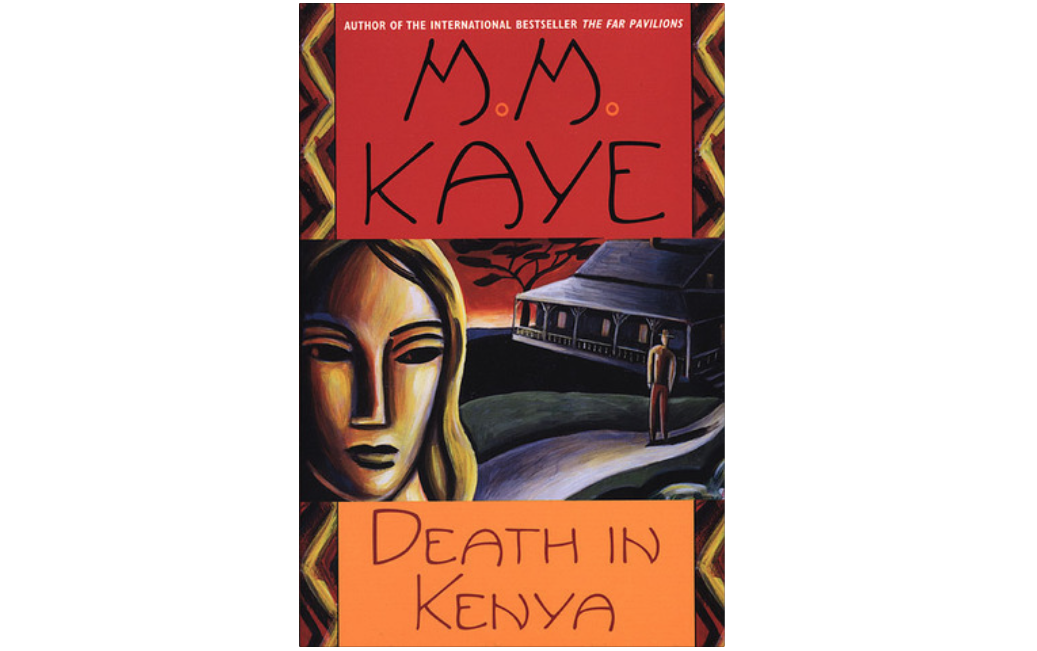
In Death in Kenya, MM Kaye paints a portrait of an Africa that glows with light and bleeds with shadows. This is not merely a murder mystery; it is a haunting story of returning home to find the past waiting, patient and venomous. Beneath the violet jacarandas and the burning sun, Kaye crafts a tale that shimmers with nostalgia, deception and danger.
The novel begins with Victoria Caryll’s reluctant return to her childhood home, Flamingo, an estate in the Rift Valley. She has come back at the insistence of her Aunt Em, a woman of iron composure who rules Flamingo with old-world grace and stubborn pride.
But the Kenya Victoria remembers has changed. The air is heavy with tension, servants whisper behind closed doors, and the wild dogs howl too close at night. When a young girl is found dead under the fierce African sun, the mystery erupts, forcing Victoria to confront not only a murderer but also the haunting ghosts of her own past.
From the moment Victoria steps off the train, Kaye immerses the reader in a landscape that feels alive. Her familiarity with Africa gives the setting an authenticity that throbs through every description. “The strange silence that lay upon the land, a silence that was not peace, but waiting,” Kaye writes — and that waiting, that sense of something terrible coiled just out of sight, seeps into the reader’s bones. The land itself becomes complicit in the crime, a silent witness to human frailty and desire.
Kaye’s writing style is what transforms Death in Kenya from a standard whodunit into something far richer. Her prose is lush, sensual and cinematic. She writes not simply to describe but to evoke. The heat, the scent of dust, the shimmer of distant plains — all rise from the page as though the reader were standing there beside Victoria, hearing the cry of a bird over the valley. The effect is hypnotic. Each chapter is steeped in atmosphere until the mystery feels inseparable from the land itself.
But beauty is deceptive here. Kaye builds her suspense through quiet menace rather than overt violence. The tension accumulates slowly, through glances and silences, through memories that refuse to stay buried. The novel’s emotional core lies in its examination of belonging and loss. Kenya, for Kaye, is both home and exile, a place that promises peace while harbouring deep divisions.
Victoria embodies that contradiction, drawn to the land that shaped her, yet alienated by the changes that time and betrayal have wrought. “You can’t go back,” she reflects. “The past has its own ghosts, and they do not sleep easily.” The line captures the story’s haunting undercurrent: the idea that the past is never truly gone, merely waiting for its chance to resurface. In Death in Kenya, the murder is not just a crime to be solved; it is the spark that exposes years of buried secrets, colonial unease and personal guilt.
Kaye’s characters are crafted with care and nuance. Aunt Em, the matriarch of Flamingo, is commanding, lonely and unforgettable, a woman fiercely tied to a land that no longer belongs to her. Victoria is a quietly intelligent heroine, less reckless than many of Kaye’s protagonists but all the more human for it. Around them swirls a cast of family members and neighbours, each carrying secrets of their own. No one at Flamingo is entirely innocent, and Kaye delights in blurring the line between truth and deception.
Her dialogue, though formal at times, brims with subtext. Every word feels weighted, every conversation edged with suspicion. The reader learns to listen for what is not said — the evasions, the hesitations, the glances exchanged across rooms filled with ghosts. Kaye’s skill lies in allowing tension to build naturally, like a storm gathering in the distance.
Yet for all its elegance, Death in Kenya is not without flaws. The pacing can falter, particularly in the early chapters. Kaye’s devotion to description sometimes overwhelms the momentum of the mystery. The first third of the novel moves slowly, and readers hungry for swift intrigue may find themselves impatient as the story lingers on the beauty of its setting. The dialogue can feel dated, echoing the colonial sensibilities of its era. These moments dull the sharp edge of suspense that Kaye so carefully forges elsewhere.
In the end, Death in Kenya is both a mystery and a requiem, a lament for lost worlds and broken loyalties. MM Kaye captures the beauty of a land on the brink of change, and the peril of hearts that refuse to move on. Beneath the jacarandas, the air hums with secrets, and in that heavy, waiting silence, death feels as natural as the setting sun.