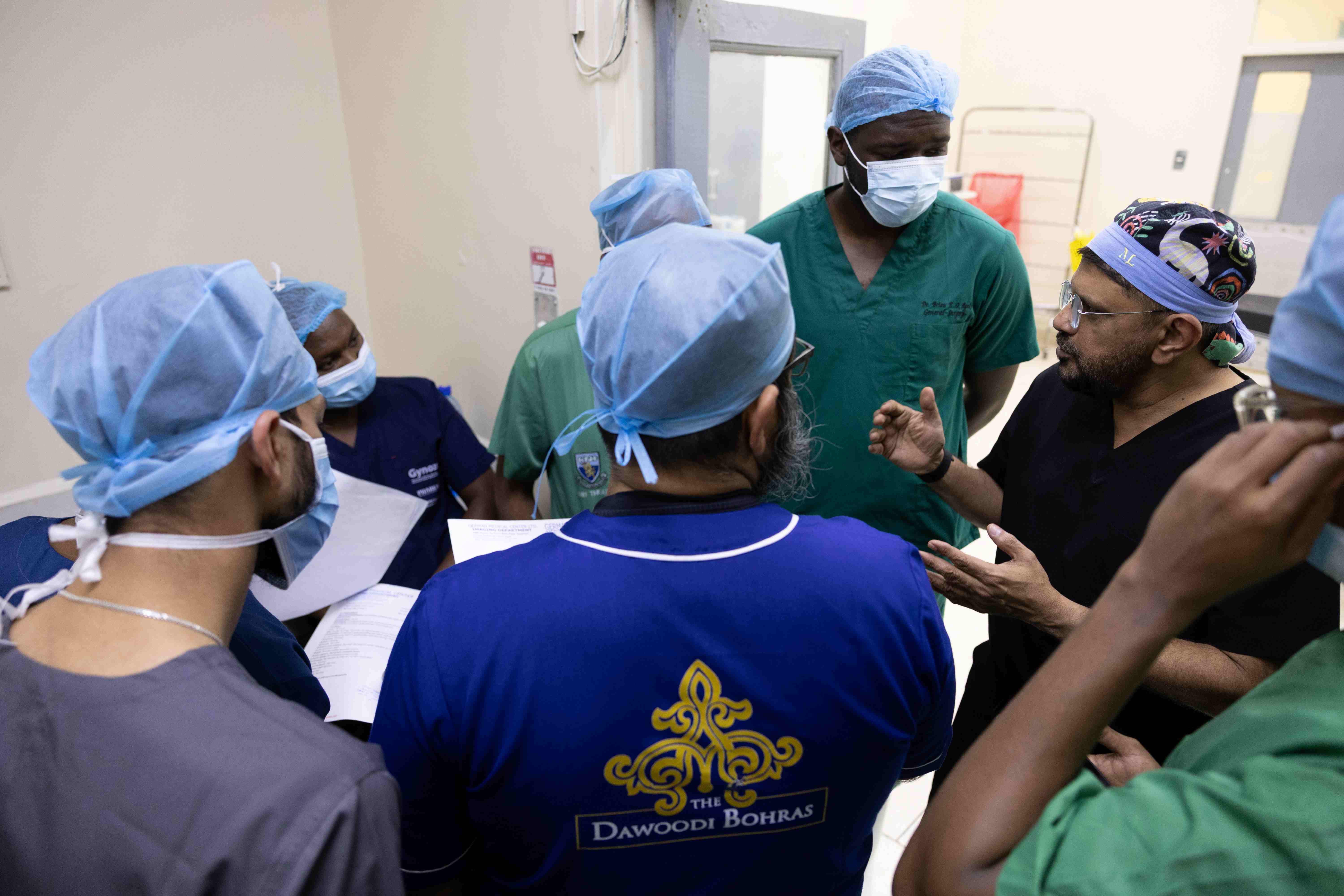
 Surgeons from the Dawoodi Bohra community together
with other Kenyan surgeons discuss at the Kenya National Hospital
on Thursday / BRIAN OTIENO
Surgeons from the Dawoodi Bohra community together
with other Kenyan surgeons discuss at the Kenya National Hospital
on Thursday / BRIAN OTIENO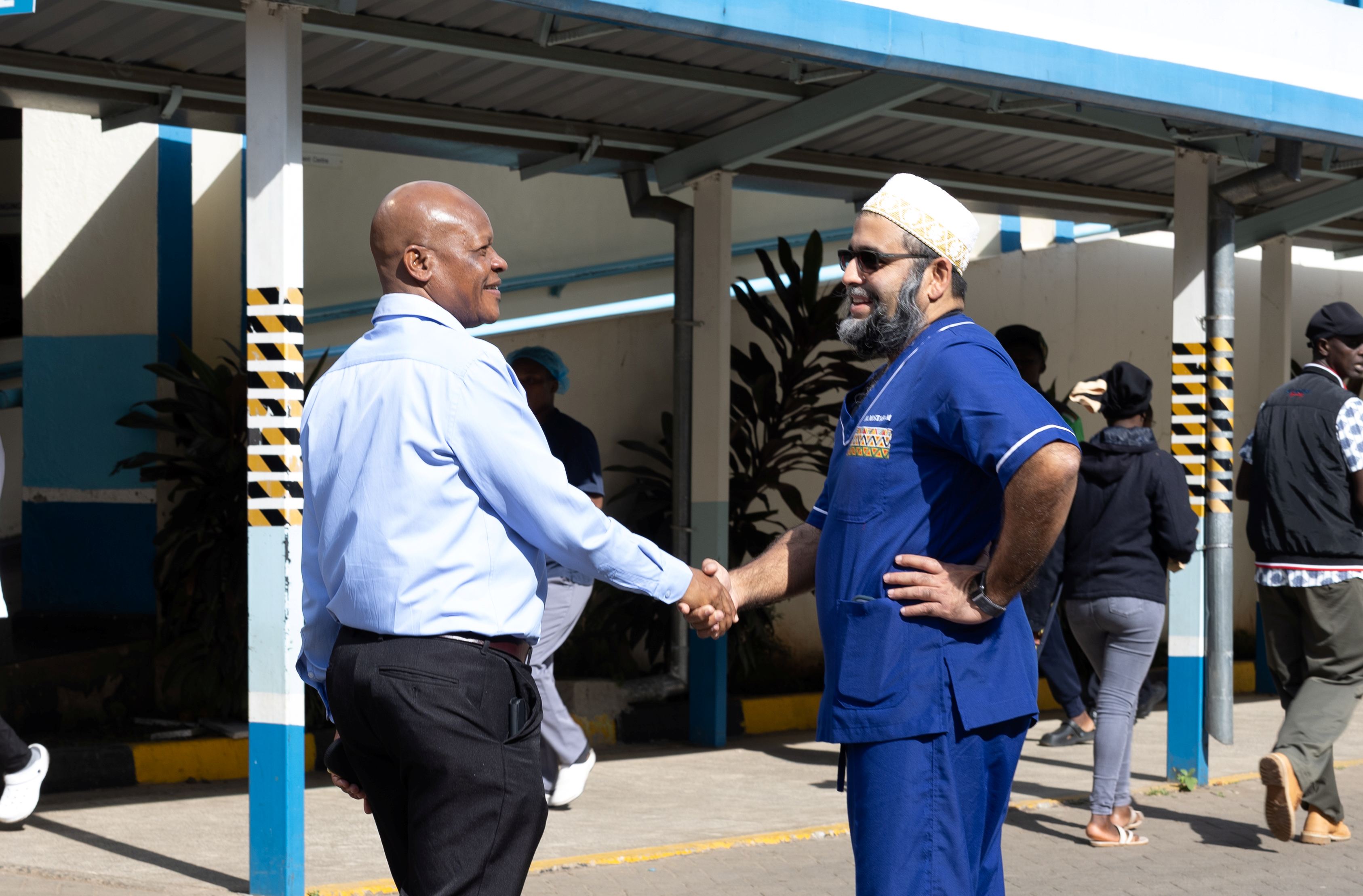 A KNH officer and a surgeon from the Dawoodi Bohra community at the Kenya National Hospital
on Thursday / BRIAN OTIENO
A KNH officer and a surgeon from the Dawoodi Bohra community at the Kenya National Hospital
on Thursday / BRIAN OTIENO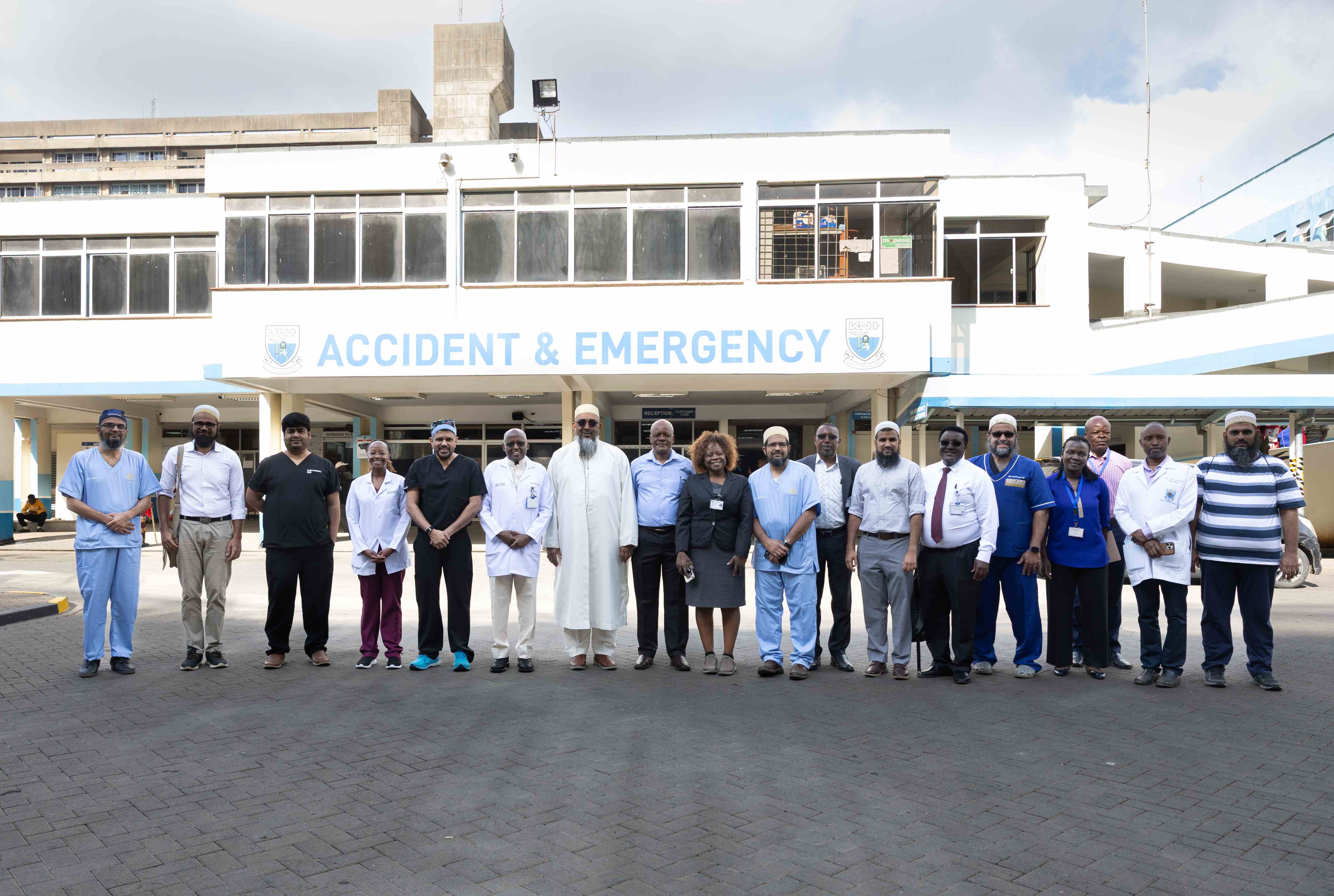 Surgeons from the Dawoodi Bohra community together
with other Kenyan surgeons at the Kenya National Hospital
on Thursday / BRIAN OTIENO
Surgeons from the Dawoodi Bohra community together
with other Kenyan surgeons at the Kenya National Hospital
on Thursday / BRIAN OTIENO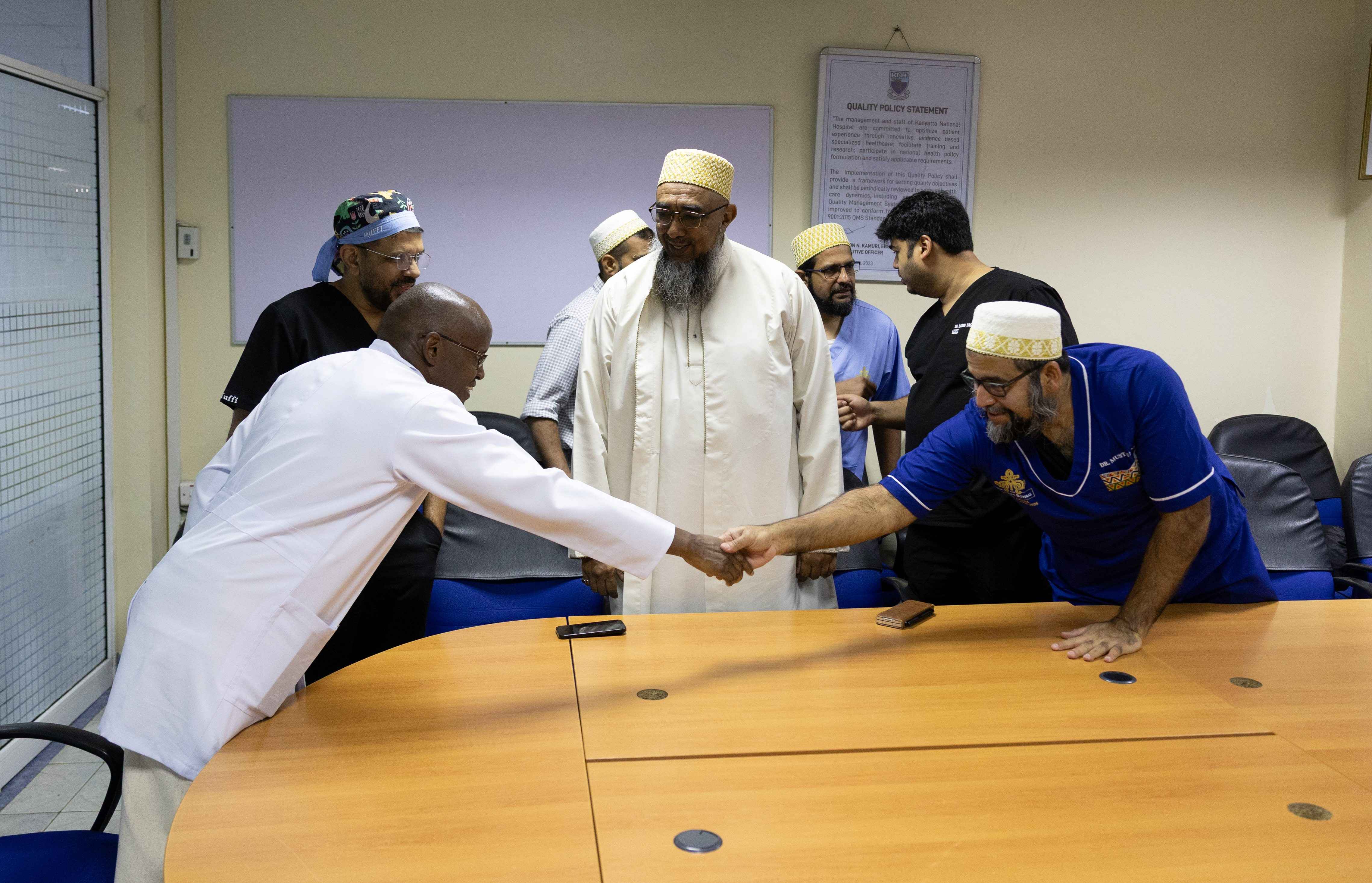 Surgeons from the Dawoodi Bohra community together
with other Kenyan surgeons at the Kenya National Hospital
on Thursday / BRIAN OTIENO
Surgeons from the Dawoodi Bohra community together
with other Kenyan surgeons at the Kenya National Hospital
on Thursday / BRIAN OTIENO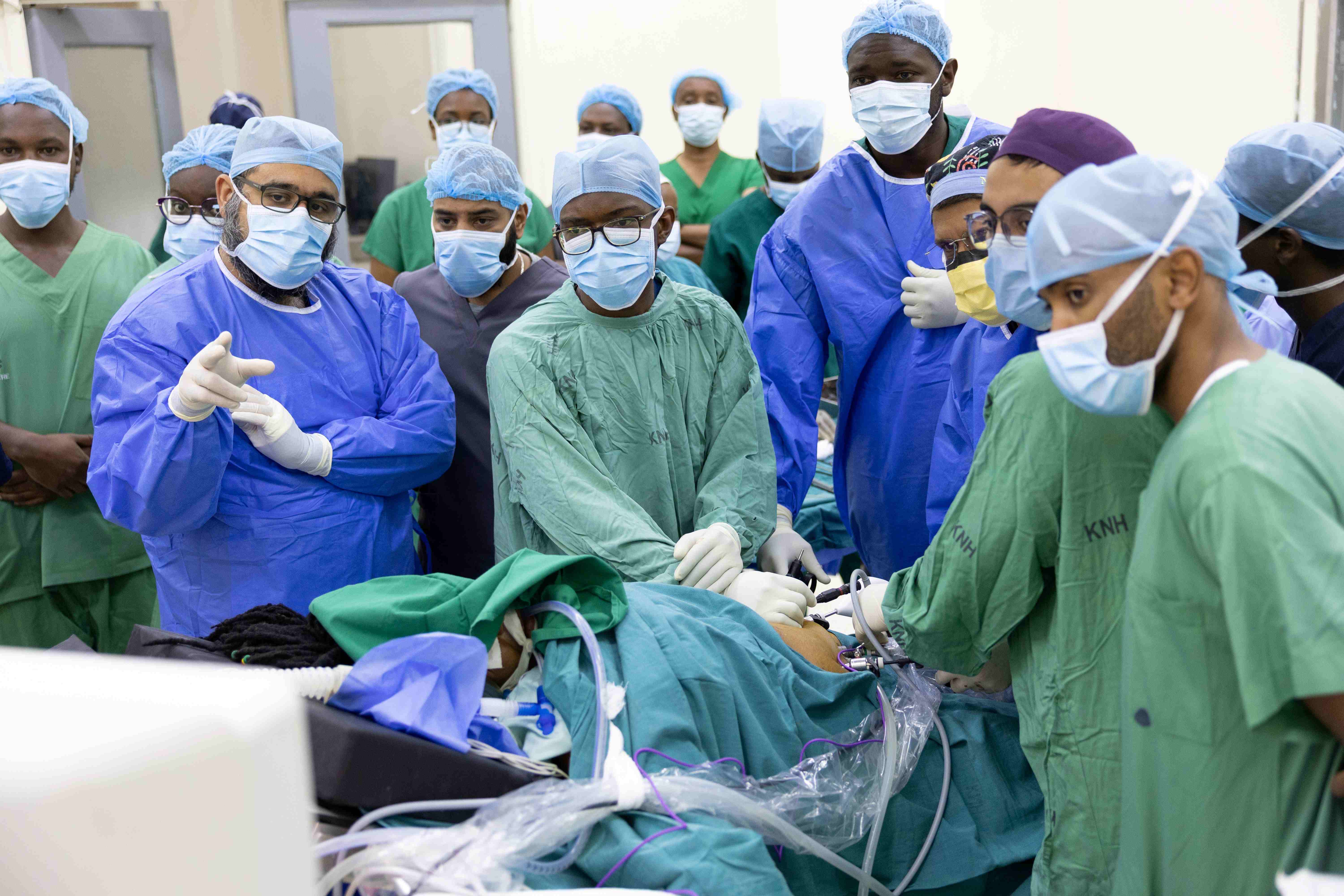 Surgeons from the Dawoodi Bohra community together
with other Kenyan surgeons operate on a patient at the Kenya National Hospital
on Thursday / BRIAN OTIENO
Surgeons from the Dawoodi Bohra community together
with other Kenyan surgeons operate on a patient at the Kenya National Hospital
on Thursday / BRIAN OTIENO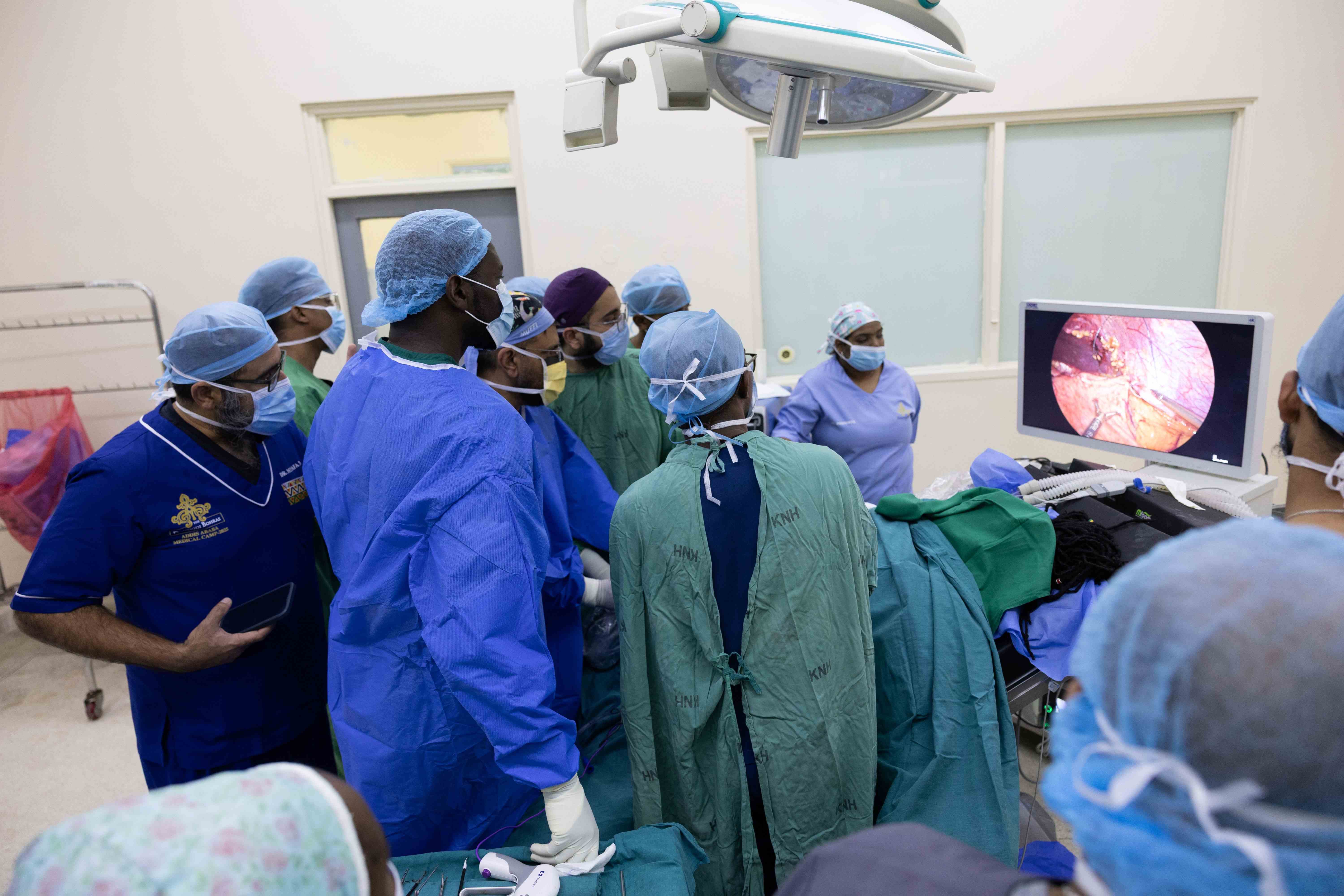 Surgeons from the Dawoodi Bohra community together
with other Kenyan surgeons operate on a patient at the Kenya National Hospital
on Thursday / BRIAN OTIENO
Surgeons from the Dawoodi Bohra community together
with other Kenyan surgeons operate on a patient at the Kenya National Hospital
on Thursday / BRIAN OTIENOFrequent medical check-ups reduce the cost of healthcare because of early detection or prevention of diseases that might cost more to treat, a community has said.
The Dawoodi Bohra Community on Thursday said it costs less to go for medical check-ups than to go for treatment, calling on Kenyans to go for medical check-ups.
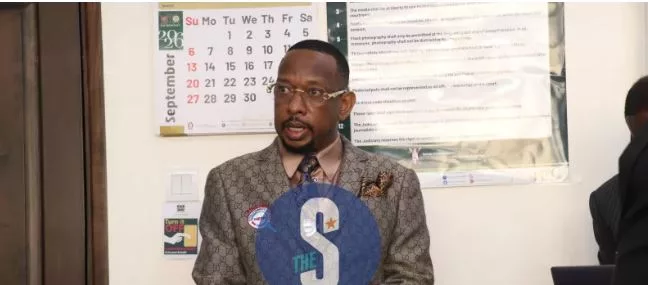
“Health is the foundation of an economy,” Hamza Shura, a community member, said.
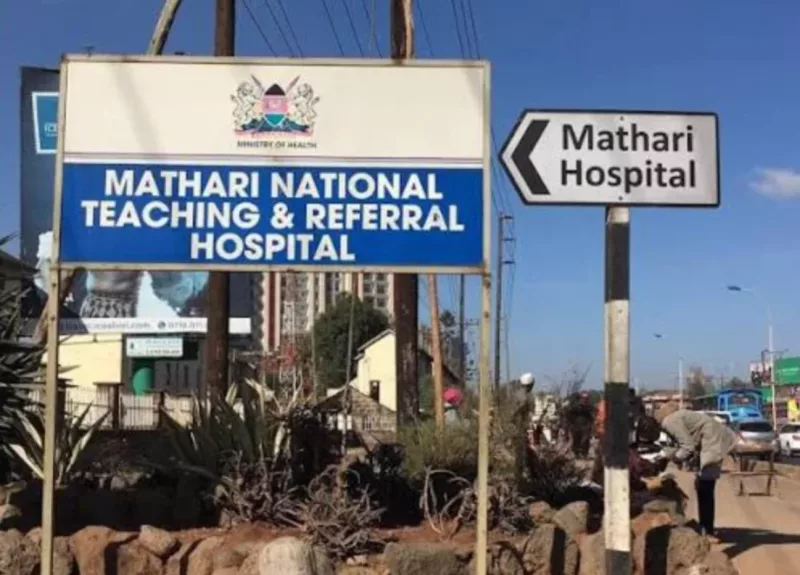
Speaking during the last of a two-day surgical camp organized by the community at the Kenyatta National Hospital and the and Kenyatta University Teaching, Referral and Research Hospital, Shura said apart from helping the needy, the camp was also meant to show support for the government’s Universal Health Coverage agenda.
Over two days, a delegation of specialist surgeons and anesthetists from East Africa and abroad, conducted over 60 advanced laparoscopic and orthopedic surgeries at the two facilities.
The procedures focused on minimally invasive techniques that reduce recovery time, lower post-operative risk and free up hospital capacity.
“The medical world is changing with technology and today there are minimally invasive techniques that can be used to conduct surgeries. That is what the Gen Z want today. They don’t want large scars after surgeries so as to ensure their bodies still look attractive,” Shura said.
The surgical camp is part of a sustained regional health program delivered under Project Rise, the community’s global philanthropic platform.
The program targets public hospitals where it seeks to reduce surgical backlogs while ensuring patients benefit from advanced surgical techniques without any financial burden.
Anne Nyabuto, a beneficiary, said she has been suffering from knee joint pains for about eight years but visits to the KNH had been met with postponements due to a heavy queue.
“When I heard about this camp, I quickly sought to be a beneficiary and I was lucky. Now they have performed the surgery and it wasn’t as painful as I had imagined. Plus, I can only see dots instead of large scars. I thank God for these people,” Nyabuto said.
Mark Obembi said his wife has been having severe stomach pains and was told to look for money for a procedure to remove a small but growing tumor that had been detected.
“I was sweating over this procedure because I could not afford it. But I got help from this camp and I cannot thank the Dawoodi Bohra community enough,” Obembi said.
Shura said this was a follow up from the successful surgical camp held in Addis Ababa, Ethiopia last year.
“That camp was part of this regional effort, reflecting a concerted effort to shift from isolated initiatives to structured, long-term healthcare partnerships across East Africa,” he said.
Shura said the Nairobi camp builds on a recent track record where similar medical and surgical camps have been conducted with the support of the community’s health department.
On December 7 last year, residents of Mariakani in Kilifi county benefited from a similar initiative.
Similar initiatives have also been conducted in Dar es Salaam and Tabora in neighbouring Tanzania.
“We made sure that each intervention was expanded in scale and clinical complexity, responding to local needs identified in coordination with public health authorities,” Shura said.
“This work follows a clear principle taught by His Holiness Syedna Mufaddal Saifuddin,” Shura said.
“We invest where the need is real. We work within public systems, and we commit for the long term. These surgical camps are not one-off gestures. They form part of a sustained health response designed to strengthen access, dignity, and outcomes.”
He said the Nairobi camp also focused on skills transfer and capacity building.
Visiting specialists worked alongside their Kenyan colleagues, sharing advanced laparoscopic protocols and operating techniques.
“This hands-on collaboration strengthens local capacity and improves future service delivery long after the camp concludes,” Shura said.
Health ministry director of curative and nursing services Andrew Toro described the initiative as transformative.
Toro said the intervention sets a new benchmark for public-private collaboration in healthcare.
“It directly reduces surgical waiting lists, transfers advanced clinical skills to our teams, and delivers measurable outcomes within our national hospitals.
“This is the kind of partnership that accelerates Universal Health Coverage in practice, not in theory,” he said.
He said the surgical camp has changed expectations.
“What the Dawoodi Bohra community has delivered here proves that community-led initiatives, when aligned with national priorities and backed by serious investment, achieve scale, quality, and sustainability. This approach strengthens our healthcare system and serves as a model we want to replicate,” he said.
The community also called on more corporates to sponsor free medical camps to cater for the less privileged in society.
Instant Analysis:
Kenyatta National Hospital has a significant waiting list for certain specialized surgeries, particularly in cardiology and oncology. Patients have had to wait several months for procedures sue to equipment failures, resource constraints and the high volume of cases.