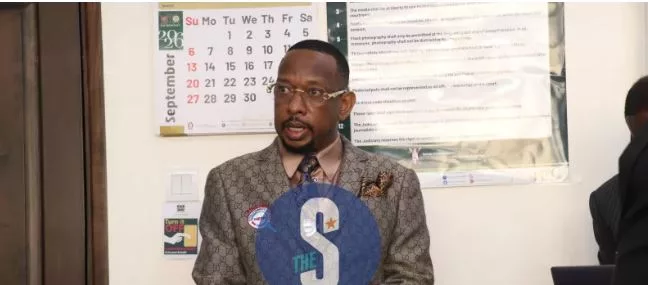
Nairobi Governor Johnson Sakaja has intervened to ensure some of the city’s most vulnerable students do not miss secondary school due to lack of fees.
This according to the governor is a silent crisis facing thousands of learners transitioning to Grade 10.
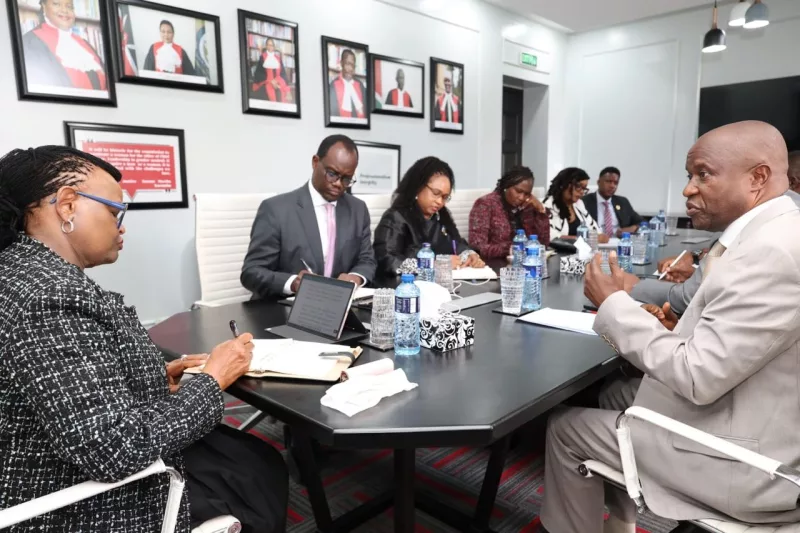
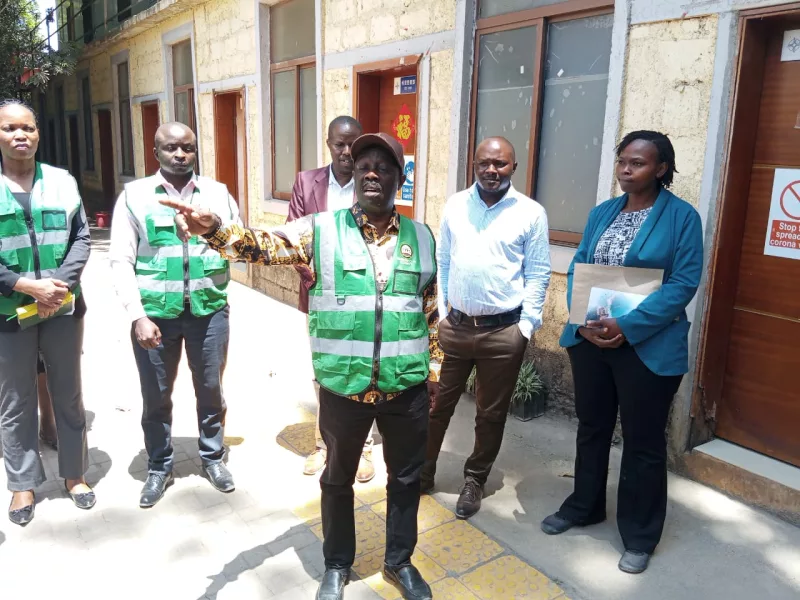
This week, Sakaja escorted two orphaned boys, Nicholas Otieno and Moses Njiru, from Mukuru kwa Njenga informal settlement to State House Boys' High School, where he cleared their full Grade 10 fees and supervised their admission.
“These boys represent the resilience of Nairobi. By standing with Nicholas and Moses, we are sending a message to every child in Mukuru and beyond. Your background does not define your future,” Sakaja said, adding his administration is committed to making education, the great equaliser, in the capital.
The governor also committed to fully sponsoring five other financially distressed learners from across the county.
Although Kenya introduced a 100 per cent transition policy from primary to secondary school, the numbers tell a more complicated story in informal settlements, where poverty routinely disrupts schooling.
While the Ministry of Education reported a national transition rate of 96 per cent in 2023, civil society organisations argue that enrolment does not equal completion, and urban poor children face the highest risk of dropout.
Data from Usawa Agenda shows 12–18 per cent of pupils in high-density urban slums fail to transition to secondary due to inability to afford associated costs, despite government subsidies.
In Nairobi alone, more than two million residents live in informal settlements, according to the Kenya National Bureau of Statistics (KNBS), and NGOs estimate that one in three learners in these settlements encounters financial barriers when moving to Grade 10.
According to the Ministry of Education, the average annual cost of a day secondary school in Kenya falls between Sh40,000 and Sh80,000, depending on category. This does not include uniforms and supplies, which parents must purchase upfront.
Basic entry costs include, uniforms at between Sh10,000–Sh18,000, textbooks and stationery at Sh5,000–Sh15,000, transport at Sh50–Sh200 per day for urban learners, and meals at between Sh7,000–Sh15,000 per year, where school lunch is provided.
For many urban informal households where parents are casual labourers, domestic workers, boda boda operators, or small traders, these costs are high.
A 2024 Usawa Agenda survey found that 51 per cent of households in informal settlements reported delaying or cancelling secondary enrolment due to lack of money.
Education experts warn the transition gap entrenches intergenerational poverty, especially in cities where the wage premium for secondary education remains high.
According to the World Bank, completing secondary school in Kenya increases lifetime earnings by up to 40 per cent, while dropout significantly reduces employment prospects in the formal sector.
Last week, Sakaja launched the Sh170 million Governor’s Scholarship Programme, expected to benefit more than 4,000 vulnerable learners across Nairobi’s 85 wards. Priority will go to orphans, children from informal settlements, and top performers without financial support.
In addition to sponsoring vulnerable students, the governor also met Jasper Onyinkwa, a top-performing student from Mang’u High School who excelled in the 2024 KCSE examinations, signalling the county’s intention to reward academic excellence.
Experts note that while Kenya has made massive strides in access to education, the gap between policy and household reality remains large.
For learners in informal settlements, success in primary school does not guarantee entry into secondary without supportive financing mechanisms. Without such interventions, experts warn that thousands of capable Kenyan children risk falling through the cracks.
Instant analysis
Governor Johnson Sakaja’s initiative highlights the critical role of targeted support in bridging the gap between policy and reality for vulnerable learners. While Kenya’s 100 per cent transition policy from primary to secondary school exists on paper, many students in informal settlements still face financial barriers that prevent them from enrolling or completing secondary education. By covering fees for orphaned and financially distressed students, Sakaja ensures capable youth do not miss opportunities due to poverty. Beyond individual cases, such interventions promote equity, reduce intergenerational poverty, and reinforce the broader social and economic value of education, which remains a key driver of lifelong earnings and social mobility.