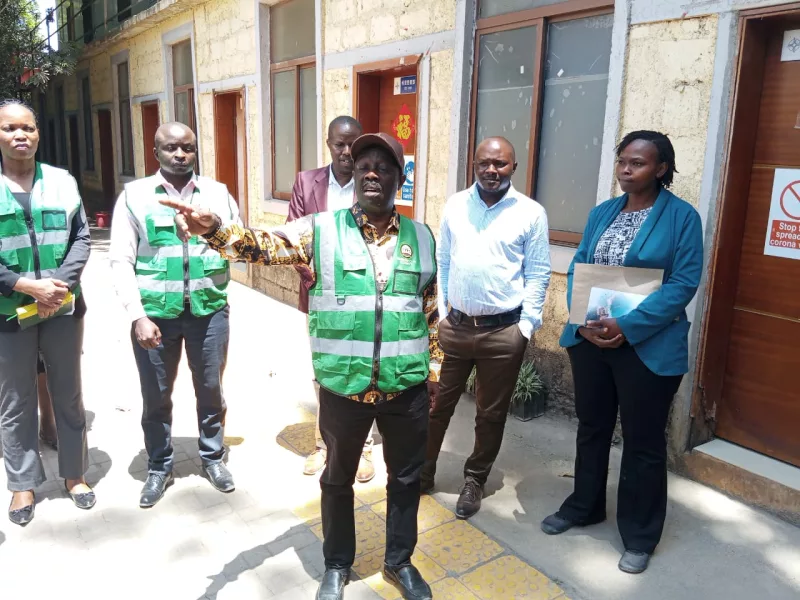
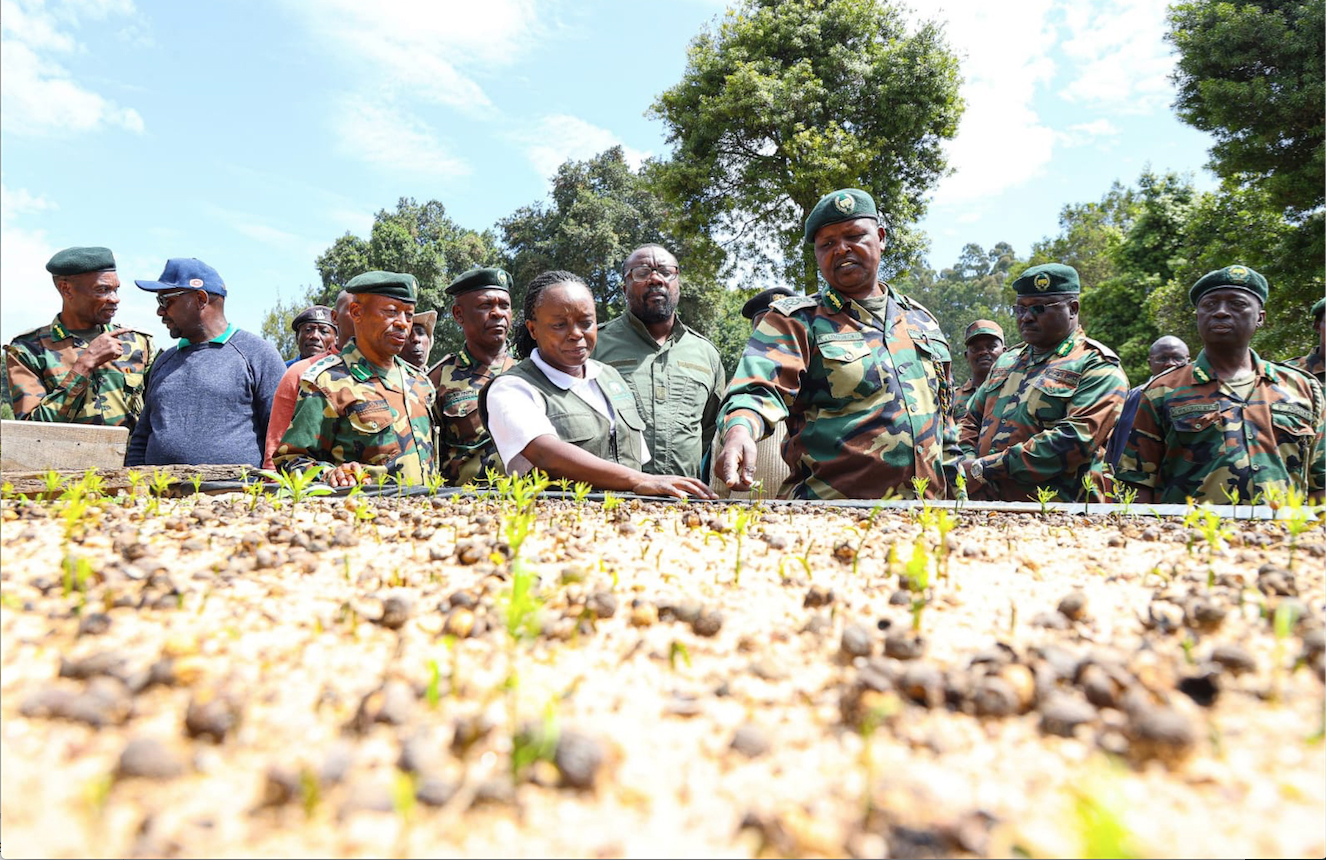
 Chief Conservator of Forests Alex Lemarkoko engages with Environment CS Dr Deborah Barasa at Kinale Forest Nursery/FILE
At the Kinale Forest Station in Kiambu, rows of seedlings stretch
across the nursery, each tiny sapling a quiet promise of a greener Kenya.
Here, over 600,000 potting bags are in use, and Environment
CS Dr Deborah Barasa is inspecting the ongoing expansion with an eye on a bold
national ambition: producing a billion seedlings annually as part of the
country’s 15 billion tree campaign.
Launched in December 2022, the campaign aims to restore 10.6
million hectares of degraded land, enhance biodiversity, mitigate climate
change and create green jobs.
The plan is ambitious — each of Kenya’s 300 tree nurseries
is now tasked with producing at least one million seedlings a year, with 17
nurseries expected to yield 25 million seedlings each.
“We need to restore our ecosystem and create green jobs,”
Barasa said, urging communities and the private sector to participate.
The effort is already showing signs of progress, with over
one billion seedlings raised so far.
Yet challenges remain.
Labour is a significant hurdle, prompting Kenya Forest Service
to engage the National Youth Service, with each youth propagating 40,000
seedlings annually, and communities joining hands to meet targets.
Chief Conservator of Forests Alex Lemarkoko highlighted the
scale of the undertaking. “Many people do not fully understand the magnitude and
effort involved in producing seedlings at this scale. Nursery development
requires significant investment in materials, labour and technical expertise.”
For local workers, the campaign offers more than
environmental benefits — it provides livelihoods.
Casual workers employed under the Greenzone Project, as well
as local farmers and communities who sell seedlings to private buyers, are
directly benefiting from Kenya’s green push.
Beyond jobs, the seedlings represent hope for the country’s
climate resilience.
From expanding forest cover, currently at 12.13 per cent, to
restoring degraded landscapes, each sapling is a step toward meeting the
constitutional target of 30 per cent tree cover by 2032.
Barasa’s visits to nurseries across the country are part of
a strategy to ensure accountability, efficiency and multisectoral
collaboration.
With clear targets assigned to each ministry and county, the
15 billion tree campaign is as much about policy and partnerships as it is
about planting seeds.
As the sun sets over Kinale, young saplings sway gently in
the breeze, a reminder that Kenya’s greening journey is not just a government
initiative but a shared endeavour — one that intertwines environmental
restoration with economic opportunity, community empowerment and the hope of a
greener, more sustainable future.
INSTANT ANALYSIS
Kenya’s 15 billion tree campaign is more than an environmental initiative; it is a catalyst for climate resilience, economic opportunity and community empowerment. By targeting one million seedlings per nursery and engaging 17 mega nurseries, the government aims to restore 10.6 million hectares of degraded land. Challenges such as labour shortages are being addressed through the National Youth Service and local community involvement. Beyond ecological benefits, the initiative generates green jobs, supports livelihoods and fosters public-private partnerships for sustainable forestry. The campaign exemplifies how ambitious environmental policies can simultaneously tackle climate change, biodiversity loss and socio-economic development.